Two months since launch, how is programmatic DOOH faring at Bengaluru airport?
Launched with the promise of providing brands access to high-value business travellers, Bengaluru airport’s programmatic DOOH has now shifted the conversation from availability to impact
 by
by
Published: Oct 1, 2025 9:13 AM | 3 min read
 Follow Us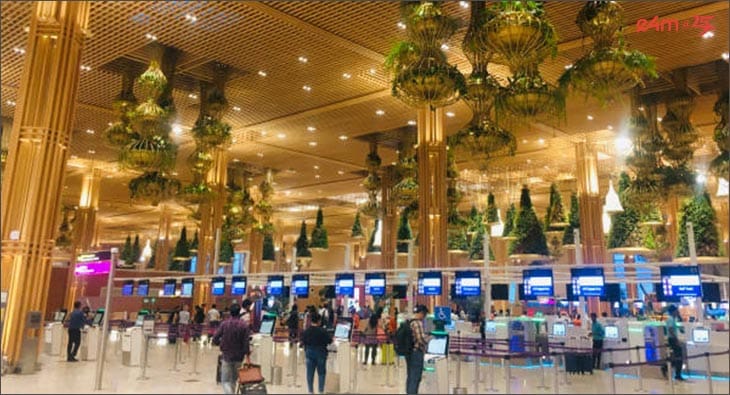

It’s been two months since JCDecaux India opened programmatic access to 64 digital screens at Bengaluru Airport’s Terminal 2. The August 5 launch was pitched as a milestone for digital out-of-home (DOOH), giving advertisers exclusive programmatic access to the screens, unlocking over 41 million monthly impressions, and reaching both domestic and international passengers at India’s third-busiest airport.
The partnership promised brands access to high-value business travellers, frequent flyers and affluent consumers through strategically placed premium displays across one of the country’s fastest-growing transport hubs. At the time of the announcement, the airport had welcomed 41.88 million passengers, up from 37.53 million in the previous financial year, reflecting a growth of 11.6%. The airport connects to over 110 domestic and international destinations through 39 airlines, JCDecaux had said in a press note.
But two months on, the conversation is less about availability and more about outcomes. The bigger question now is whether the rollout is delivering on its promise. Are programmatic buys driving higher yields for publishers and measurable ROI for advertisers—or is adoption still lagging?
Also read: DOOH on the rise: Not a future bet, but the new norm
While many industry insiders e4m spoke with said it is too early to comment, some have suggested that adoption of programmatic DOOH (pDOOH) in India remains limited.
According to Praveen Vadhera, CEO of the Indian Outdoor Advertising Association (IOAA), the primary reason for this is fragmentation within the ecosystem. While India has a substantial number of digital screens—over 300,000 by some estimates—there is currently no programmatic platform that aggregates even 25% of these screens.
Another challenge, as per experts, is that many media owners still view programmatic as inventory multiplication, focussing on selling screen slots rather than valuing the audience being reached.
“Even in the case of T2 airport, I hardly see the relevance of a programmatic platform,” Vadhera added. “The audience cross-section is already defined by the airport environment. For programmatic to truly deliver, you need a large, widespread network of screens at varied points of audience interaction, so the targeting actually makes sense.”
“Until the ecosystem recognises that brands are willing to pay a premium for the type of audience and context, programmatic pricing will remain disconnected from real value,” Vadhera added.
However, Fabian Trevor Cowan, Director at Connect Digital, who leads the company’s DOOH business, pointed out that pDOOH has the potential to combine technology, creativity, and context to create a more engaging experience for both brands and consumers.
Also read: pDOOH set to become dominant player in the broader digital ecosystem
As Bengaluru Airport’s T2 screens begin their programmatic journey, these perspectives underline the gap between promise and current adoption. The coming months will be crucial in determining whether programmatic DOOH can move beyond niche premium applications and into mainstream OOH budgets, delivering both audience impact and measurable ROI.
Looking ahead, an industry expert shared that programmatic at airports, while initially a niche option for premium brands, can realistically scale into broader, mainstream OOH budgets.
The Indian pDOOH market is experiencing significant growth, driven by the increasing demand for data-driven strategies, transparency, and integration with other digital channels. pDOOH offers enhanced precision, real-time optimisation, and accountability, transforming traditional OOH into a dynamic and measurable medium that aligns with the goals of both upper-funnel awareness and outcome-based campaigns. While still a developing segment, industry experts see it as the essential future of OOH in India, especially for engaging increasingly digitally savvy consumers.
Read more news about Out of Home, Internet Advertising, Marketing, Digital Media, TV Media
For more updates, be socially connected with us onInstagram, LinkedIn, Twitter, Facebook, YouTube & Google News
