Ad volume per match nearly tripled in Women’s WC 2025 compared to 2022: Report
The data by TAM is based on the analysis of commercial advertising during 31 live matches each from the 2022 and 2025 editions
 by
by
Published: Nov 14, 2025 3:52 PM | 3 min read
 Follow Us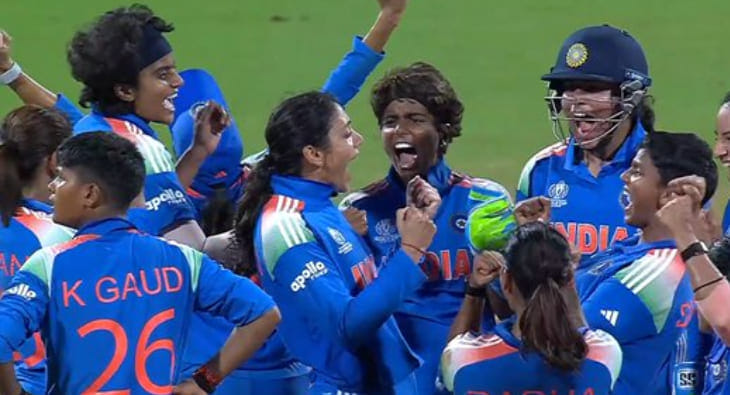

The ICC Women’s Cricket World Cup 2025 delivered an unprecedented advertising boom, setting new records across sectors, categories and brands.
According to TAM Commercial Advertising Report on ICC Women World Cup 2025, the number of TV channels carrying the tournament doubled from ten in 2022 to twenty in 2025 and the expanded visibility translated into a surge in ad durations across every stage of the competition.
The overall average ad volume per match nearly tripled in 2025 compared to the 2022 World Cup, underscoring the scale at which brands aligned with the tournament.
Matches featuring the Indian team saw ad volumes shoot up more than three times, while matches between non-India teams grew a strong fifty seven percent. Even on a per channel per match basis, the 2025 edition maintained heavy momentum with a twenty eight percent jump over the previous cycle.
Read On: After historic victory, women cricketers are batting for brands
It said that the growth was visible not just in volume but also in the diversity of advertisers. The count of categories rose from 14 to 36. Advertisers increased from 12 to 30 and brands from 19 to 54. This expansion demonstrates that the tournament evolved from being a niche advertising destination to one attracting mainstream and high value categories.
Semifinals in 2025 recorded an 8.6 times leap in ad volumes when compared to 2022, while league matches grew 77%. The final between India and South Africa produced the most dramatic spike, posting a record breaking 23.5 times increase over the 2022 final.
Sectoral contributions also shifted significantly. In 2025 the top five sectors accounted for 90% of total ad volume, only slightly lower than the 94% commanded in 2022.
Three sectors remained common across both editions: services, personal care and hygiene, and food and beverages. However, the dominance of fuel and petroleum brands in 2025 was unmistakable as the sector alone contributed 47% of all ad volumes, replacing services as the top contributor. Services followed with 28% while banking, food and beverages and personal care rounded off the top five.
Only one ecommerce category featured in the top five of 2025 compared to three in 2022.
Corporate petroleum products led the list with a massive 47% share followed by ecommerce wallets with 22%. Banking services and products, other professional services and smartphones collectively contributed smaller shares. This was a clear departure from the 2022 leaderboard which was dominated by deodorants, ecommerce education, ecommerce services, cars and ecommerce gaming.
Read On: World Cup win: Will brands finally write the cheque for women's cricket?
Advertising at the brand and advertiser level showed consolidation as well. In both editions the top five advertisers together accounted for more than 80% of total ad volume. Google was the only advertiser common to both years. Saudi Arabian Oil Company emerged as the biggest advertiser in 2025 with a 47% share, followed by Google at 22% and SBI, the International Gemological Institute and Samsung India in lower proportions. The brand leaderboard reflected similar dominance with Aramco contributing 47% percent of all advertising, followed by Google Pay at 22%.
SBI, IGI and Rexona made up the rest of the top five. By contrast 2022 was led by Google Search Engine, Fogg, Hyundai SUV, Fairplay and Cadbury Dairy Milk.
The Women’s World Cup 2025 did not merely improve on past advertising benchmarks but reset them entirely.
With steep increases across sectors, categories, advertisers and brands the tournament established the biggest commercial footprint in the history of women’s cricket on Indian television and signalled a new era of brand confidence in the women’s game.
The data by TAM is based on the analysis of commercial advertising during 31 live matches each from the 2022 and 2025 editions. The study excludes promos, fillers, and broadcaster content to capture only pure commercial advertising.
Read more news about Television Media, Digital Media, Advertising India, Marketing News, PR and Corporate Communication News
For more updates, be socially connected with us onInstagram, LinkedIn, Twitter, Facebook YouTube & Google News