The Creative Question: Ganesh Pareek of 1st December Films on ROI-backed storytelling
Ganesh Pareek, Executive Producer and Partner, 1st December Films, shares insights on how ROI-backed storytelling opens doors for more creative output
 by
by
Published: Nov 14, 2025 8:39 AM | 8 min read
 Follow Us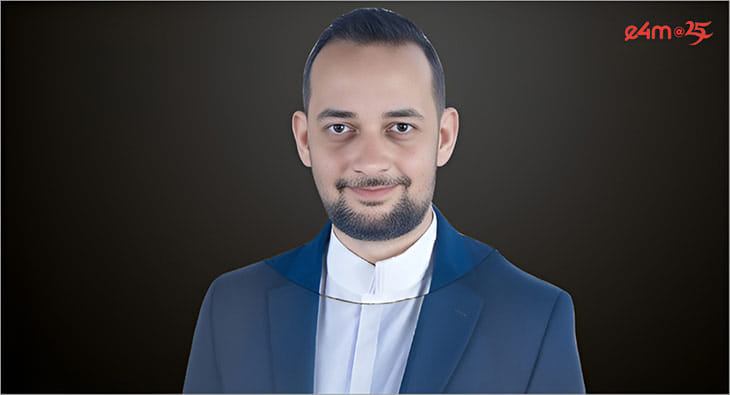

In a content economy moving at algorithmic speed, creative filmmakers face a paradox: deliver work instantly, yet make it feel timeless. Production timelines keep shrinking, briefs keep expanding with data, and every choice, from casting to camera movement, is examined under the microscope of ROI.
So where does creative instinct fit in a world obsessed with measurable output?
Ganesh Pareek, Executive Producer and Partner at First December Films, believes the answer lies not in rejecting the data, but in owning the process around it.
Read On: Predictive analytics changing ROI definitions. Are Indian brands ready?
Balancing Speed and Storytelling
The industry today moves at a breakneck pace, from festive-season drops to trending topicality, leaving little room for contemplation. For production houses, speed can easily become the enemy of craft.
But Pareek sees process, not pressure, as the deciding factor. “If time is an issue, we take ownership of time. If clarity is missing, we take ownership of clarity,” he says. “Everyone in the team knows their role, tone, and frame. That’s how we move faster without losing depth.
At FDF, efficiency comes from what he calls a “precision exercise.” Ownership, he explains, doesn’t mean micromanaging; it means each person knows exactly what their creative responsibility is. “When we have to shoot and deliver in eight days, preset systems and shared ownership keep the quality intact,” he adds.
The result is not just speed but structure, a system that lets creativity breathe, not suffocate.
ROI: Restriction or Refinement?
The question that haunts every creative briefing today: has the “ROI lens” strangled the creative soul of storytelling?
For Pareek, data isn’t the villain. It’s a mirror, if used wisely. “I see ROI as an advantage. It’s just another vantage point,” he explains. “If data shows people are rewatching something at five seconds, that’s proof. Use it. But storytelling must come first.”
He likens data to having a soldier’s view on a battlefield, “a new perspective, not a command.” His approach begins with instinct and narrative rhythm; data then refines, not dictates, those decisions.
“If someone tells you, you’re fit but have belly fat,” he laughs, “you take that feedback, fix it, and become better. That’s how I see ROI, a fact-based input that improves storytelling.” The real danger, he warns, is when data starts leading the creative conversation. “Good data can’t replace good discipline. Storytelling is conviction first, correction later.”
Read On: LOL is the new ROI: How brands are hiring fictional employees to break the internet
The Influencer Invasion
From digital-first brands to traditional giants, influencer casting has become the default brief. Creators are replacing actors, and follower counts often trump auditions.
Does that dilute performance or democratise creativity?
Pareek has worked with both, from emerging creators to Bollywood names, and has seen the shift firsthand. “A good creative piece by anyone has more value than the follower count,” he asserts. “Creators bring truth and spontaneity. You don’t direct them much, you bring them, and you shoot them well.”
But he’s also clear about the difference between relatability and depth. “Actors bring transformative emotion, a pause, a silence, a certain stillness you can’t fake. But if you want quick access to audience connect, influencers offer that speed.”
Interestingly, he finds working with influencers creatively liberating: “I feel less pressure. They bring life, rawness, and relatability. But when a celebrity becomes self-aware of their image, that’s when magic happens.”
AI: The new collaborator or creative crutch?
From pre-visualisation to voice cloning, AI has reshaped the filmmaking workflow faster than anyone anticipated. The question is no longer if production houses use AI, but how much. “There’s always an AI assistant on our calls, recording, transcribing, even suggesting things,” Pareek says matter-of-factly. “But it should never think for us. The risk of sameness is real. Everyone using the same prompts means everything starts looking like a Midjourney image.”
He sees AI as an enabler of precision, reducing waste, improving pre-visualisation, and speeding up iterations. “Earlier, we’d have to travel for recces to visualise a pitch. Now AI helps us prototype faster. But the instinct must still come from the human eye.”
For animation and VFX, he sees even bigger promise. “Prompt culture is enabling craftsmen,” he says. “I’m seeing people create self-expressive work that wouldn’t exist before. If you own both the craft and the technology, you won’t lose your job, you’ll create more.”
AI, in his eyes, doesn’t replace hand and mind. It only amplifies them. “Human instinct can’t be coded,” he says simply.
Read On: Why true creator ROI takes a year to show up
The Echo Chamber Problem
AI’s rise also amplifies another unseen crisis, algorithmic manipulation. As content becomes more data-trained, creators risk feeding biases and echo chambers.
Pareek, however, insists on personal agency. “I trust people’s intelligence,” he says. “If my feed is negative, I can reset it. I’ve done it, followed thinkers, commented positively, and the algorithm changed. We can educate people to use tech as a tool, not let it use them.”
For him, the problem isn’t artificial intelligence, it’s artificial awareness. “People aren’t dumb; we just stop letting them think. Leadership must allow others to think freely - that’s how creativity thrives.”
The Rise of Regional Storytelling
With ‘South-first’ campaigns and vernacular storytelling dominating India’s ad landscape, cultural nuance is the new universal language. From Mohanlal-fronted jewellery ads to hyperlocal humour on digital platforms, regional identity has become a brand differentiator.
Pareek sees this as evolution, not trend. “Language is identity,” he says. “You can’t just translate tone, you must live it. We bring local writers, directors, and voice artists for each language. For a Malayalam film, we worked with a Malayali director; for a Bengali spot, we got a political commentator to do the VO.”
The effort is not always perfect, he admits, but the process matters. “Sometimes we failed to convince clients why something needed that tonality. But every attempt made us more sensitive. Authenticity can’t be faked in translation.”
Low Budgets, High Discipline
Another reality biting at the creative industry is the steady shrinking of production budgets. But where some see limitation, Pareek sees focus. “Constraint brings innovation,” he says. “Every frame must earn its place emotionally, not financially.”
He recalls an internal workshop he held on environment and ethics, teaching his team how to cut waste without cutting quality. “We shot three films on one set by just changing the wall colour,” he smiles. “We stopped using the term ‘money shot.’ Discipline gives you freedom. Structure makes space for creativity.”
For him, lean budgets don’t reduce scale, they test sincerity. “The audience should never feel you suffered. They should only see a great film.”
Read On: Is retargeting cannibalizing brand ROI?
Cannes or Connection?
When asked to choose between a Cannes-winning film and one that achieves mass recall, Pareek pauses, and then answers with quiet conviction. “We didn’t come into advertising to win Cannes. Our first Cannes film was an accident, we made it with instinct. The second, about an acid attack survivor, we did pro bono. I used my wedding fund for that shoot,” he recalls. “It won Cannes Gold, yes - but the goal was honesty.”
He sums up his philosophy in one line that echoes his worldview across all topics, data, budgets, AI, and storytelling alike, “An improved person makes an improved film. I chase growth as a human, not a trophy.”
The Creative Equation
At a time when algorithms write headlines, influencers headline films, and budgets write the rules, Ganesh Pareek’s take feels refreshingly human. ROI-backed storytelling, he says, isn’t the death of creativity - it’s the demand for responsibility. “Data is proof, not prophecy,” he says finally. “AI is assistance, not authorship. And storytelling, when led by instinct, will always find its ROI.”
Read more news about Internet Advertising India, Marketing News, PR and Corporate Communication News, Digital Media News, Television Media News
For more updates, be socially connected with us onInstagram, LinkedIn, Twitter, Facebook YouTube & Google News