Uorfi Javed Birthday: How she turned viral fashion moments into brand equity
On Uorfi Javed’s birthday, a look at how she turned unconventional fashion and public attention into brand equity, challenging the traditional rules of celebrity endorsements
 by
by
Published: Oct 15, 2026 8:59 AM | 3 min read
 Follow Us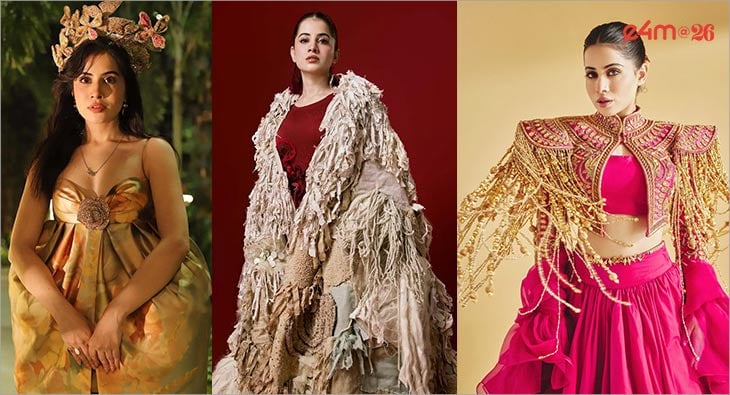

- Uorfi Javed, a 29-year-old creator and entrepreneur, has transformed modern Indian celebrity advertising by leveraging viral marketing and social media engagement, marking a significant shift from traditional Bollywood endorsements.
- After her exit from Bigg Boss OTT in 2021, she utilized unconventional fashion choices and public appearances to generate organic engagement, attracting attention from brands seeking innovative advertising strategies.
- Javed's collaborations with brands like Zomato and The Health Factory exemplify her ability to create impactful marketing campaigns that resonate with digitally engaged consumers across various demographics.
- Her close relationship with paparazzi and candid public interactions have redefined celebrity engagement, while her success in high fashion signifies her acceptance in the industry, challenging the norms of traditional marketing.
When the history of modern Indian celebrity advertising is written, Uorfi Javed will not be relegated to a footnote of internet eccentricities; she will merit an entire chapter on viral distribution economics.
On her birthday, as the 29-year-old creator-turned-entrepreneur marks another year in the spotlight of Mumbai’s paparazzi, her journey offers valuable lessons in modern marketing. In less than four years, Javed has dismantled the traditional gatekeeping of Bollywood endorsements, converting public outrage into prime-time streaming deals and high-engagement brand equity.
For decades, the Indian celebrity endorsement apparatus ran on aspirational distance. Stars appeared aloof on glossy hoardings, packaged meticulously by legacy talent management firms. Uorfi inverted the formula. Following an early exit from Bigg Boss OTT in 2021, when top-tier designer showrooms reportedly refused to dress a former television actor without a film pedigree, she weaponised what the industry denied her: access.
Read On: Marketing it right: What’s Zomato got to do with restaurant denying entry to Uorfi Javed
She turned Bandra pavements into runway strips and everyday hardware, including razor blades, SIM cards, bicycle chains and glass shards, into high-visibility couture.
View this post on Instagram
To the casual observer, it was cheap tabloid bait. To media planners, it was algorithmic alchemy. In an era when brands burn crores on user-acquisition campaigns to capture a three-second thumb-stop on Instagram, Uorfi manufactured instant engagement organically. Every visual appearance generated impressions, polarising debates and comments, data signals that social algorithms prioritise over sterile, airbrushed lifestyle posts.
It did not take long for consumer brands to recognise the commercial utility of what marketing executives term friction-led advertising. When Zomato staged a viral stunt featuring Uorfi wrapped in delivery tape outside a venue, the shock value translated into brand recall.
View this post on Instagram
When D2C challenger brand The Health Factory tapped her for its Zero Maida Bread campaign, #BreadBadloAadatNahi, Uorfi appeared wrapped in bread packaging, a visual pun that delivered earned-media reach that traditional television commercials rarely achieve.
Similar brand integrations followed with e-commerce giant Meesho, Ajio and quick-service restaurant chain Chinese Wok, each betting on her connection with digitally engaged consumers across metropolitan and smaller cities.
View this post on Instagram
Central to her strategy is her close relationship with Mumbai’s paparazzi. While many mainstream actors maintain a carefully managed distance from the media, Uorfi has treated paparazzi crews as a direct channel to her audience. Her daily street-side interactions have become a form of public engagement: unfiltered, self-deprecating and conversational.
View this post on Instagram
The ultimate validation, however, was cultural. The creator who was once ostracised by haute couture breached high fashion on her own terms. Couturiers Abu Jani and Sandeep Khosla dressed her in handcrafted silks; designer duo Rimple & Harpreet signed her for bridal campaigns; and Amazon Prime Video greenlit her unscripted docu-series, Follow Kar Lo Yaar. The show pulled back the curtain on the enterprise behind the persona: an acute awareness of monetisation, the financial anxieties of an outsider and the deliberate choreography required to keep a digital audience transfixed.
In an attention economy marked by diminishing returns, Uorfi Javed highlights a fundamental rule of modern marketing: brand irrelevance can be far more damaging than bad publicity. As she enters another year, the question is no longer whether brands will work with her, but whether traditional marketing can afford to look away.
Read more news about Digital Media, Television Media, Out of Home Advertising, Print Media, Latest Advertising India
For more updates, be socially connected with us onInstagram, LinkedIn, Twitter, Facebook, YouTube & Google News
