Hindi journalism in a changing era: Rahul Mahajan, BCCL
Rahul Mahajan, Head of Corporate Affairs at Bennett Coleman & Co. Ltd., discusses how the digital age has transformed the news ecosystem
 by
by
Published: May 30, 2026 10:10 AM | 3 min read
 Follow Us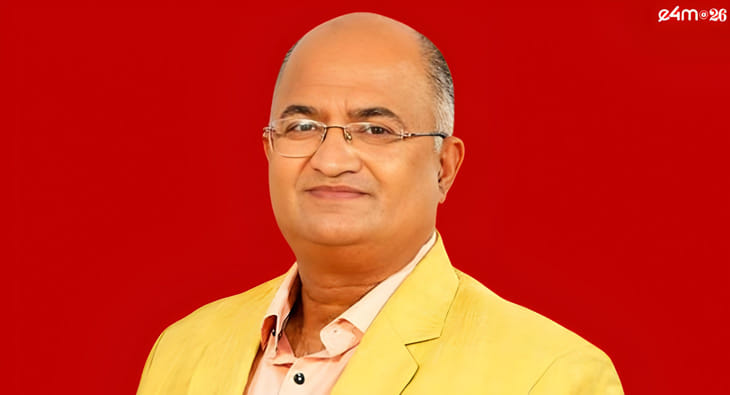

- The evolution of Hindi journalism has shifted from being a voice of public interest to facing challenges from technology, market pressures, and political influences, impacting its credibility and impartiality.
- The rise of digital platforms and social media has accelerated the spread of misinformation, leading to a decline in trust among audiences regarding news accuracy and reliability.
- Financial pressures on media organizations have resulted in cost-cutting measures, reduced staff, and a focus on quick, attention-grabbing content, diminishing the quality of in-depth reporting, especially on rural and marginalized issues.
- Despite these challenges, the growth of Hindi-speaking digital audiences and independent journalism initiatives offers potential for revitalizing serious and fact-based reporting in the future.
The history of Hindi journalism has long been closely linked to India’s social and political consciousness. It was once widely seen as a voice of public interest. Newspapers did more than report events - they sparked debate, questioned authority and brought people’s concerns to the forefront.
Today, that picture has changed significantly. Technology, market forces and political pressures have reshaped the nature of journalism.
The digital age has transformed the news ecosystem. Information now flows at such speed that audiences expect constant updates on their mobile phones. Social media, YouTube and digital platforms have created a strong challenge to traditional media. Where news once underwent verification and fact-checking before publication, there is now intense pressure to break stories first. In this race, incomplete or inaccurate information often reaches the public.
Fake news has become one of the biggest challenges facing journalism today. Misinformation and rumours spread rapidly on social media, often overtaking verified facts. This has had a clear impact on media credibility, with audiences increasingly unsure about what to trust.
There has also been a notable shift in journalistic practice. Journalism was once regarded as the fourth pillar of democracy, responsible for holding power to account and amplifying public voices. However, there is now a growing perception that sections of the media avoid uncomfortable questions for those in power. Many journalists and media organisations are seen as aligning with political ideologies, raising concerns about impartiality.
As a result, audiences often judge news outlets based on their perceived political leanings. Public debates are increasingly driven by noise and allegations rather than facts. This shift is affecting democratic discourse, as attention moves away from public interest issues towards political polarisation.
At the same time, media organisations are facing growing financial pressure. Print media revenues, once heavily dependent on advertising, have been hit as a significant share of advertising has shifted to digital platforms. Many organisations are now forced to operate with tighter budgets.
Cost-cutting measures are clearly visible in newsrooms. Staff numbers are being reduced, smaller city bureaux are shutting down, and journalists are expected to take on multiple roles. Reporting, video production, editing and social media management are now often handled by the same individual. This has increased workload pressure and reduced the depth of coverage.
Investigative and ground-level reporting has been particularly affected. Stories from rural areas, farmers, workers and small towns are receiving less attention, as such reporting requires more time and resources. Instead, there is a growing focus on quick, attention-grabbing content designed to generate clicks.
Despite these challenges, the prospects for Hindi journalism are not diminishing. The number of Hindi-speaking readers and digital audiences continues to grow. Improved internet access in smaller towns and rural areas has created new readerships. Independent digital platforms and alternative journalism initiatives are also emerging, attempting to produce more serious and fact-based reporting.
The core purpose of journalism remains unchanged: to provide accurate and balanced information to the public. In today’s environment of rapid technological change and market pressure, the greatest challenge is how journalism can preserve its credibility and independence.
If the media can rise above political divisions, commercial pressures and power structures to keep public interest at its centre, its democratic role will remain intact.
(This article reflects the personal views of the author)
Read more news about Digital Media, Television Media, Out of Home Advertising, Print Media, Latest Advertising India
For more updates, be socially connected with us onInstagram, LinkedIn, Twitter, Facebook, YouTube & Google News