Hindi journalism in the digital era: Challenges and opportunities - Shamsher Singh
Shamsher Singh, Managing Editor of Times Network, explains how Hindi journalism is shifting from traditional formats to a more digital-first approach
 by
by
Published: May 30, 2026 10:15 AM | 3 min read
 Follow Us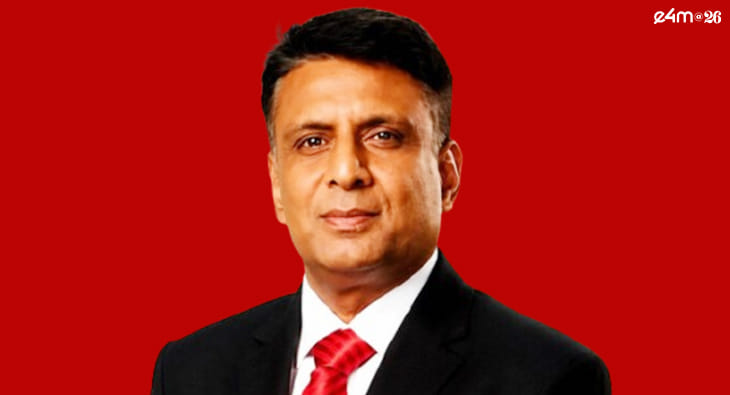

- Hindi journalism is at a pivotal moment, facing challenges and opportunities due to evolving language and reader expectations, transitioning from print to digital formats and real-time reporting.
- The shift to digital platforms has made journalism faster and more accessible, but it also raises concerns about maintaining trust and credibility amidst competition for audience engagement.
- Younger audiences prefer simpler, impactful communication, prompting a move away from traditional styles towards more digital-centric content, with a focus on mobile-first and hyperlocal reporting.
- The future of Hindi journalism is expected to thrive in smaller cities beyond traditional hubs, with success dependent on adapting to technological changes and audience needs while prioritizing integrity and accuracy.
Hindi journalism today stands at a turning point where it faces both significant challenges and unprecedented opportunities. The language itself is evolving, as are the expectations and behaviour of readers and viewers. Journalism was once seen as a mission, then became a profession, and has now entered the era of real-time reporting. Hindi Journalism Day is, in many ways, an occasion for reflection - to consider how the credibility and essence of journalism can be preserved amid the rush of breaking news, digital competition and constant information overload.
Hindi journalism has moved far beyond print. It now exists on mobile screens, social media platforms and even in AI-driven newsrooms. News is no longer confined to newspapers or television screens; it reaches audiences in the form of reels, short videos, podcasts, live streams and notifications at every moment. This shift has made journalism faster, more dynamic and more accessible, but it has also brought with it several serious challenges.
Today, news is not just about delivering information; it is also about reaching larger audiences quickly and effectively. Journalism has become a multi-skill profession, where reporters are expected not only to write but also to understand video production, digital editing and social media. Amid all these changes, the biggest challenge remains maintaining trust.
The language of Hindi used by younger audiences is also changing. People now prefer simple, fast and impactful communication rather than formal or complex language. As a result, Hindi journalism is rapidly moving away from traditional styles towards a more digital form of Hindi content.
In the coming years, the biggest strengths of Hindi journalism are expected to be mobile-first content, hyperlocal reporting, and the growing use of artificial intelligence and automation. Readers today want not only speed but also accuracy and credibility. If Hindi journalism is able to maintain its integrity and impartiality, its influence will continue to grow in the years ahead. However, if the race for TRPs, clicks and sensationalism takes priority, the crisis of trust could deepen further.
The future of Hindi journalism lies strongly in smaller cities. It will no longer remain centred only around Delhi and Mumbai. Cities such as Patna, Lucknow, Indore, Jaipur, Ranchi, Gorakhpur and Dehradun are expected to emerge as new hubs of journalism. Journalists who understand local issues and content rooted in regional sensitivities will play an increasingly important role.
Overall, the future of Hindi journalism appears promising, as the number of Hindi-speaking audiences continues to grow. However, this future will belong only to those institutions and journalists who are able to adapt to rapidly changing technology, digital behaviour and evolving audience expectations in time. The coming era will not be defined merely by news delivery, but by credible, sensitive and impactful communication - with Hindi journalism at its core.
(This article reflects the personal views of the author)
Read more news about Digital Media, Television Media, Out of Home Advertising, Print Media, Latest Advertising India
For more updates, be socially connected with us onInstagram, LinkedIn, Twitter, Facebook, YouTube & Google News