Saurabh Dwivedi’s Indian Express move raises big question: Can Lallantop be done again?
Industry observers note that Lallantop’s success was not just a function of individual leadership, but also of the India Today Group’s strategic vision
 by
by
Published: Jan 22, 2026 4:36 PM | 4 min read
 Follow Us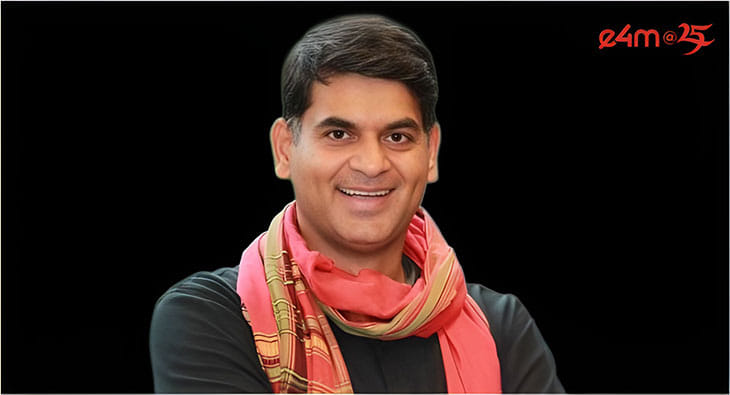

- Senior journalist Saurabh Dwivedi is expected to join The Indian Express Group to lead its Hindi news initiatives after leaving the India Today Group, where he significantly contributed to digital journalism and the success of Lallantop.
- Dwivedi's role at The Indian Express is anticipated to involve overseeing editorial, digital, and broadcast strategies, with a focus on enhancing Hindi content, including video programming and YouTube offerings.
- His transition to The Indian Express presents challenges, as he will need to adapt to a different organizational culture and editorial legacy while maintaining the innovative approach he employed at Lallantop.
- The move is seen as a strategic effort by The Indian Express to engage more effectively with Hindi-speaking audiences, leveraging Dwivedi's experience in building a successful digital-first brand within a legacy media framework.
Senior journalist Saurabh Dwivedi is likely to join The Indian Express Group as part of its strategic expansion into the Hindi news market, following his recent exit from the India Today Group, where he spent close to 12 years building and shaping some of the organisation’s most influential digital journalism initiatives.
While there has been no official confirmation, industry sources suggest Dwivedi is expected to play a pivotal role in shaping The Indian Express Group’s Hindi editorial and digital ambitions. The larger question, however, is whether the journalist who helped build Lallantop into a Hindi digital powerhouse, within the ecosystem of a large media conglomerate, can repeat that success in another legacy media institution with a distinct editorial culture.
Dwivedi’s rise is closely intertwined with the India Today Group’s early and sustained investments in digital journalism. He joined the group as Features Editor at AajTak.in at a time when Hindi digital news was still evolving, and went on to set up Lallantop. Backed by the group’s resources, distribution strength and willingness to experiment, Lallantop was incubated as a bold digital-first brand that broke away from traditional television-led news formats.
Under Dwivedi’s leadership, Lallantop emerged as one of India’s most influential digital-first Hindi news platforms. The platform carved out a distinctive identity built on long-form political interviews, nuanced discussions and issue-driven journalism that resonated strongly with younger audiences in the Hindi-speaking belt. Today, Lallantop counts nearly 35 million subscribers on YouTube and recorded over 250 million views in the last month alone, according to publicly available figures, making it one of the most successful Hindi news channels in the country.
Industry observers note that Lallantop’s success was not just a function of individual leadership, but also of the India Today Group’s strategic vision. The group’s willingness to give editorial independence, invest patiently in digital growth and back personality-led journalism allowed Dwivedi and his team to build scale without sacrificing credibility. In many ways, Lallantop became a case study in how legacy media houses can successfully incubate digital-native brands.
According to sources familiar with the current development, Dwivedi is likely to oversee editorial, digital and broadcast initiatives for The Indian Express’s Hindi vertical. His mandate is expected to span video programming, e-paper operations and overall content strategy, with a strong emphasis on scaling Hindi YouTube offerings. Sources also suggest that his role could extend to the group’s events and public engagement initiatives, although the contours of that responsibility are still evolving.
This development would mark a significant moment in The Indian Express’s efforts to deepen its engagement with Hindi-speaking audiences. Known for its investigative depth and analytical rigour in English journalism, the group is now looking to translate that editorial DNA into formats and platforms that appeal to a more digitally native Hindi readership.
Within the media industry, the development has sparked discussion not only because of Dwivedi’s stature, but because of the complexity of the challenge ahead. At Lallantop, he operated in a relatively greenfield digital environment, even as he benefited from the institutional backing of the India Today Group. At The Indian Express, the task will involve navigating a different organisational structure, editorial legacy and pace of decision-making.
Dwivedi’s journalistic style, marked by depth, accessibility and an intuitive understanding of platform behaviour, has earned him wide recognition. However, replicating the Lallantop model will require more than personal brand equity. Balancing editorial autonomy with institutional processes, and experimentation with tradition, will be critical.
For The Indian Express Group, Dwivedi’s possible induction represents a strategic bet on leadership that understands both journalism and digital scale. For Dwivedi, it signals another defining phase, moving from building a successful digital brand within the India Today ecosystem to attempting a similar transformation in a different legacy newsroom. Whether he can recreate, or even reimagine, the Lallantop formula in this new setting is likely to be one of the most closely watched experiments in Hindi digital journalism.
Read more news about Television Media, Digital Media, Advertising India, Marketing News, PR and Corporate Communication News
For more updates, be socially connected with us onInstagram, LinkedIn, Twitter, Facebook YouTube & Google News
