Yeh Naya Bharat Hai: Is it a brand new India, or an India that is a new brand?
Subhrangshu Neogi, former corporate leader turned entrepreneur, shares his thoughts on this Independence Day
 by
by
Published: Aug 15, 2026 11:50 PM | 5 min read
 Follow Us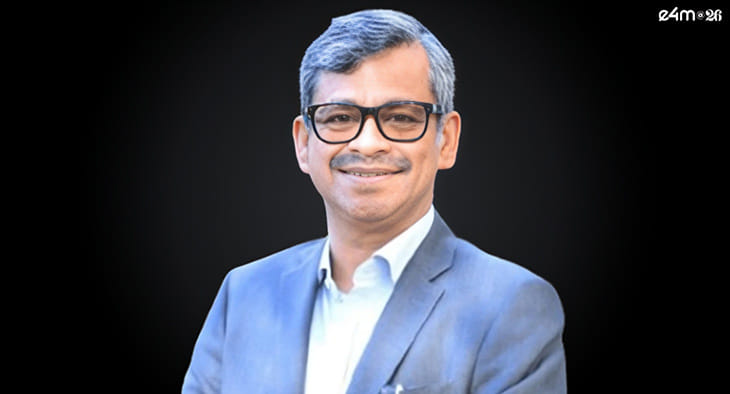

- India is undergoing a significant transformation, being repositioned as a global brand while maintaining its core values of diversity and hospitality.
- The country's economy grew by 7.8% in Q1 2026 and 7.7% for FY26, leading G20 nations in growth, with record merchandise exports and accelerated bank credit growth.
- Projections suggest India could surpass Germany to become the world's third-largest economy by 2028, driven by investments in AI, energy, and manufacturing.
- The brand identity of India is evolving through strong governance, a youthful demographic, and active participation in global conversations, while acknowledging the need for improvements in infrastructure and education.
There's a line from a popular Hindi film — "Yeh Naya Bharat Hai" — that has entered everyday conversation, originally a comment on India's offensive-defence posture. It captures something larger: the country is being repositioned, deliberately and visibly, as a brand. The real question isn't whether India has changed. It's whether this is a brand new India, or India becoming a new brand.
The Scale Behind the Story
The numbers make the case as powerfully as the narrative does. India's economy grew 7.8 percent in the January-March quarter of 2026 and 7.7 percent for the full FY26 year, the strongest full-year reading in three years, holding the highest growth rate among G20 economies through a stretch that included US tariff pressure and an energy price shock.
Merchandise exports touched a record $129.6 billion in the first quarter of FY27 alone. Bank credit growth has accelerated past 17 percent, and government capital expenditure at the centre grew nearly 24 percent year-on-year in the same quarter — a sign that both public and private engines are firing together, not one propping up the other. Morgan Stanley has projected India overtaking Germany to become the world's third-largest economy by 2028; other estimates place the milestone in the early 2030s, powered by a structural capital-spending cycle across AI infrastructure, energy, defence, and manufacturing onshoring.
Conviction from global capital has followed the growth: Goldman Sachs has put roughly $500 million into building out its India banking franchise over the past three years, with its India country head telling the firm's own board that India should no longer be treated as a future growth story, but as one already underway. That's not a narrative dressed up in economic language — it's a market whose weight in the global system is compounding in real time.
The Core That Doesn't Move
Every strong brand has a philosophy that stays constant even as its expression evolves. For India, that core is diversity, a deep-rooted ethic of hospitality, and a civilisational habit of assimilating cultures into one confluence of thought. What has changed is everything built on top of it — governance, private enterprise, geopolitical posture, and the ambition of a young population.
Context, Competition, Customer
Winning brands, country brands included, keep their eye on three things: context (the socio-cultural environment they operate in), competition (the peer set they're benchmarked against), and customer (the stakeholders being spoken to — citizens, diaspora, global media, international institutions, other nations). India is leading on all three, backed by a strong demographic dividend, definitive governance, and a distinct national mindset.
What's Driving the Repositioning
India today leads or is fast becoming central to several global conversations: defence and space technology, AI, GCC hubs, startups, sport (cricket foremost), tourism, and an increasingly strong passport. A young, digitally native Gen Z and millennial base drives consumption and enterprise. Talent's direction has reversed — where the ambitious once left to build elsewhere, India is increasingly where the action is, by design.
No Brand Is Bulletproof
This isn't a political argument. Every brand — and country — has gaps alongside its gains. India's infrastructure and technology are world-class in parts; other areas need work, and that isn't the government's job alone. It starts with education — values and self-discipline built early, at home and school. Government can enable civic discipline; individuals sustain it.
The Brand Mesh
A brand strengthens through a porous mesh — people, process, technology — that lets new ideas in while it grows organically. People means governance, aided by over a decade of political stability. Process means the regulatory frameworks that set the rules. Technology is the quiet force behind UPI, ubiquitous QR payments, and India's status as WhatsApp's largest market, accelerating agriculture, healthcare, and finance. Much like Dabur — built on Ayurveda, now a professionally managed, diversified enterprise without losing its core — India is leapfrogging into a wider portfolio while its roots stay intact.
The LEAD Doctrine
If India's tone of voice as a brand had to be distilled, it would spell LEAD: Loud — confident and visible. Emphatic and energetic in execution, across business, technology, sport, and culture. Articulate — carrying a distinct, unapologetic point of view onto the world stage. Definitive — following through on what we set out to do, without hedging. This is a brand that has stopped asking for a seat at the table and started setting it. India today is not a pushover, and does not intend to become one.
Ours to Build, Together
No brand builds itself top-down. Leave it entirely to governance and political parties, and little changes. This starts at the individual level — homes, schools, companies — and scales upward. Less cribbing, more ownership. Our identity as Indians is something to take pride in and actively strengthen, not outsource to policy alone.
Eighty Years, and the Next Twenty
As India marks its eightieth Independence Day, the road to a century of freedom is the horizon that matters. The tricolour flying from homes that never used to display it, and a diaspora that carries Indianness with pride while anchoring belief back home, are signs of a brand gaining self-esteem alongside stature. The next two decades will define whether Naya Bharat becomes the world's most powerful country brand — and every signal today points to a nation marching from strength to strength, confident, optimistic, and unmistakably its own.
Proud to be an Indian, Jai Hind!
Read more news about Digital Media, Television Media, Out of Home Advertising, Print Media, Latest Advertising India
For more updates, be socially connected with us onInstagram, LinkedIn, Twitter, Facebook, YouTube & Google News
