The force of a billion dreams: How India’s people built Brand India
Vikkramm Chandirramani, astrologer, psychic and Founder of Futurescopes, writes how Brand India is evolving into a confident, youth-driven global identity
 by
by
Published: Aug 15, 2026 11:05 AM | 3 min read
 Follow Us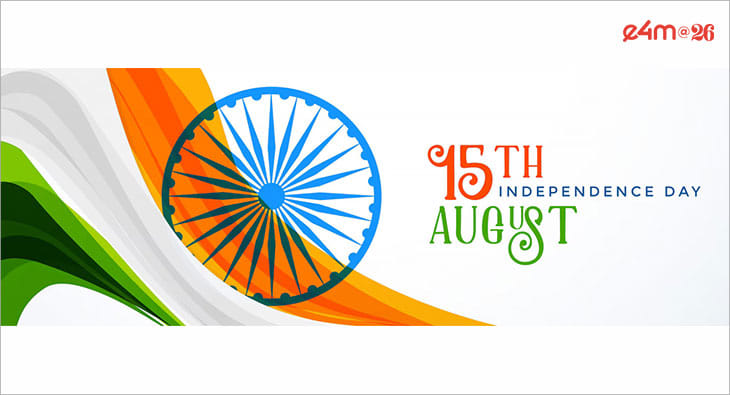

- India commemorates its 79th Independence Day on August 15, reflecting on its evolution from a fractured economy and low literacy in 1947 to a confident, diverse democracy with a strong national identity known as "Brand India."
- The narrative surrounding Brand India has shifted from defensive postures to a more assertive representation, showcasing its digital infrastructure, cultural exports like Bollywood and cuisine, and the aspirations of its youthful population.
- Social media plays a crucial role in shaping Brand India, allowing young Indians to share their personal stories and achievements, while also presenting challenges such as polarization and misinformation.
- As India enters its eighth decade of independence, the focus for future narratives will be on responsible leadership and authenticity, moving beyond simplistic representations to embrace the country's complexities and ongoing development.
On 15 August the tricolour rises again. Seventy-nine years after the midnight tryst with destiny, India does not merely commemorate freedom. It stages the longest-running brand campaign in modern history. Brand India is not a logo or a slogan. It is the living, contradictory and confident identity of a civilisation that chose democracy, diversity and aspiration as its operating system. For brand and advertising professionals, Independence Day offers a rare audit of how the national brand is performing and where the next chapter of storytelling must begin.
In 1947 India inherited a fractured economy, low literacy and the trauma of Partition. The early narrative was defensive: non-alignment, self-reliance and the moral authority of the freedom struggle. That restraint has given way to a more assertive vocabulary. Today Brand India is projected through digital public infrastructure, the soft power of yoga, Ayurveda and cuisine, space and defence capabilities, and the cultural fluency of its diaspora. Bollywood, cricket and Indian enterprise no longer need translation. They are ambient.
What gives this brand its kinetic energy is the country’s extraordinary youth. India is one of the youngest large nations on the planet. Its people are deeply aspirational. Across villages and small towns, students travel hours on crowded buses, study under streetlights, sit for competitive examinations against steep odds, agitate for better conditions, and migrate to cities for education that can rewrite their family’s trajectory. This stubborn pursuit of learning is the engine. Aspiration here is daily endurance converted into progress. When advertising captures this spirit honestly, it taps into a collective emotional truth the world is beginning to recognise.
Social media has accelerated and complicated this narrative. Platforms have turned every smartphone into a broadcast studio. Young Indians document their journeys, failures and victories in real time - a student cracking a national examination, a first-generation entrepreneur launching a product, a regional song finding global listeners. These moments travel faster than any official campaign. Brand India is co-authored daily by millions of voices. Authenticity has become the new currency, and the most effective advertising now feels like participation in an ongoing national conversation.
Yet the same platforms also magnify friction. Polarisation, misinformation and the pressure to perform identity create new risks. The brand must now navigate a fragmented attention economy. For creative professionals the opportunity lies in crafting work resilient enough to travel across platforms and human enough to survive sophisticated scrutiny.
Brand India’s greatest strength is its complexity. No single story can contain 1.4 billion people across languages and development paths. The temptation is to oversimplify it into pretty tourism images or pure tech success stories. Stronger work resists that urge and treats the country’s contradictions as its genuine character. Independence Day itself shows this: formal ceremonies in the capital coexist with chaotic, heartfelt celebrations in schools, societies and workplaces nationwide. The brand is enriched by these parallel performances.
As India moves deeper into its eighth decade of independence, the next narrative must shift from celebration of arrival to responsible leadership. The young, aspirational population that braves difficult circumstances for education is already writing its own answers every day on social media and beyond. The most compelling campaigns of the coming decade will not wave the flag louder. They will treat the flag as a living brief - complex, unfinished and still capable of surprising the world. India is no longer the land of snake charmers and elephants. It is a nation of restless, determined people rewriting their story in real time.
Read more news about Digital Media, Television Media, Out of Home Advertising, Print Media, Latest Advertising India
For more updates, be socially connected with us onInstagram, LinkedIn, Twitter, Facebook, YouTube & Google News
