New India does not need explaining
Arnab Mitra, Founder and Managing Director, Liqvd Asia, writes why advertising is still arguing a case the country has already won
 by
by
Published: Aug 15, 2026 8:08 PM | 4 min read
 Follow Us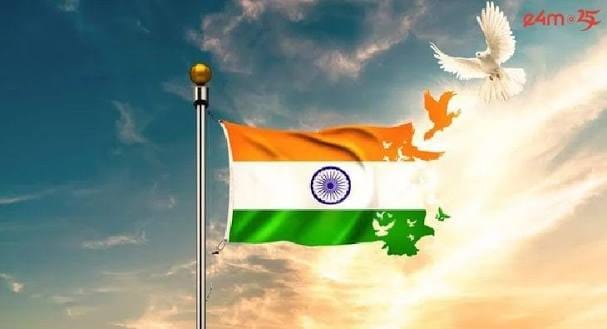

- Indian advertising continues to rely on traditional patriotic imagery and themes, which may not resonate with today's younger consumers who have no memory of past struggles or scarcity.
- The current generation of consumers, accustomed to modern conveniences and global influences, finds outdated advertising approaches to be irrelevant and unpatriotic.
- The article argues that advertising should evolve to reflect the competence and achievements of modern India, rather than relying on clichéd symbols of nationhood.
- Brands are encouraged to communicate authentically and meaningfully, acknowledging their genuine stake in the country, rather than using Independence Day as a mere marketing opportunity.
Every August, Indian advertising reaches for the same shelf. A flag. A soldier. A grandmother at a window. A child running in slow motion through a field while strings swell. It is a grammar we inherited, and we have used it for thirty years without once asking whether the country it describes still exists.
It does not.
That grammar was built for a nation that was still making its case. In the nineties we advertised India the way an applicant advertises himself. We were earnest. We were a little defensive. We reached constantly for sacrifice and struggle, because struggle was the proof we had. Every film ended with a promise about what India would one day become.
The consumer sitting in front of that film today is twenty-four years old. She has no memory of scarcity. She has never waited for a telephone connection or queued for anything her parents queued for. She pays by phone, watches Korean drama with Hindi subtitles, and expects the same delivery speed from a brand in Guwahati as one in Manhattan. She does not need to be told the country is rising. She has never known it any other way. When a brand explains India to her, it does not sound patriotic. It sounds dated.
This is the real shift, and most marketing has not absorbed it. New India is not aspirational. It is matter-of-fact. The confidence is no longer something to be declared, because it has stopped being in question. And confidence, when it is genuine, is quiet. It does not need an anthem underneath it.
Look at where Brand India is actually being built. It is being built in the fact that our payments rails are studied abroad rather than copied from abroad. In the fact that a Malayalam film now opens in fifty countries without apology or dubbing into anything. In Indian companies buying assets in the markets that once sold to us. None of that was created by an August campaign. It was created by competence, and it travels on its own.
Which raises the harder question for our industry. If the country has moved on, why has the advertising not?
Partly because the old format is safe. Nobody was ever fired for a film with a flag in it. Partly because it is easy. Nationhood is the one shortcut to emotion that requires no insight into the actual brand. And partly because we keep confusing volume with meaning. Fifteen brands arrive at the same idea in the same week, and the collective effect is not fifteen tributes. It is noise, and it flattens the moment for everybody.
There is also a structural problem we should say out loud. One Hindi film is a strange way to speak to a country of twenty-two official languages and a thousand functional cultures. That was a limitation of production economics, not a creative choice. It is no longer a limitation. What a single national film cost five years ago now buys forty pieces of language-specific, region-specific work. For an idea as plural as India, forty is closer to the truth than one has ever been.
So what should a brand do tomorrow?
Earn the moment or skip it. If the brand has a genuine stake in the country - it employs at scale, it builds here, it moved something forward - then say that plainly and without an orchestra. If it does not, silence is more respectful than a borrowed sentiment, and audiences can tell the difference faster than any research panel can measure it.
Independence Day is not a media property. It is not a slot in the festive calendar between the monsoon sale and Diwali. It is one of the few days a year when a country agrees to feel something together. Brands are welcome in that room. But they should walk in with something to say, not something to sell.
The best tribute this industry could pay to New India is to stop telling it what it already knows.
Arnab Mitra is Founder and Managing Director of Liqvd Asia. Views are personal.
Read more news about Internet Advertising India, Marketing News, PR and Corporate Communication News, Digital Media News, Television Media News
For more updates, be socially connected with us onInstagram, LinkedIn, Twitter, Facebook YouTube & Google News
