The creator economy's next disruption: AI influencers, AI studios & AI commerce
Appeal for brands is straightforward. Unlike human creators, AI influencers do not require travel schedules, photoshoots, availability conflicts or reputation management for personal controversies
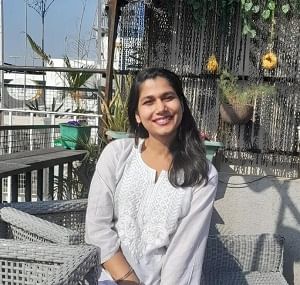 by
by
Published: Jun 3, 2026 9:15 AM | 10 min read
 Follow Us

- Vrutika Patel, an AI-generated Instagram influencer, has gained over 100,000 followers and generates an estimated ₹1.17 lakh monthly from subscriptions, showcasing the rise of virtual personalities in India's creator economy.
- The emergence of AI influencers is reshaping marketing strategies, as brands find them more cost-effective and controllable compared to human creators, with projections indicating AI influencers could capture 8-12% of influencer marketing budgets by FY27.
- AI studios are revolutionizing content production, allowing for rapid creation and scaling of digital content, while social media platforms like Meta are enhancing tools for AI-assisted content creation and distribution.
- As AI-generated influencers become more prevalent, regulatory bodies are beginning to establish guidelines for transparency in advertising, emphasizing the need for clear labeling of AI-generated content to maintain consumer trust.
An Instagram creator earning more than ₹1 lakh a month without ever existing might have sounded like science fiction a few years ago. Today, it is becoming a glimpse into the future of the creator economy.
Vrutika Patel, an AI-generated Instagram influencer, has reportedly amassed more than one lakh followers and over 300 paid subscribers. At a subscription price of ₹390 per month, the account is estimated to generate more than ₹1.17 lakh every month from subscriber revenue alone. Her feed is filled with photos like any other lifestyle influencer: photos from beach holidays, café visits, fashion shoots and travel moments. The difference is that none of it is real. Every image, visual, and interaction is generated through artificial intelligence.
Vrutika is not an isolated example. India's creator economy is increasingly witnessing the emergence of virtual personalities designed to behave like influencers, build audiences and attract brand partnerships. What started as a niche experiment is now evolving into a commercial category that is drawing the attention of marketers, agencies, platforms and creators themselves.
The New Influencer Doesn't Need a Camera
India has already witnessed the rise of virtual creators such as Kyra, widely regarded as the country's first virtual influencer. With a social media following of more than 2.5 lakh users, Kyra has collaborated with brands including boAt, American Tourister and Amazon Prime Video, demonstrating that audiences are willing to engage with digital personalities and that brands are willing to invest in them.
Globally, the phenomenon is even more advanced. Lil Miquela, arguably the world's most recognised virtual influencer, has worked with global brands including Prada, Calvin Klein, BMW and Samsung. What was once viewed as a novelty has gradually become a marketing asset.
The appeal for brands is straightforward. Unlike human creators, AI influencers do not require travel schedules, photoshoots, contracts involving availability conflicts or reputation management linked to personal controversies. They can be customised for specific audiences, speak multiple languages, remain active around the clock and evolve according to a brand's requirements.
As a result, brands and agencies are increasingly experimenting with their own digital personalities. Companies across industries have begun creating virtual ambassadors to support product launches, social media campaigns and brand storytelling. The objective is not simply to create another influencer but to build intellectual property that the brand owns and controls.
The trend mirrors the rise of digital brand mascots, but with a critical difference. These characters now behave like creators. They post content, build audiences, engage with followers and participate in cultural conversations much like human influencers.
The Fight for Marketing Budgets Has Started
The rise of AI creators is generating excitement among brands, but it is also creating anxiety within the creator ecosystem.
For years, influencer marketing budgets were largely directed toward human creators. That equation is beginning to change.
According to Zefmo's Influencer Marketing Report, the cost of developing a brand-ready virtual influencer has fallen by approximately 92 percent, from around ₹3.6 crore in 2022 to about ₹26 lakh in 2026. At the same time, AI-generated influencers are projected to capture between 8 and 12 percent of nano and micro-influencer budgets by FY27.
According to the report, India's influencer marketing industry has already crossed ₹10,000 crore in actual brand deployment, nearly three times larger than the formally tracked market size of ₹3,375 crore. The report estimates that India's creator economy, which now includes more than 100 million creators, could reach ₹5.8 lakh crore by 2033.
AI creators are expected to capture a growing share of that spending.
"The mid-tier human creator and the mid-tier AI creator are now competing for the same brand budget. Two years ago, this was a debate. Today it is a procurement decision. By next year, it will be the default option for many brand categories," said Shudeep Majumdar, Co-Founder and CEO of Zefmo.
His observation reflects a broader shift underway in the industry. The conversation is no longer about whether AI creators can influence consumers. The discussion has moved toward cost efficiency, scalability and return on investment.
For many marketers, AI creators offer something traditional influencers cannot: complete control over messaging, availability and content production.
Behind Every AI Influencer Is an AI Studio
The rise of AI influencers is part of a much larger transformation happening behind the scenes.
What enables a virtual creator to exist is not just an image-generation tool but an increasingly sophisticated ecosystem of AI studios capable of producing videos, voices, visual effects, translations and digital environments at scale. The timing coincides with the expansion of India's media and entertainment industry, which was valued at approximately $30 billion in 2024 and is projected to reach $48 billion by 2030. Globally, the AI video market is expected to grow from $3.86 billion in 2024 to more than $42 billion by 2033, while India's animation and VFX industry is projected to reach $2.2 billion by 2026.
Said Amar Kondekar, Head of Brand Services and Business Growth at Jio Creative Labs, "India's ambition to become the world's largest content exporter will not be powered by bigger studios alone. It will be powered by AI-native studios."
"What we are seeing today is a rapid rise of AI studios across agencies, production houses and creator ecosystems that are fundamentally reimagining how content is made. AI is being used across the entire pipeline from idea generation and scripting to visual creation, voice cloning, multilingual localisation and rapid content iteration."
According to Kondekar, the bigger opportunity lies in content scale.
"The real shift is that AI studios are turning India from a content production hub into a content scaling hub," he said.
The shift is already visible.
JioHotstar reportedly released 100 microdramas during IPL across multiple Indian languages, a scale of content production that would have been difficult without AI-assisted workflows.
Similarly, Swiggy Instamart's "Quick India Movement" campaign used AI-generated visual effects to create multiple versions of actor Ajay Devgn in a campaign designed around speed, humour and meme culture.
These campaigns suggest that AI's role in marketing is moving beyond experimentation and into mainstream production.
For content creators, agencies and production houses, AI is steadily becoming part of the production backbone. Tasks that once required large creative teams and months of post-production work can now be completed by significantly smaller teams using AI-assisted workflows.
Platforms Want to Accelerate the Shift
If AI studios provide the infrastructure, social media platforms are providing the distribution layer.
Meta's latest announcements indicate that it sees AI-assisted content creation as central to the future of creator commerce.
The company recently introduced new tools allowing creators to add product links directly into Reels, turning creator content into a shoppable experience. Brands can also share product catalogues directly with creators, making it easier to integrate products into content.
At the same time, Meta is expanding its generative AI capabilities to help creators and advertisers produce content at scale.
The company is testing AI-generated UGC-style videos featuring avatars and voiceovers while expanding AI-powered translation tools that can automatically localise content across languages.
According to Meta, advertisers using its AI video generation tools during beta testing recorded an average 10 percent increase in click-through rates and an 8 percent increase in conversions.
Industry executives believe the implications are significant.
Aaid Ramasish Bhowmik, Co-Founder of Adbuffs, "Meta's GenAI tools are fundamentally changing how we build creatives at scale. What used to take our teams days now happens in hours, and the performance lift we're seeing from AI-generated ad variations is making it clear that GenAI isn't just a convenience, it's becoming the competitive edge in performance marketing."
Meta is also expanding creator discovery and audience matching capabilities within Instagram's Creator Marketplace while strengthening Partnership Ads, a format that allows brands to amplify creator content through paid media.
According to the company, campaigns using Partnership Ads deliver lower acquisition costs, higher click-through rates and stronger brand lift compared with traditional creator collaborations.
According to Vikas Chawla, Co-Founder of Social Beat, "Partnership Ads has moved influencer marketing from a brand-building line item to a broader marketing channel."
The platform's broader direction is clear. AI is no longer being positioned as a standalone tool but as an integrated layer that powers content creation, localisation, distribution and monetisation.
Human Creators Are Fighting Back With AI
Interestingly, the response from human creators has not been resistance. Instead, many are embracing AI themselves.
According to Creator Now, 61 percent of mid-tier creators now use AI tools every week, up from 29 percent in 2024. Creators using AI for strategy reportedly achieve brand pitch turnaround times that are three times faster, while Indian macro creators with highly optimised feeds are securing annual deal values exceeding ₹80 lakh.
Rather than replacing creators, AI is increasingly becoming a business assistant.
Some creators are using tools such as Claude to analyse comments and direct messages at scale, helping them understand audience demand and identify content opportunities. Others use AI to study successful creators in their category, benchmark performance and understand patterns that attract brand partnerships.
Fitness creator Arun Sharma, who operates a home-workout account with approximately 120,000 followers, said AI helped him prepare for his first major brand negotiation.
"I asked it to explain what metrics a sports nutrition brand would prioritise, saves, shares, or follower count, and why. It walked me through the whole logic. I went into that meeting knowing more than the brand manager expected," Sharma said.
The example highlights how AI is changing the creator economy from both sides. While synthetic creators are entering the market, human creators are simultaneously using AI to become more competitive, data-driven and commercially sophisticated.
The Trust Challenge
As AI-generated creators become more realistic, the industry faces an inevitable question: how will consumers know what is real?
Regulators are beginning to respond.
The Advertising Standards Council of India (ASCI) recently released draft guidelines on responsible labelling of AI-generated advertising content.
The proposed framework adopts a risk-based approach that focuses on consumer impact rather than the technology itself.
Under the guidelines, virtual influencers and synthetically generated ambassadors would fall under medium-risk content categories where disclosure is mandatory. Brands would be required to clearly indicate when content has been created or enhanced using AI.
The guidelines also identify high-risk practices, including fabricated endorsements, unauthorised deepfakes and misleading product demonstrations, which would remain prohibited even if labelled.
The move reflects growing recognition that transparency will become increasingly important as AI-generated content becomes indistinguishable from reality.
For the advertising industry, the challenge is no longer whether AI will become part of marketing. It already has.
The challenge is ensuring consumers understand when they are interacting with a human creator, a virtual personality or content that has been generated entirely through artificial intelligence.
From Creator Economy to Synthetic Economy
The emergence of AI influencers represents more than a new marketing trend.
It reflects the convergence of three powerful forces: creator commerce, generative AI and platform monetisation.
Virtual influencers are attracting audiences. Human creators are using AI to become more efficient. AI studios are reshaping content production. Platforms are building tools that make AI-assisted creation easier to distribute and monetise. Regulators are racing to establish guardrails.
Together, these developments suggest the creator economy is entering a new phase.
For years, the industry's biggest question was how creators could make money.
Today, a new question is emerging.
In a world where an influencer can be entirely synthetic, what exactly does being a creator mean?
Read more news about Influence Zone, Marketing, PR and Corporate Communication, Internet Advertising, People Movement
For more updates, be socially connected with us onInstagram, LinkedIn, Twitter, Facebook, YouTube & Google News