While their DNA remains same, legacy brands should evolve their communication: Mayank Shah
At Goafest 2026, Mayank Shah, CMO, Parle Products, spoke to e4m about the Melody buzz, Gen Z consumers, digital media shifts, and reinventing legacy brands for a new generation
 by
by
Published: May 22, 2026 8:31 AM | 5 min read
 Follow Us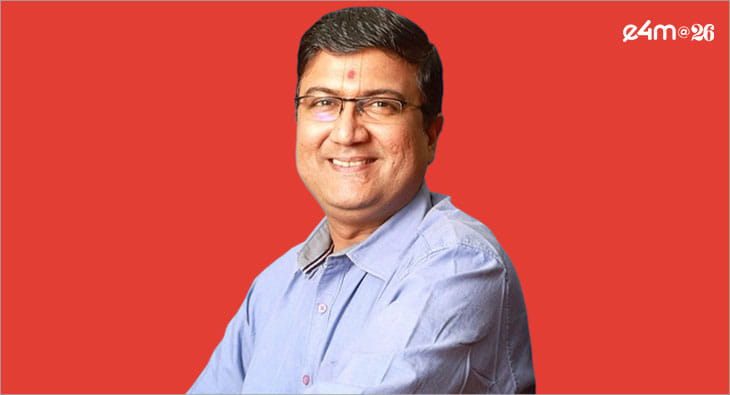

- Indian FMCG brands, particularly Parle Products, are adapting to changing consumer behaviors influenced by digital media, Gen Z, and quick commerce, while maintaining their core identity.
- The recent global attention on Parle's Melody toffee, gifted by Prime Minister Modi to Italy's Prime Minister, has highlighted the potential for Indian brands to gain international visibility.
- Parle's media strategy has shifted significantly, with 35% of advertising spend now on digital platforms, while still relying heavily on television for brand communication.
- The company is focusing on engaging Gen Z consumers and adapting to quick commerce trends, emphasizing the need for brands to evolve their communication and distribution strategies to remain relevant.
As Indian FMCG brands navigate a rapidly changing consumer landscape shaped by digital media, Gen Z audiences and quick commerce, legacy players are being pushed to reinvent themselves without losing their core identity.
Against this backdrop, the recent global attention around Melody after Prime Minister Narendra Modi gifted the iconic Parle toffee to Italian Prime Minister Giorgia Meloni has put a renewed spotlight on homegrown Indian brands and their cultural relevance. In an interaction with exchange4media, Mayank Shah, CMO, Parle Products spoke about the “Melody movement,” Parle’s evolving media strategy, the growing importance of Gen Z consumers, premiumisation, quick commerce and how the company is adapting to new-age consumer behaviour while preserving its legacy.
‘PM Modi Has Given Indian Brands a Global Stage’
Calling the recent attention around Melody a matter of pride for the company, Shah said Parle did not anticipate the scale of conversation the brand would generate after the Prime Minister’s gesture.
“Honestly, we never expected this. But it is a matter of great pride for all of us at Parle,” he said.
Referring to Modi gifting Melody to Italian Prime Minister Giorgia Meloni, Shah said the move reflects the Prime Minister’s larger push towards promoting Indian-made brands globally.
“He loves to promote Swadeshi brands, brands which are made in India. By gifting Melody, he’s making a statement,” Shah said.
According to him, the gesture has opened up a larger opportunity for Indian brands to gain global visibility.
He added, “The Honourable Prime Minister has given Indian brands an opportunity to shine on the global stage.”
Shah further noted that the responsibility now lies with Indian brands to build on this momentum and scale internationally.
Media Mix
Shah revealed that Parle’s media mix has undergone a significant transformation as digital consumption continues to rise across India.
“We used to be a point-in-time, linear TV-heavy company. But today, almost 35% of our spends go towards digital,” he said.
Despite the rapid growth of digital, television continues to remain the company’s largest advertising medium.
“Almost 50% of our spends still go to linear TV, while the balance 15% goes towards print and outdoor,” Shah added.
According to Shah, the shift reflects changing consumer media habits and the growing importance of digital-first engagement for FMCG brands.
Reinventing Legacy Brands for a New Generation
Speaking about how legacy FMCG brands can remain culturally and commercially relevant amid changing consumer behaviour, Shah said continuous reinvention is critical.
He said, “Legacy brands need to understand changing times, changing preferences and consumer behaviour. While your DNA remains the same, the way you communicate has to evolve.”
According to Shah, relatability and cultural fluency have become increasingly important in modern brand communication.
Shah said consumers resonate far more with brands that communicate in their language, dialect and cultural context, adding that brands need to feel like a natural part of consumers’ everyday lives rather than something distant or unfamiliar.
From Value to Premium: Parle’s Multi-Segment Strategy
While affordability continues to remain central for brands like Parle-G, Shah clarified that Parle today operates across multiple price segments.
“Value pricing is important, but only for a section of our brands,” he said.
According to Shah, the company’s portfolio spans nearly 80 brands across value, mid-market, premium and super-premium categories.
“Our portfolio has something for everybody,” he said, citing Parle Platina as part of the company’s premiumisation play.
‘You Need to Catch Them Young’: Why Gen Z Matters
Shah described Gen Z consumers as one of the most influential cohorts for brands today and in the future.
“Today they are already influencing purchases significantly, and tomorrow they will become the largest consumer cohort,” he said.
According to him, brands need to engage younger consumers early and understand their communication patterns and aspirations.
Shah explained, “You need to catch them young. We understand their aspirations and the way they communicate with each other. Those are the pegs we use while building communication.”
Quick Commerce Is Changing FMCG Distribution
On the rise of quick commerce, Shah said the channel has emerged as a major opportunity even for deeply entrenched legacy brands like Parle. “QCom has been a great level playing field for brands and an additional channel for growth.”
However, Shah noted that succeeding on quick commerce platforms requires brands to rethink both distribution and marketing strategies compared to traditional general trade.
According to him, everything from SKU sizes to performance marketing and digital commerce initiatives needs to be tailored differently for quick commerce platforms.
AI Is Being Used Across Manufacturing and Marketing
On artificial intelligence, Shah said Parle is currently using AI extensively in operational areas such as manufacturing and forecasting.
The company is also leveraging generative AI tools in media and marketing functions.
“We use AI largely in manufacturing, forecasting and similar areas. On the media front too, we use a good amount of Gen AI,” he concluded.
Read more news about (internet advertising India, internet advertising, advertising India, digital advertising India, media advertising India)
For more updates, be socially connected with us onInstagram, LinkedIn, Twitter, Facebook Youtube & Whatsapp
