Brands endure by adding meaning & staying relevant: Debasree Dasgupta, Pernod Ricard
Debasree Dasgupta, who recently took over as Chief Marketing Officer of Pernod Ricard India, shares how alco-bev brands these days need to become cultural icons and not just a category leader
 by
by
Published: Apr 15, 2026 9:09 AM | 6 min read
 Follow Us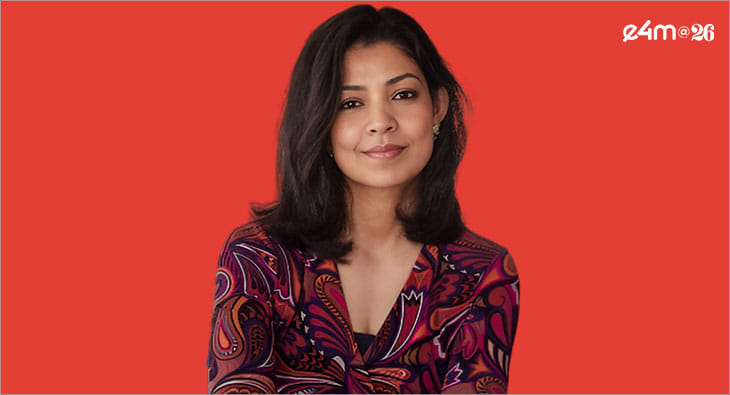

As India strengthens its position as the world’s largest whisky market, Pernod Ricard India is recalibrating its marketing playbook to stay culturally relevant in an increasingly complex and competitive landscape.
For Debasree Dasgupta, who recently took over as Chief Marketing Officer, scale alone does not build enduring brands. In a conversation with exchange4media, she mentioned how alco-bev brands these days need to become cultural icons and not just a category leader.
Reframing success in a democratised era
At the core of the brand’s evolution is its long-standing philosophy of “success in your own terms”. But as success becomes more visible and accessible, Dasgupta believes the definition itself is shifting.
“When success becomes democratized, distinction becomes rare. That is what we are trying to highlight,” she says.
The latest “One and Only” campaign reflects this transition. Moving away from celebrity-led storytelling, the campaign places the narrative at the centre, spotlighting individuals who are shaping their own journeys on a global stage.
“The hero is the narrative itself,” she adds.
The campaign brings together three women with sharply distinct identities. Avanti Nagrath is portrayed with an assured, self-contained confidence that does not seek validation. Kirandeep Chahal brings an assertive, high-energy presence that commands attention, while Mahieka Sharma reflects a quieter, composed authority.
Together, their individual journeys underline the campaign’s core idea that distinction is not defined by milestones alone, but by building a path and identity that is unmistakably one’s own.
From category leadership to cultural influence
Dasgupta draws a clear line between market leadership and cultural relevance. According to her, Blenders Pride has historically played both roles.
“It has always been a thought leader first,” she says, pointing to early moves such as introducing women as brand faces in a male-dominated category and building a strong association with craftsmanship and lifestyle.
The brand’s earlier collaboration with figures like Priyanka Chopra, she notes, was aligned with individuals who were defining success on their own terms.
“It was about showcasing limitlessness, not just representation,” she says.
Women in communication, not as a consumption lever
Despite consistently featuring women in its campaigns, Dasgupta is clear that the intent is not to drive consumption among a specific cohort.
“For us, this is about relevance in culture, not about consumption,” she says.
While she acknowledges that drinking behaviour is becoming more gender-neutral, especially among younger consumers, she maintains that the brand’s storytelling is rooted in ambition and individuality rather than category expansion.
“There is normalization happening. But we never try to push consumption,” she adds.
Experience as cultural currency
Experiential platforms like the Blenders Pride Fashion Tour remain central to the Pernod Ricard’s cultural strategy.
“There is no connection with revenue generation. These are cultural properties meant to engage with audiences,” Dasgupta says.
Over the years, the property has collaborated with designers, artists and creators, evolving into a platform that blends fashion, lifestyle and aspiration. Each edition is designed to push creative boundaries.
“We are not chasing trends. We are trying to move culture forward,” she says.
The FICCI–EY M&E Report 2026 notes that live events grew 44%, the highest across segments, reflecting a strong shift towards out-of-home, shared experiences. The segment, valued at ₹145 billion in 2025, is projected to reach ₹196 billion by 2028.
As premiumisation deepens beyond metros, the brand is extending these experiences to tier two markets through scaled formats while maintaining aspiration.
“We create aspiration in urban centres and then take that experience forward without diluting the imagery,” she adds, highlighting the role of content in amplifying reach.
Beyond ROI: measuring cultural impact
Dasgupta pushes back against an over-reliance on performance metrics in evaluating campaigns.
“Not everything is about ROI,” she says.
While performance marketing remains a part of the mix, she emphasises effectiveness over efficiency.
“Are we driving the right conversations? Are people thinking differently? Those are the indicators that matter.”
For her, long-term brand building is anchored in shifting perception rather than chasing short-term metrics.
Alcohol as an ‘amplifier’, not the occasion
A key behavioural shift shaping the category is the changing role of alcohol in social settings.
India-specific data points to a more nuanced shift rather than a sharp decline in alcohol consumption among younger cohorts.
At the same time, industry estimates suggest that while participation remains steady among legal drinking age consumers, younger audiences are drinking less frequently and making more selective, occasion-led choices, often leaning towards premium offerings.
“Alcohol is no longer the occasion. It is the amplifier,” Dasgupta says.
Younger consumers are increasingly fluid in their choices, moving across categories depending on the occasion.
“They might choose whisky one day, a cocktail the next, or nothing at all. That flexibility is absolutely okay.”
She rejects the idea that this signals a decline in alcohol consumption. “They are not category rejecters. They are experimentative.”
Instead, alcohol is increasingly seen as a way to enhance experiences rather than define them.
The shift, therefore, is less about rejection of alcohol and more about moderation, experimentation and intent-led consumption
Portfolio play and evolving consumption patterns
This shift is influencing portfolio strategy at Pernod Ricard India, which is expanding beyond whisky to cater to multiple occasions.
Newer propositions like Exclamation are designed for consumers who prefer switching across categories.
Dasgupta also highlights emerging behaviours such as alternating between alcoholic and non-alcoholic beverages during social occasions, a trend she describes as “zebra striping”.
“It is about making the evening more sessionable and memorable, not mindless consumption,” she says.
Competition, regulation and the India opportunity
With a surge in homegrown brands and increasing shelf competition, Dasgupta views the trend as a sign of growth.
“Competition is good. It signals headroom in the category,” she says.
However, she cautions that long-term success will depend on more than trend adoption.
“What makes brands endure is how they add meaning and stay culturally relevant over time.”
At the same time, alco-bev marketing continues to operate within India’s surrogate advertising framework, with brands relying on extensions and cultural platforms to remain visible.
Surrogate advertising has long been a defining feature of India’s alco-bev marketing landscape, shaped largely by regulatory restrictions on direct promotion.
“We operate through brand extensions,” she says.
On the global front, ongoing trade negotiations between European Union and India could reshape access to premium spirits.
“These are still expressions of intent. There is a lot between the cup and the lip,” she says, adding that any duty reductions could make international brands more accessible without disrupting the market.
Having returned to India after nearly a decade, Dasgupta sees a market defined by demographic advantage, economic momentum and growing cultural influence.
“India is not just a growth market anymore. It is beginning to shape culture,” she says.
Looking ahead, her focus remains on three pillars: quality and craftsmanship, relevance to evolving consumers, and sustained cultural connection.
“The opportunity in India is enormous. With nearly 30 million new legal drinking age consumers entering the market, the growth runway remains substantial,” she says.
Read more news about Marketing News, Advertising News, PR and Corporate Communication News, Digital News, People Movement News
For more updates, be socially connected with us onInstagram, LinkedIn, Twitter, Facebook, YouTube & Google News