#e4mXplains: How AI is turning shopping into a single automated decision
With impressions & clicks seemingly fading in relevance, AI assistants have becomes the primary commerce interface and brands who anticipate this will dominate in ways that look invisible today
 by
by
Published: Oct 6, 2025 8:45 AM | 5 min read
 Follow Us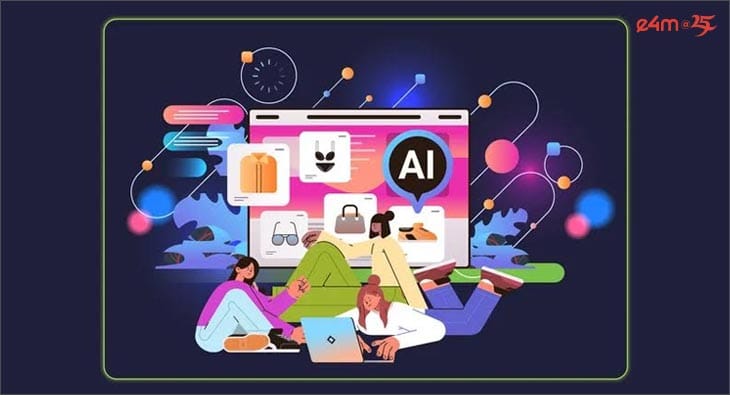

Ads used to interrupt. Now they’re the interface. What once was a linear funnel (from awareness to conversion) is being devoured by AI. Meta is building the “intent capture” layer; OpenAI is building the “intent fulfillment” layer. Together they’re collapsing the funnel into a single predictive moment. But this isn’t hypothetical; we’re entered that moment. And it’s bigger, faster, and messier than many realise.
Meta’s next trick is to turn your AI chats into sales signals. Starting December 16, 2025, Meta will begin using handset conversations with its Meta AI chatbot to personalise content and target ads across Facebook and Instagram (with exceptions such as the UK, EU and South Korea). That means a discussion about hiking equipment in Messenger or Instagram’s chat thread may directly feed the ads you see. But hold your breath. Meta hasn’t fully activated commerce inside chats yet. The targeting plan is rolling out first; conversational shopping is the forecast, not yet reality.
Read e4m report on Meta turning conversations into advtg opportunities
Meanwhile, OpenAI has already pushed part of the funnel into ChatGPT. With its new “Instant Checkout” via the Agentic Commerce Protocol, U.S. users can now buy items from U.S. Etsy sellers entirely inside ChatGPT (no redirect, no tab switch). It currently supports only single-item purchases; multi-item carts, more merchants (via Shopify, etc.), and broader regional rollout are on the roadmap. So: only U.S., only Etsy for now, but open standards and protocols are public and others can plug in. The future ambition is clear. And there's a market ripe for the taking.
Meta bringing ads to WhatsApp status. Read on
To see why this matters, take a step back: global e-commerce is on course to hit about USD 4.8 trillion in 2025. In India, the market is roaring with industry estimates suggesting we’ll cross USD 160 billion this year, growing at nearly 18-19% annually. Add in India’s rising quick-commerce sector (expected USD 5 billion GMV) and social commerce (projected USD 8+ billion) and you see: this is a vast and accelerating opportunity. Whoever inserts themselves into the decision moment gets a slice of that pie.
Advertising is oxygen for digital platforms. Meta and Google built empires on ad monetization. Now OpenAI, freshly valued at USD 500 billion, is positioning itself to breathe the same air; not via pay-per-click, but by owning the point of decision. It doesn’t need banners when it can monetize the transaction itself. It doesn’t need ads when it can become the ad.
e4m deep dive on Martech’s impact on shopping. Read on
But this new regime rewrites the rules for marketers. When discovery, persuasion, and conversion collapse, what are you optimizing for? Exposure becomes less meaningful. Impressions, clicks, and middle-funnel engagement metrics fade in relevance. Attribution becomes opaque when the AI model mediates the entire path inside its own architecture. Creative becomes prompt engineering. Strategy becomes negotiating insertion inside AI models. Brands will vie not for visibility on a page or feed, but for presence within an assistant’s first instinct.
In India, this shift may accelerate fastest. With 840+ million internet users, WhatsApp as the national chat layer, mobile-first behavior, and consumer comfort with conversational commerce via UPI and chat, the leap from talking to buying feels natural. The AI assistant becomes the primary commerce interface, in vernacular languages and regional contexts. That means brands who anticipate this, and who think about how to become those assistant prompts, will dominate in ways that look invisible today.
These latest moves are two halves of the same collapse. Meta’s upgrade is still in its targeting/intent capture phase; OpenAI’s Instant Checkout is the first working piece of an intent fulfillment architecture. The funnel doesn’t vanish. It's being rewritten, folded, folded again.
We’ve been forecasting this for months: AI would bleed the boundaries between creative and conversion. This moment was inevitable. The ad isn’t something you scroll past; the ad becomes your assistant. The model observes, infers, and acts. Discovery, decision, purchase: they merge into a single cognitive act.
Because we’re not talking incremental disruption. We’re talking the “Great Compression” of marketing: the funnel compressed into a singular loop. Discovery is no longer upstream of intent. It is Intent. The model doesn’t wait for you to search; it whispers to you what you want, then lets you take it.
Once Meta turns on commerce inside its chat layers, you’ll see identical behaviors on both ends: move your wish into a chat, get a suggestion, tap to buy; no redirect. Meta’s current rollout is about targeting first; e-commerce activation likely follows. OpenAI has built the checkout piece first, and opened the interface for anyone to plug in. The two are converging. The AI layer becomes the distribution layer. The model, not the feed, is the new battleground.
If this feels like inevitability, that’s because it is. The advertising industry built precision pipelines to funnel attention toward buyer intent. AI has simply rerouted the plumbing. The funnel didn’t die; rather, it was ingested and recomposed as a loop.
So yes, the marketing funnel had a good run. But in a world where models pre-empt your wants, discovery isn’t a journey anymore, but a trigger. The machines aren’t just recommending products. They’re orchestrating decisions. The next war won’t be for reach or frequency. It will be for presence. The final frontier is living in the machine’s first thought. Advertising isn’t being automated. It's dissolving into experience.
Read more news about Digital Media, Internet Advertising, Marketing News, Television Media, Radio Media
For more updates, be socially connected with us onInstagram, LinkedIn, Twitter, Facebook, YouTube & Google News