Lipstick shades to coat fittings: How Martech is personalising India’s online shopping
Brands are going for multilingual and hyperlocal Martech tools unifying data across apps, websites, and social media to make to make online shopping friendlier and holistic, share industry watchers
 by
by
Published: Jul 22, 2025 8:50 AM | 6 min read
 Follow Us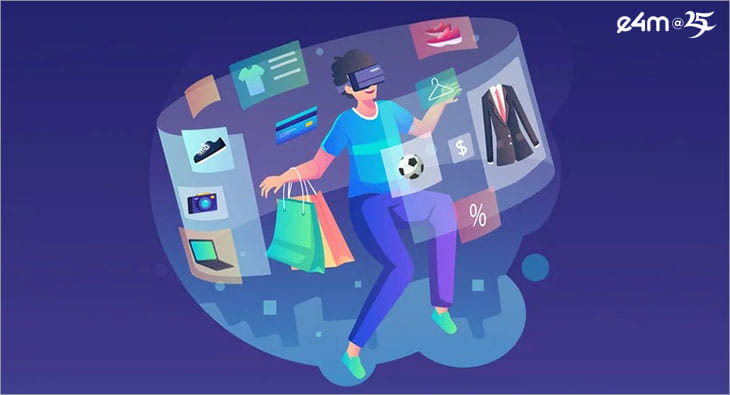

Martech in India isn’t just recommending products anymore. It’s curating full-blown retail experiences: fluid, predictive, and increasingly personal. From multilingual nudges to AI-driven outfit suggestions, Indian shoppers are being handed a concierge, not just a cart.
At the heart of this shift is the collision of three forces: artificial intelligence, first-party data, and a rapidly maturing customer base that expects their favourite platforms to “get them” from the first click.
Brands like Nykaa use ModiFace for virtual cosmetic try-ons tailored to skin tone, while Tata CLiQ leans on Vue.ai for personalised discovery. Myntra’s My Stylist goes a step further with real-time outfit suggestions based on wardrobe photos and shopping behaviour. As Saad Anwer, Manager – Growth Advisory at Aranca, puts it, “E-commerce platforms are moving beyond generic recommendations and broad segmentation.” AI isn’t an add-on, but it’s the engine.
And the consumer, crucially, is not surprised. According to Adobe’s 2024 State of AI-driven Consumer Value report, 66 per cent of Indian brands have adopted generative AI, and another 26 per cent are testing it. Indian shoppers aren’t waiting to be convinced. In fact, 81 per cent expect brands to integrate gen AI by the end of this year. The motivation isn’t novelty, it’s utility. From visualising themselves wearing a product (91 per cent want this) to trusting AI-powered offers (48 per cent do, double the global average), Indian users are signalling something clear: show me what matters, when it matters.
In a market where attention spans hover under seven seconds and product discovery now starts from Instagram reels and WhatsApp forwards as much as it does from search bars, brands must act fast or not at all. “We live in an attention-deficit era,” says Vaibhav Velhankar, Chief Technology Officer at Segumento. “AI-powered engines, when combined with first-party data and contextual intelligence, allow brands to deliver experiences that are not only personalised but also timely and relevant.”
He points to a shift from mass targeting to “individual understanding,” enabled by dynamic pricing, predictive content strategies, and real-time signal analysis. “The new wave of martech isn’t just about automation — it’s about empathy at scale,” he adds.
For Indian audiences, this empathy also needs to be multilingual and hyperlocal. That’s where smart Martech design is separating the leaders from the pack. “Consumers today expect brands to anticipate their needs and respond in real time,” says Tushar Dhawan, Partner at Plus91Labs. “AI-driven recommendations are offering timely nudges like curated discounts, contextual product suggestions, and seamless reminders that drive repeat purchases and reduce drop-offs.”
Dhawan adds that regional diversity is a force multiplier. “Brands are increasingly investing in multilingual and hyperlocal Martech tools, using localised AI models to communicate in regional languages.”
This isn’t a future-tense story. Platforms have already begun local tuning. Flipkart’s voice assistant in Hindi and English, for example, has seen increased adoption in Tier 2 and Tier 3 cities. Amazon’s regional storefronts with language toggles are no longer experiments, rather they’re pipelines. Meesho’s localised promotions during regional festivals are calibrated by engagement data, not just calendar cues. The logic is simple: if a brand speaks your language, literally and culturally, you’re more likely to listen, AND convert.
And yet, for all the automation and targeting, some of the best Martech design still hinges on emotional resonance. “Imagine online shopping not as a crowded marketplace, but as a conversation with a helpful friend who truly ‘gets’ you,” says Kruthika Ravindran, Director – Key Accounts at TheSmallBigIdea. “That’s what Martech is doing for Indian shoppers. Instead of generic offers, it’s like your friend knows your favourite colours, the festivals you celebrate, and even what you might need before you do.”
One reason this “friendship” metaphor isn’t wishful thinking is the backbone of CDPs (Customer Data Platforms) that stitch together signals across apps, websites, and platforms into one coherent view. These systems don’t just map purchase history. They infer intent, adjust messaging dynamically, and switch channels when engagement dips.
Benjamin Chamlet, Director of Solution Engineering APJ at Twilio, explains, “What we’re seeing is that brands that unify data across apps, websites, and social media can build a more holistic understanding of their audience.” He adds, “The real advantage comes from having accurate, up-to-date information collected with consent.”
Chamlet’s example is practical. When a shopper browses a catalog without logging in, predictive algorithms can still infer preferences based on geography and behaviour. “Based on their purchase propensity, the app may offer a premium product that’s recently launched or align a promotion that nudges them toward completing that purchase.” And if the customer asks a question (whether via SMS, WhatsApp, or in-app chat) the platform can respond immediately, in context.
That kind of seamlessness is why Gartner’s 2025 Martech report identified “real-time intent orchestration” as the fastest-growing investment category among Indian consumer brands. The same report found that 72 per cent of Indian consumers expect online platforms to remember their preferences and predict needs, even if they haven’t transacted recently.
What makes India a fascinating testbed is how rapidly expectations are maturing. In the West, personalisation is often tempered by concerns about privacy and algorithmic bias. In India, the conversation is still grounded in delivery, value, and relevance. If the AI gets you a better deal in your language, the consumer is in. For now.
Of course, expectations are slippery. Once a good experience becomes baseline, the gap between “personalised” and “irrelevant” narrows quickly. Martech in India is not just optimising for clicks; it’s being challenged to keep up with a consumer who’s learned to expect concierge service for their bandwidth.
The platforms that get this are designing systems where context is as important as content. The real leap isn’t in showing you what you want. It’s in showing you what you didn’t know you wanted, in the voice you prefer, at the exact right time.
Read more news about Tech Talk, Marketing, PR and Corporate Communication, Internet Advertising, People Movement
For more updates, be socially connected with us onInstagram, LinkedIn, Twitter, Facebook, YouTube & Google News
