#e4mExclusive: Comscore teams up with Google to launch YouTube CTV measurement in India
In an exclusive interview with e4m, Alejandro Fosk, Executive Vice President International, Comscore, talked about the plan and shared his strategy for the India market
 by
by
Published: May 23, 2025 8:35 AM | 5 min read
 Follow Us

Comscore is preparing to launch a YouTube connected TV (CTV) viewership measurement study in India in partnership with Google, after earlier efforts to collaborate with broadcasters failed to gain traction.
“The move aligns with Comscore’s broader strategy to provide holistic digital audience measurement in the country—mirroring its partnership model already active in the U.S. and other global markets,” says Alejandro Fosk, Executive Vice President International at Comscore.
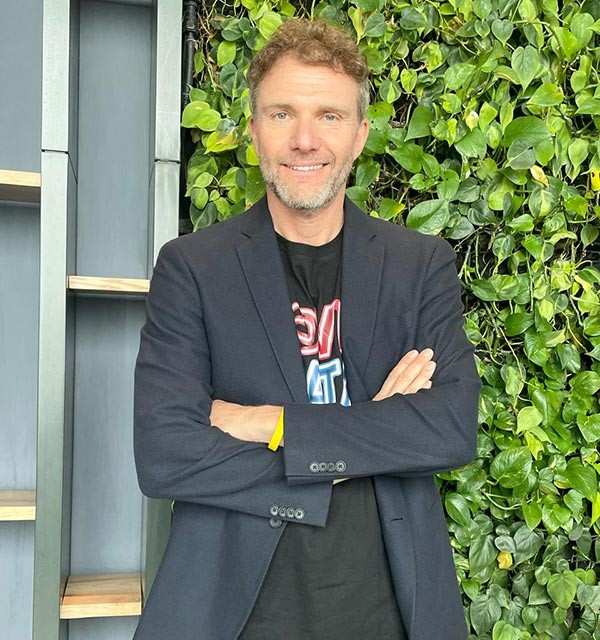
Fosk is currently in India. He spoke to e4m exclusively on the sidelines of Goafest 2025, sharing key insights into the company’s roadmap for the Indian market, challenges around social content measurement, and what lies ahead for India’s media ecosystem.
Excerpts:
You had previously explored a CTV study initiative with Indian broadcasters, but it didn’t materialise. Despite the widespread adoption of Connected TV, no Indian agency has successfully launched a measurement framework yet. In your view, is India ready for CTV measurement, and have you considered alternative approaches?
Connected TV has come up in every single meeting we’ve had here—it's a top priority. We already have a limited CTV offering in India, but now we’re expanding it. We’ll be launching YouTube Connected TV measurement in India later this year through our global partnership with Google.
We believe it's important to offer visibility into this space. Broadcasters and publishers can now share content on CTV and monetize it, so we must provide the tools to measure total reach across platforms.
We had initially tried launching a CTV study last year with the industry, but the response wasn’t strong. Our plan was to raise awareness—both qualitatively, with 20+ industry interviews, and quantitatively, with over 4,000 participants. But the industry was looking for a measurement system, not a snapshot. So, the project didn’t move forward then.
Now, we’re relaunching with a different approach. The partnership with Google offers the scalability and continuity the industry wants. The industry’s expectation is to provide more continuous and scalable insights into CTV audiences.
Will you measure digital viewership of only major broadcasters or will it include regional channels as well?
We hope to do both. The goal is impartiality, just like in our digital measurement. Ideally, we would include all channels, including regional ones.
We’re still finalising the partnership and haven’t yet received the full granularity of the data. So, while our ambition is broad, I can't confirm exactly what the coverage will be. Beta data will come out by year-end, and then we’ll know more about the methodology and data scope.
In India, there’s no unified cross-platform measurement system yet, like in the US. Do you see this as a barrier?
Internationally, including in India, we don’t have that infrastructure. For instance, we don’t measure set-top boxes here. So, we need more creative ways to capture cross-device behaviour, including CTV. And no, linear TV is not part of our plan in India. That’s the domain of BARC and other local players.
You launched Social Incremental in India about a year ago to measure the content consumption on social platforms for publishers. What has your experience been?
Let’s go back to what put us on this path. When we looked at publisher and broadcaster data, it was clear that traffic and reach were not growing—some were even decreasing. The audience was ageing. And that didn’t reflect reality, because a significant portion of content is consumed elsewhere—on social platforms.
Social Incremental was our way of levelling the playing field for publishers and broadcasters. It gives them better insights—more ammunition, if you like—to show the real value of their content. Because content is king. And it's not just about print or even digital anymore; audiences are everywhere, including on social platforms.
The experience so far has been good. Clients appreciate seeing large audiences coming from social. Of course, not everyone is thrilled when rankings change, as that can be uncomfortable. That’s why we offer both views: with and without social, to fit different strategies.
One big issue remains: monetisation. Publishers can't monetise these social audiences directly because the platforms own the distribution. For example, if a publisher wants to advertise on Instagram, they can’t just do it—Instagram controls the platform. So, while we're helping make these audiences visible, there's still work to be done in redefining business models around them.
With the rapid rise of social and digital media globally, has it become more challenging for you as a measurement agency? How are you adapting to the expanding ecosystem and increasing data complexity?"
In addition to our work on Social Incremental, we’ve developed a dedicated Comscore Social product that directly ingests data from various platforms.
We’ve established partnerships with major players like Instagram, Facebook, Twitter, TikTok, and others, which allow us to access comprehensive, first-party data.
This enables us to offer a granular and detailed view of social behaviour across these platforms. It’s especially helpful in tracking and understanding key trends, like the rise of influencers, which is a fascinating shift in the media ecosystem.
For traditional publishers and broadcasters, this presents a unique challenge. You create and own the content, but suddenly, you're competing with entirely new players from different spaces.
(Transcribed by Nandita Srivastava)
Read more news about Digital Media, Internet Advertising, Marketing News, Television Media, Radio Media
For more updates, be socially connected with us onInstagram, LinkedIn, Twitter, Facebook, YouTube & Google News