BARC blackout leaves TV programming heads flying blind as festive launch season nears
Industry experts say suspension of weekly television ratings disrupts commissioning, scheduling and content decisions, forcing broadcasters to depend on experience rather than data
 by
by
Published: Jul 21, 2026 9:33 AM | 6 min read
 Follow Us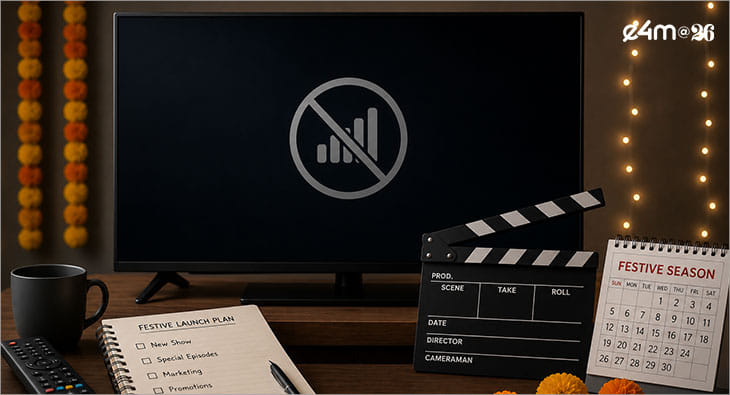

- The Broadcast Audience Research Council (BARC) has suspended television audience ratings, disrupting decision-making for broadcast networks, particularly in programming and content evaluation.
- The suspension coincides with the festive season, a critical time for new show launches and advertising, leaving programming teams without the data needed to make informed adjustments.
- Industry experts suggest that the absence of ratings may lead to more conservative programming choices, as decisions shift from data-driven insights to instinct and historical performance.
- Broadcasters are expected to rely on alternative metrics and internal judgment while navigating this period, which could hinder innovation and affect the commissioning of new, high-risk content.
The suspension of television audience ratings by the Broadcast Audience Research Council (BARC) is beginning to reshape decision-making inside broadcast networks, with programming heads losing access to the weekly data that has long dictated everything from storyline tweaks and time-slot changes to commissioning new shows.
While much of the industry's initial focus has been on the implications for advertising deals, television executives say the absence of audience measurement is equally disruptive for content teams that depend on ratings to evaluate performance and calibrate programming strategies. The timing is particularly significant as broadcasters prepare for the festive season—traditionally the biggest period for new launches, premium advertising inventory and audience acquisition.
The Ministry of Information and Broadcasting recently directed BARC to suspend publishing television ratings across all genres until the audience measurement body completes registration under the new Television Ratings Policy, 2026. The move has effectively removed the industry's common performance currency at a time when broadcasters are rolling out major fiction and entertainment properties.
Over the past few weeks, leading general entertainment channels have launched several new titles, including Star Plus' Sairaab, Colors' Juhi Mui, Zee TV's Tu Hi Re Dil Mein and Dilo Ki Ram Leela, and Sony SAB's Hastinapur Ke Veer. Under normal circumstances, programming teams would now be analysing weekly ratings to determine whether changes in casting, pacing, promotion or scheduling were required. Instead, those decisions are now being made without measurable audience feedback.
Industry executives say the blackout could have a deeper impact than merely delaying performance assessment. It could fundamentally alter the risk appetite of programming teams during one of television's most commercially significant quarters.
Marketing leader and columnist Shubhranshu Singh believes the suspension has exposed how deeply television programming has become dependent on continuous audience measurement. "News monetisation always rode on influence and relationships more than tonnage," he said. "Television has long been sold on trust, with ratings serving as a comfort blanket over a handshake."
According to Singh, broadcasters are likely to increasingly rely on alternative metrics such as connected TV data, digital consumption, reach estimates and independent measurement tools until ratings resume.
However, he believes the biggest casualty is the programming process itself. "Indian GEC programming is an iterative craft that is recalibrated weekly against minute-by-minute data," Singh said. "Decisions now revert to instinct, which is honest craft but hard to defend in a budget meeting. The deeper risk is conservatism because when you fly blind, you fly straight."
That caution comes at a particularly critical moment for broadcasters. "Festive is when launches, spends and premiums peak together and projections rest on an assumed ratings trajectory," he said. "With the currency unavailable and paused, that trajectory is unverifiable and so the gap between asking price and accepted price widens precisely when inventory is most valuable."
Singh expects marquee launches to continue attracting advertisers but says programming that traditionally depended on ratings efficiency to justify premium pricing could face greater challenges. "News is the one genre where digital shadows are visible in real time — YouTube concurrents, app traffic, social velocity," he said. "Digital numbers for news are abundant and instant. On the other hand, they measure a different audience, and advertisers know it. A launch will be judged on salience — whether the market feels its arrival — more than on any number."
The absence of ratings is also changing editorial decision-making inside television newsrooms, according to Singh. "That scoreboard is dark," he said. "Editorial judgement was always the core skill and it now reclaims primacy." "Without differential feedback, everyone converges on the same safe formats." He believes the freeze will disproportionately affect newer or fast-growing channels.
Inside television networks, however, the concern is less about advertising and more about day-to-day programming.
Vaishnavi HS, Programming Head at SUN Udaya, said weekly ratings have traditionally acted as a decision-making framework for both creative and scheduling teams. "Not having BARC ratings not only disrupts our Thursdays but also poses challenges when we look forward to kickstarting new shows and IPs," she said.
Despite the uncertainty, she believes the disruption could also encourage experimentation. "The bright side could be that disruption does bring about innovation at times," she said. "Like COVID times, this could be an ideal time for some experimentation in the FPC."
Without ratings, programming teams are relying on internal judgement and historical performance benchmarks. "With BARC ratings, we do ensure the programming and creative teams remain dynamic and fleet-footed." "We continue to do so, but now, we do not have the BARC data to back our decision-making," she said.
She added that her team is using brand strength and previous-year ratings to estimate audience behaviour while hoping measurement resumes before the festive season.
Vishal Khanna, Founder of Sales Strategist LLP and a Connected TV specialist, believes the absence of ratings represents a structural shift rather than a temporary operational hurdle. "Programming is a weekly-feedback business. Data lands mid-week, tracks change by the weekend — casting, pacing, timeslot, lead-in. That loop is the job, he said. "Without it, the loop is not slowed down, it is broken. Decisions are still being made; they are simply being made without instrumentation."
Khanna argues that the disappearance of an objective performance benchmark increases the influence of hierarchy over evidence. "When the number disappears, the loudest voice in the room becomes the data," Khanna said. "Creative calls that were previously settled by evidence are now settled by seniority and instinct. Some of those calls will be excellent. The organisation will have no way to distinguish which ones."
More importantly, he believes the impact will be visible in what broadcasters choose not to commission. "The most under-discussed cost is on the slate itself," he said. "No programming head wants to launch a fresh, high-risk IP into a measurement blackout. So the safe format gets extended, the tested face gets recommissioned, the bold bet gets deferred by a quarter. The suspension is not only stopping measurement — it is quietly changing what gets commissioned."
Taken together, the views reflect an industry adapting to the absence of its primary performance benchmark. Broadcasters continue to launch new shows, advertisers continue to negotiate inventory and programming heads continue to make weekly decisions. But without BARC's audience data, many of those decisions are now guided by instinct, experience and historical trends rather than measurable viewer behaviour—potentially reshaping commissioning strategies just as television enters its most commercially important season.
Read more news about Television Media, Digital Media, Advertising India, Marketing News, PR and Corporate Communication News
For more updates, be socially connected with us onInstagram, LinkedIn, Twitter, Facebook YouTube & Google News