Happy birthday Shekhar Gupta: A life in reporting, reinvention and institution-building
As he turns 69 today, Gupta remains among the most recognisable and influential figures in Indian journalism
 by
by
Published: Aug 26, 2026 1:11 PM | 6 min read
 Follow Us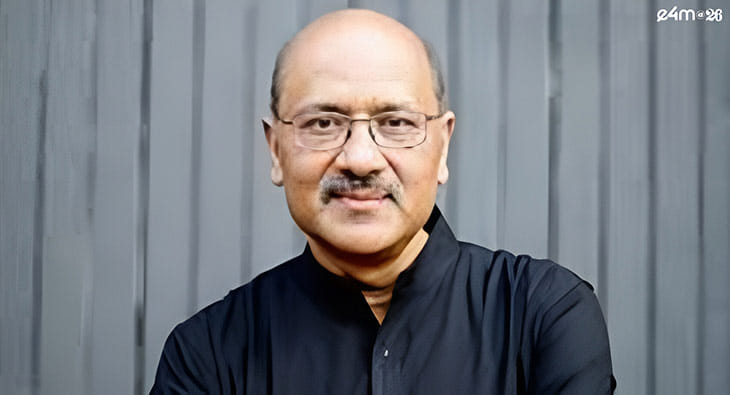

- Shekhar Gupta, a prominent figure in Indian journalism, celebrates his 69th birthday, marking a career that spans reporting, editing, and media entrepreneurship across various platforms, including print, television, and digital media.
- Starting as a cub reporter in 1977, Gupta gained recognition for his coverage of significant events, such as the Nellie massacre and the Tiananmen Square protests, establishing a reputation for in-depth, ground-level reporting.
- As Editor-in-Chief of The Indian Express for 19 years, he emphasized the importance of credible reporting and adapted to the rapidly changing media landscape, later transitioning to digital journalism with the launch of ThePrint in 2017.
- Gupta's work has earned him multiple awards, including the Padma Bhushan, and he remains influential in public discourse, known for his analytical style and commitment to journalistic integrity throughout his career.
Some journalistic careers are identified with a particular beat; others with an institution or a defining news break. Shekhar Gupta’s career has moved across all three-reporting, editing and institution-building, while retaining the instincts of a field reporter.
As he turns 69 today, Gupta remains among the most recognisable and influential figures in Indian journalism. His journey is also the story of a journalist who has repeatedly adapted to a changing media landscape: from the age of the printed newspaper and long-form reportage to television interviews, digital video and the creator-led news economy.
Born in 1957, Gupta studied journalism at Panjab University before beginning his career as a cub reporter with the Chandigarh edition of The Indian Express in 1977. Three years later, at just 23, he was sent to the Northeast, then witnessing insurgencies, ethnic conflict and political unrest. It was an assignment that would shape both his reporting style and his understanding of India beyond the national capital. His reporting from Assam, including on the Nellie massacre, eventually informed his first book, Assam: A Valley Divided, published in 1984.
Those early years established the qualities that would remain visible throughout his career: an appetite for difficult assignments, a fascination with politics and national security, and a preference for understanding events from the ground rather than solely through official briefings.
During his years as a reporter and editor at India Today, Gupta covered several events that defined the closing decades of the twentieth century. His assignments included Operation Blue Star, the insurgency in Sri Lanka’s Tamil North, the student uprising at Tiananmen Square, the fall of the Berlin Wall, the first Gulf War and the conflict in Afghanistan. He also reported extensively from Pakistan and uncovered LTTE training camps in India.
This was journalism before rolling news and social media—when access to a conflict zone, a first-hand account or a carefully cultivated source could fundamentally alter public understanding of an event. Gupta belonged to a generation of reporters for whom the byline was earned in the field, often under difficult and dangerous conditions.
Yet, reducing his career to conflict reporting would overlook an equally significant chapter: his evolution into a newsroom leader.
Gupta eventually returned to The Indian Express and served as its Editor-in-Chief for 19 years, while simultaneously holding the position of Chief Executive for 13 years. It was an unusually long tenure at the helm of a major Indian newspaper and placed him at the intersection of editorial decision-making, institutional management and the economics of news.
At the Express, he became known as a reporter’s editor—someone who understood that a newspaper’s credibility ultimately rests on the strength of its reporting. His tenure coincided with an intensely competitive period in Indian media, marked by the rapid expansion of television news, the arrival of private capital and the early disruption caused by the internet.
His weekly column, National Interest, added another dimension to his journalistic identity. Moving across politics, security, economics, foreign affairs and society, the column sought to connect developments that were often viewed in isolation. A selection of these writings was later published as Anticipating India. The column remains one of the most enduring elements of the Shekhar Gupta brand—argumentative, analytical and willing to invite disagreement.
Television gave that brand a wider audience.
Between 2003 and 2017, Gupta hosted Walk the Talk on NDTV 24x7, interviewing more than 600 personalities from politics, business, cinema, sport and public life. At a time when television interviews were increasingly becoming confrontational, the programme created its own grammar: an extended conversation conducted while walking, with the setting often revealing as much as the formal questions.
The format was deceptively simple, but its strength lay in preparation, follow-up questions and Gupta’s ability to draw out guests without making himself the centre of every exchange. A collection of these interviews was subsequently published as Walk the Talk: Decoding Politicians.
After leaving The Indian Express in 2014, Gupta briefly joined the India Today Group as Vice-Chairman and Editor-in-Chief. But the most consequential reinvention of his career came a few years later, when he moved from running a large legacy newsroom to building a digital-first media venture.
ThePrint, launched in 2017, marked Gupta’s transition from editor to media entrepreneur. Significantly, he made the shift at an age when many established editors might have preferred the familiarity of a traditional newsroom. Instead, he entered a crowded and uncertain digital market where distribution algorithms, video consumption and audience habits were changing rapidly.
Gupta said the name ThePrint was intended to signal that entering digital media did not require lowering journalistic standards. The venture was positioned around politics, policy, governance and social change, with an emphasis on analysis and explaining the meaning behind the day’s news.
At ThePrint, he also demonstrated an ability to adapt personally to new formats. Cut the Clutter, his regular explanatory video show, brought his analytical style to a younger, digital audience. The format combines maps, historical references, data, reportage and commentary—effectively translating the newspaper column into an accessible video product. Off the Cuff, meanwhile, carried forward his long-form interview tradition.
Today, Gupta continues to serve as Founder, Editor-in-Chief and Chairman of ThePrint. His work across print, television and digital media makes him one of the relatively few Indian editors to have built a significant presence in every major phase of the country’s modern news industry.
His career has brought several honours, including the Inlaks Young Journalist of the Year Award, the G.K. Reddy Award for Journalism, the Fakhruddin Ali Ahmed Memorial Award for National Integration and the Padma Bhushan in 2009. He also served as President of the Editors Guild of India for two consecutive terms between 2018 and 2020.
Like any editor who has remained prominent for nearly five decades, Gupta’s positions and editorial choices have attracted both admiration and criticism. But perhaps that is also central to his relevance. He has remained firmly present in public debate—opinionated, accessible and willing to defend his reading of events.
The enduring thread across his journey is not attachment to a platform, but commitment to the reporter’s craft. Newspapers changed, television arrived, digital platforms disrupted distribution and individual journalists became media brands. Gupta moved through each transition without giving up the habits formed during his earliest assignments: reading widely, cultivating sources, seeking context and treating news as part of a larger historical continuum.
At 69, Shekhar Gupta’s journey offers a lesson in professional longevity. Staying relevant does not mean remaining unchanged. It means protecting one’s journalistic core while continually learning how to tell stories in new ways.
On his birthday, his career is worth celebrating not only for the positions he has held or the institutions he has led, but for the curiosity and capacity for reinvention that have kept the reporter in him alive.
Read more news about Print Media, TV Media, Advertising India, Digital Media, Marketing
For more updates, be socially connected with us onInstagram, LinkedIn, Twitter, Facebook, YouTube & Google News