Navika Kumar birthday: From political questions to conversations that go beyond headlines
A look at veteran journalist Navika Kumar’s three-decade journey in Indian television news, from political interviews to prime-time debates and editorial leadership
 by
by
Published: Aug 21, 2026 8:28 AM | 6 min read
 Follow Us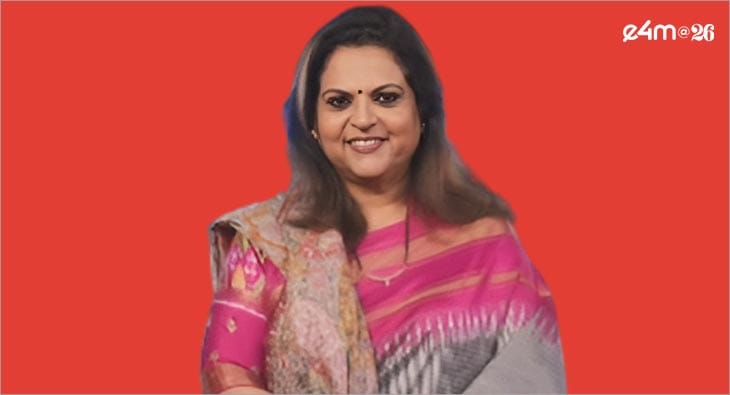

- Navika Kumar, a veteran journalist with over three decades of experience, has transitioned from traditional political journalism to more intimate, long-form conversations, exemplified by her podcast "Baatein Dil Se" and her appearance on "The Ranveer Show."
- Her career began in print journalism with notable publications before moving to television in 2005, where she became known for her confrontational interviews and political debates on Times Now.
- Kumar's recent work emphasizes personal stories and human-interest topics, shifting the focus from political accountability to exploring guests' journeys, ambitions, and vulnerabilities.
- In April 2026, she was appointed Times Group Editor-in-Chief, marking a significant advancement in her editorial leadership while continuing to adapt her journalistic approach across various media formats, including podcasts and social media.
Navika Kumar is a veteran journalist and one of the familiar faces of Indian television news, known for her political interviews, prime-time debates and coverage of some of the country's most consequential political and policy stories. As she celebrates her birthday, we look at her journey spanning more than three decades, from print journalism to television and, most recently, into a larger editorial leadership role as Times Group Editor-in-Chief.
But Kumar's latest chapter is showing a different side of the journalist audiences have known for years. After spending decades on the interviewer’s side of the table, asking politicians and public figures difficult questions, she has increasingly stepped into more intimate, long-form conversations. Her appearance as an interviewee on Ranveer Allahbadia's The Ranveer Show, followed by the launch of the podcast Baatein Dil Se with Navika Kumar, has allowed audiences to see a side of Kumar that is less about confrontation and more about vulnerability, experiences and the people behind the public persona.
From print journalism to prime-time television
Kumar's journalism career began in print, with stints at publications including The Economic Times, The Observer and The Indian Express. Her early work involved business and political reporting before she moved into television with the Times Network in 2005.
Her reporting career included investigations and coverage around major political stories, including the Commonwealth Games controversy, the AugustaWestland helicopter deal and the Aircel-Maxis case. Over time, she became increasingly associated with political journalism and television news.
Her transition into anchoring eventually made her one of the recognisable faces of Times Now. She became known for interviews and debates involving politicians and public figures, where the emphasis was often on accountability, political positions and getting answers on issues dominating the news cycle.
That persona became an important part of her professional identity: a journalist who was expected to ask the question that others might avoid.
Then came a role reversal
For someone who has spent decades interviewing others, becoming the interviewee can itself be revealing.
Kumar appeared on Ranveer Allahbadia's The Ranveer Show in 2025, where the conversation moved well beyond her television career. She spoke about parenting, relationships, journalism, mental health, personal challenges and the pressures that come with being a public-facing journalist.
https://www.instagram.com/reel/DNtDMACXssS/?hl=en
Navika Kumar shared, "I cry often in my professional life. Why? When things aren’t going as they should, or if my team isn’t giving their 100%, it hits me deeply. It’s not about showing attitude—it’s about caring. I feel every success and every struggle intensely because I’m fully invested in my work."
The appearance offered viewers a different perspective on Kumar. Away from a television debate, there was no political panel to moderate and no politician to hold accountable. Instead, Kumar herself became the subject of the questions.
That role reversal is significant because much of her public identity has been built around controlling an interview through questions. On a long-form podcast, she experienced the other side of that equation, allowing audiences to see the person behind the journalist.
From tough questions to ‘Baatein Dil Se’
That change in tone has also found its way into Kumar's own work.
In April 2026, she launched Baatein Dil Se, a podcast designed around longer and more personal conversations. The show has featured guests from different walks of life, including singer and poet Satinder Sartaaj, actor Kriti Sanon and lawyer Raian Karanjawala.
The conversations are markedly different from the political interviews that made Kumar a household television name. Instead of focusing primarily on political accountability or the day's biggest controversy, the format explores people's journeys, ambitions, relationships, setbacks, beliefs and vulnerabilities.
In an episode with Kriti Sanon, for instance, the conversation went into her transition from engineering to acting and the ambitions that shaped her career, including her practice of maintaining a "Diary of Dreams".
The show has also ventured into more human-interest stories, including conversations around personal struggles and overcoming challenges, giving Kumar an opportunity to explore subjects that do not necessarily make it to a prime-time news debate.
The questions, therefore, have changed.
For years, they were about politics, power, policy and accountability. Now they are increasingly about people: what drives them, what they have struggled with, what they aspire to become and what exists behind the public image.
Experimenting beyond television
Kumar's evolution is not limited to the podcast itself. Her Instagram presence has also increasingly incorporated reels, short clips from conversations and more candid moments.
For a journalist who spent most of her career within the traditional television news ecosystem, the move towards short-form social content represents another adaptation to how audiences consume journalism and personalities today.
A television interview is built around a fixed programme and a scheduled broadcast. A podcast allows a conversation to unfold at length, while Instagram can take a single emotional, funny or revealing moment from that conversation and turn it into a standalone piece of content.
Kumar is now operating across all three formats.
The shift also allows her to present a less formal side of herself. Rather than only appearing as the television anchor delivering questions from a studio, she can participate in lighter conversations, candid interactions and behind-the-scenes moments that make the journalist herself part of the content.
The journalist remains, but the questions have changed
The move into podcasts and social media does not necessarily represent a departure from Kumar's journalistic identity.
If anything, it shows how the same interviewing skills can work in a different setting.
Her television career was built around asking questions designed to establish facts, challenge positions and hold people accountable. Baatein Dil Se uses that same curiosity differently, allowing guests more space to explain their experiences and the circumstances behind their public lives.
The difficult question remains, but the purpose is different.
It is no longer only about getting an answer to a political question. It is about understanding the person answering it.
A new chapter at Times Group
The change in Kumar's public-facing work comes alongside one of the biggest professional developments of her career. In April 2026, she was elevated to Times Group Editor-in-Chief, taking on a broader editorial leadership role while continuing her association with television.
The elevation represents another transition for a journalist who has already moved through several stages of the profession, from print reporter to television anchor and now senior editorial leader.
Her career consequently offers an interesting reflection of the changing media landscape itself. The journalist who began in newspapers, built a reputation through television news and political interviews is now experimenting with podcasts, Instagram and long-form conversations while taking on a larger role in editorial leadership.
And perhaps the most interesting part of Kumar's current phase is that she has not stopped asking questions.
She has simply changed what she wants to know.
After decades of asking politicians about power, policy and politics, Kumar is now asking people about ambition, failure, relationships, vulnerability and the experiences that shaped them.
The questions may sound softer.
But the journalist behind them remains the same.
Read more news about Television Media, Digital Media, Advertising India, Marketing News, PR and Corporate Communication News
For more updates, be socially connected with us onInstagram, LinkedIn, Twitter, Facebook YouTube & Google News