How decentralized journalism stole the narrative from India’s legacy network
Guest Column: Partho Dasgupta, Managing Partner, Thoth Advisors and ex CEO, BARC India, asks, “How did the giants of the Indian media landscape manage to completely bankrupt their own credibility?”
 by
by
Published: Aug 11, 2026 12:01 PM | 3 min read
 Follow Us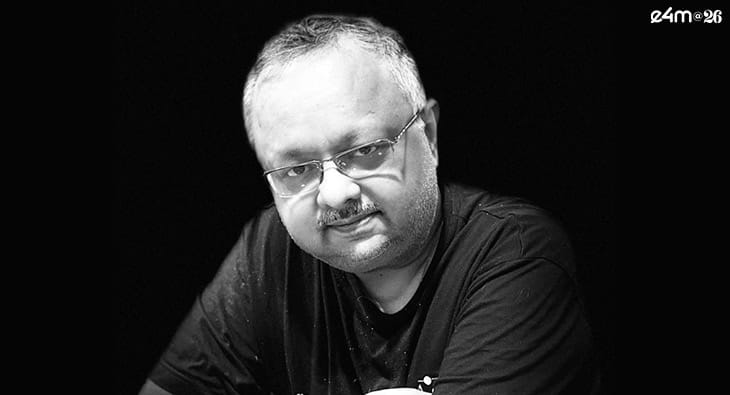

- Indian television news is struggling to retain viewership, losing audiences to social media platforms where young creators provide real-time updates during events like recent youth protests.
- The evolution of Indian media has shifted from a government-controlled landscape in the 1990s to a sensationalist approach in the 2000s, which has now devolved into what critics call "Godi Media," characterized by corporate bias and lack of accountability.
- The rise of independent digital journalism has disrupted traditional media, but this shift has led to a chaotic environment filled with misinformation, deepfakes, and clickbait, complicating the search for verified news.
- As a result, the average news consumer faces confusion over the authenticity of information, navigating a landscape that offers a plethora of unverified content rather than clear, objective reporting.
The current state of Indian television news is a masterclass in unintentional comedy: multi-million-rupee studios with flashing red graphics, dramatic countdown timers, and anchors screaming at twelve panelists simultaneously, yet they are losing the war for eyeballs to a twenty-something kid holding a phone on a shaky selfie stick.
The recent youth protests officially turned this irony into a tragedy for legacy networks. While mainstream channels were busy curating carefully sterilized studio debates or hunting for a conspiracy angle from their air-conditioned fortresses, the public collectively changed the channel. Or rather, they closed the TV entirely and opened Instagram.
Millions got their live updates not from prime-time veterans, but from 15-second Reels and raw, unedited citizen streams recorded directly on the pavement. Traditional media didn't just lose the audience; they lost the narrative to vertical video.
So, how did the giants of the Indian media landscape manage to completely bankrupt their own credibility?
The Era of "Please Stand By"
Back in the 1990s, the Indian television landscape was a remarkably polite, government-approved snooze-fest. Media consumption meant tuning in to the sole state-owned broadcaster, alongside one or two early private networks that neatly aligned their coverage with whoever happened to be sitting in the ruling dispensation's chairs.
The Loud Awakening
Then came the 2000s, and the private players officially arrived, bringing with them flashy graphics, dramatic background music, and a sudden appetite for anti-establishment journalism. For a glorious minute, it felt like the fourth estate had finally found its teeth as networks routinely held the powerful accountable.
The Modern Divide
Fast forward to the 2020s, and that fiercely independent media has largely devolved into what the intelligentsia now routinely mocks as "Godi Media"—essentially corporate stenographers comfortably parked in the lap of luxury and power. This vacuum sparked a revolution: the rise of internet journalism and social media creators during the recent youth protests.
Independent, digital-first reporters armed with nothing but a smartphone and a mobile data plan completely hijacked the news cycle. While mainstream anchors yelled over each other in air-conditioned studio bubbles, these decentralized creators were on the pavement capturing raw, unedited reality in real time.
The Tipping Point
Ideally, this shift should have blessed the Indian consumer with a utopian buffet of diverse, democratized viewpoints from all sides of the political aisle. Instead, we have broken the legacy monopoly only to land in a digital Wild West.
The new business model is ruthlessly fueled by views, engagement algorithms, and clickbait, trading old-school studio bias for a tsunami of motivated journalism.
The Real Casualty
The ultimate sucker in this scenario is the everyday news consumer. Between deepfakes, AI-morphed videos, and selectively edited clips circulating at lightning speed, trying to find a verified, objective point of view feels like looking for a needle in a digital haystack.
Viewers are now totally confused about which videos are true and which are AI or fake—welcome to the era of the confused viewer.
We successfully escaped the curated echo chambers of the elite, only to get trapped in a hyper-active circus of unverified noise where the truth is permanently out of stock.
Disclaimer: The views expressed here are solely those of the author and do not in any way represent the views of exchange4media.com.
Read more news about Television Media, Digital Media, Advertising India, Marketing News, PR and Corporate Communication News
For more updates, be socially connected with us onInstagram, LinkedIn, Twitter, Facebook YouTube & Google News