Sir Mark Tully - The voice that never stopped listening: K N Gupta
Mark Tully’s passing feels like the closing of a chapter in journalism that was built on patience, fieldwork, and moral nerves, writes Gupta
 by
by
Published: Jan 26, 2026 6:28 PM | 4 min read
 Follow Us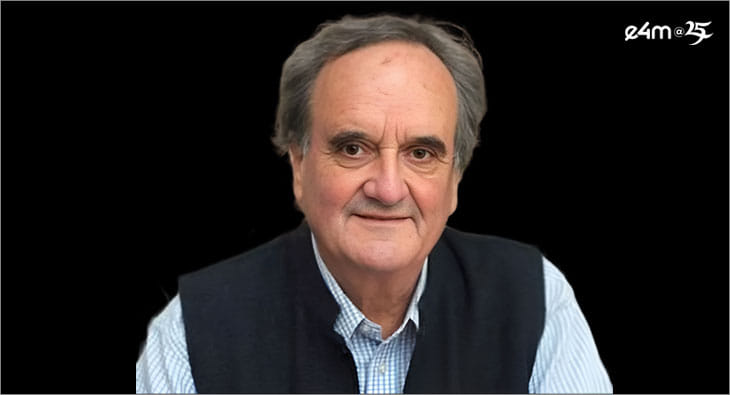

This morning began like many winter mornings in Delhi do— quiet, unhurried, almost ordinary —until it suddenly wasn’t. The news came abruptly about the sad demise of Mark Tully, our old journalist friend and associate. Two years ago, my journalist daughter Manoranjana had a long conversation with Mark Tully, whose very name has, for decades, been synonymous with one thing India always needs: honest witnessing.
Mark Tully - a life so intimately braided into India’s story has ended in the country he chose not merely to report on, but to understand.
What stayed with me most from what he had shared with Manoranjana — and what I feel compelled to record before time dulls its edges—was his recollection of the Emergency. Not as a textbook chapter, not as a political slogan, but as lived experience.
He spoke of a moment that captures the entire architecture of censorship in one chilling scene: “I remember quite vividly that a police person came to each one of us, knocking our doors at midnight and asked us to sign a document that, among many other things, also said we agree to getting our reports verified and that we shall not carry a word of what the opposition says. We all refused, barring three foreign correspondents who signed that document.
It was then that those of us who refused to sign that document were given only 24 hours to take a flight back to our respective countries.”
Read that again. Midnight. A knock. A paper. A demand to surrender the very idea of journalism. And then—if you refuse—24 hours to leave.
For 18 months, foreign media was banished and forced to go. The Emergency did not only arrest political opponents; it tried to arrest language itself. It sought to train newsrooms into silence, to turn editors into stenographers, and to convert “verification” into a euphemism for obedience.
Mark refused. And that refusal mattered— not just for the BBC, not just for foreign correspondents, but for Indian journalism too. Because there are moments when a journalist’s job is not to be liked, not to be invited, not to be accommodated. It is simply to say: No. I will not sign away the public’s right to know.
This entire conversation between Mark and Manoranjana is recorded in my book Ink, Saffron & Freedom released a few months ago.
I too have written about Mark because he was not merely “a foreign correspondent in India.” He was, in a sense, a chronicler of our contradictions—our politics and our poverty, our faith and our fractures, our resilience and our recurring temptations with power. He listened deeply, he asked inconvenient questions without malice, and he had that rare gift: the ability to describe India without reducing it.
You could disagree with him—and many did, many times—but you could not accuse him of being shallow. Mark did not skim India. He stayed with it. He let it complicate him. And perhaps that is why his work endured: because it carried the humility of someone who understood that this country is not a headline; it is a civilisation in motion.
The Emergency memory he shared with Mano is not only a personal anecdote. It is a warning. It reminds us that censorship does not always arrive with tanks; sometimes it arrives with paperwork and polite language—“verification”, “guidelines”, “national interest”—and a knock at midnight.
Mark Tully’s passing feels like the closing of a chapter in journalism that was built on patience, fieldwork, and moral nerve. A chapter where reporting was not performance, and the journalist was not the story.
To his family, friends, colleagues, and to every listener who grew up hearing the BBC’s measured cadence describe India to itself—my deepest condolences.
And to Mark—who saw India, argued with it, loved it, and never stopped listening—thank you.
Rest in peace, Mark Tully. Your voice will outlive the silence others tried to impose.
(K. N Gupta is a veteran journalist with over six decades of experience)
Read more news about Digital Media, Television Media, Out of Home Advertising, Print Media, Latest Advertising India
For more updates, be socially connected with us onInstagram, LinkedIn, Twitter, Facebook, YouTube & Google News