Polarisation isn’t just in the media, it’s in the audience too: Zakka Jacob, CNN-News18
In this edition of Headline Makers, Jacob, Managing Editor of CNN-News18, discusses the new screen architecture, editorial values, rising competition and why the story, not the noise, is king
 by
by
Published: Apr 18, 2025 8:47 AM | 4 min read
 Follow Us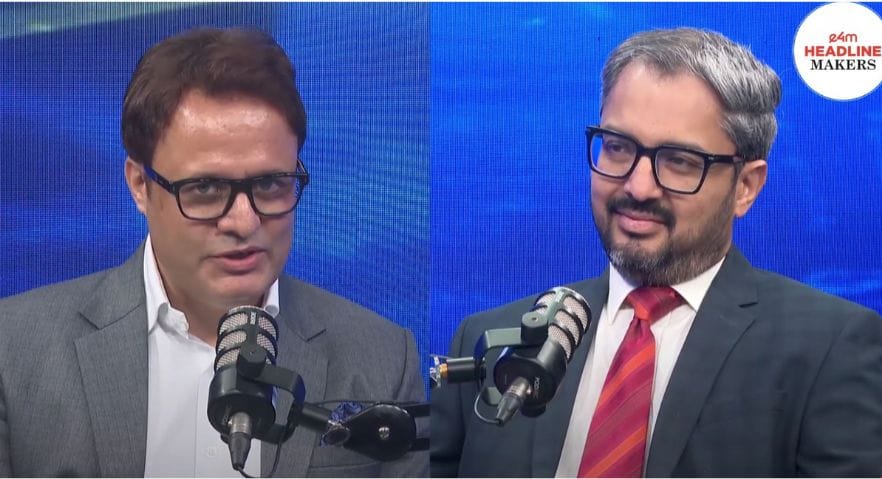

In a news ecosystem often critiqued for high-decibel shouting matches and polarised agendas, Zakka Jacob, Managing Editor of CNN-News18, is steering a quieter revolution.
Under his leadership, the network has embraced a calmer, more explanatory form of journalism, something increasingly rare in the era of clickbait and constant “breaking news.”
In this edition of Headline Makers, Jacob discusses the new screen architecture, editorial values, rising digital competition and why, for him, the story, not the noise, is king.
Your show has a notably calm and explanatory tone, contrasting sharply with the high-decibel news shows we often see. Where did this format come from, and why did you double down on it?
The real inflection point was COVID. We kept getting feedback that viewers didn’t want shouting matches. They wanted to understand the news, what happened, why it matters and how it affects them. So we moved away from the traditional panel debate format and began offering deep dives and explanatory content. It started small, maybe 5–10 minutes per hour, but now, nearly 90–95% of our show is composed of that style. It’s viewer-driven, not trend-driven.
Where do you draw the editorial line between being engaging and being sensational?
You have to be engaging, nobody wants boring news. But that doesn’t mean inflating facts. The job of a journalist is to stay as close to the truth as possible. If a story is strong, it doesn’t need “masala.” Like in film, if the script is good, it holds. The same applies to news.
What’s your take on the rise of YouTube journalism and digital-first independents? Competition or complementary?
I see it as complementary. Individual YouTubers can't match the scale, rigour or infrastructure of a legacy brand like CNN-News18. That said, they are forcing traditional media to be more agile. We have built entire teams for YouTube, Instagram and Shorts. It has helped us be faster and more relatable to younger audiences.
Do you think there’s a certain fatigue toward TV news, especially among younger viewers?
Viewership patterns have changed. There is less appointment viewing now. The content has to go where the viewer is on mobile, connected TV and social media. Viewers still care about news, but they want it delivered in formats they relate to. One-minute explainers, reels, vertical storytelling, it’s all part of the new game.
Let’s talk about your channel’s recent visual overhaul. What was the editorial thinking behind the new minimal screen architecture?
Again, viewer feedback. They wanted clarity, not chaos. We have moved away from cluttered graphics, clickbait visuals and jarring colours. Even on mobile, the viewer wants clean, digestible visuals. We are saying, "CNN-News18 makes sense", of your world, your day, your headlines. That’s the core of our new screen philosophy.
Has TV news become more intelligent than it was a few years ago?
I believe so. Viewers are demanding more meaningful content. They are pushing us to be sharper, more insightful. We are doing fewer loud debates and more deep dives. It is about shedding the noise and shining a light instead.
What is the biggest misconception people have about television news today?
That we are either sellouts or too liberal. The reality is far more nuanced. We are trying to do our job: hold power accountable, deliver the truth and operate within constraints. Polarization isn’t just in the media, it’s in the audience too.
What is your biggest challenge today as a newsroom leader?
Talent, attracting it and retaining it. Young journalists often leave after two or three years. But real growth happens after four or five. We need to create an environment where they feel valued and see a future.
Do you believe Indian news channels are making any impact globally?
Increasingly so. As India’s global stature grows, so does interest in what we have to say. During the Russia-Ukraine conflict and the Gaza war, the world listened to India’s position. Channels like ours help explain those positions and amplify India’s voice globally.
Lastly, how do you see the future of TV news? Will linear TV survive?
The medium will evolve, but curiosity won't die. People will always want to know what’s happening, why it matters. Whether on TV, mobile, or social media, the job remains the same. Go where the viewer is. Give them value. Make sense of their world.
Read more news about Digital Media, Television Media, Out of Home Advertising, Print Media, Latest Advertising India
For more updates, be socially connected with us onInstagram, LinkedIn, Twitter, Facebook, YouTube & Google News