Draft BS-VII norms expand emission rules to brake dust, tyre wear & EV batteries
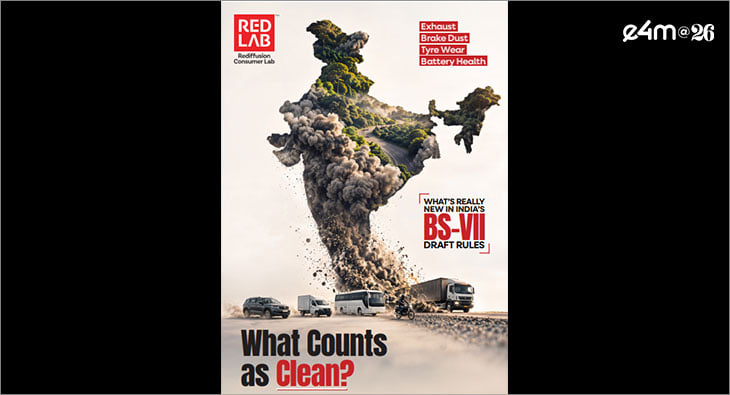
According to a report by RedLab examining the draft notifications, the proposed framework would introduce India's first Bharat Stage limits on brake emissions
 by
Published: Oct 27, 2026 8:18 AM | 5 min read
 Follow Us

- India's proposed Bharat Stage VII (BS-VII) emission standards aim to regulate not only exhaust emissions but also brake dust, tyre abrasion, battery durability, and real-world emissions performance, with draft notifications issued for public comment.
- The new standards are set to apply to light goods vehicles from April 1, 2030, and to buses and medium/heavy goods vehicles from April 1, 2031, introducing specific limits for brake emissions and tyre wear, although numerical limits for tyre abrasion are yet to be defined.
- Proposed regulations include minimum battery durability requirements for electric and plug-in hybrid vehicles, along with an Environmental Vehicle Passport for tracking fuel consumption and emissions, while also enhancing testing frameworks for exhaust emissions.
- The implementation of these standards could significantly impact automakers and component suppliers, requiring them to adapt to broader compliance responsibilities, though many details, including enforcement mechanisms and compliance for replacement parts, remain unresolved.
India’s proposed Bharat Stage VII (BS-VII) emission standards could expand vehicle pollution regulation beyond exhaust emissions to include brake dust, tyre abrasion, battery durability and real-world emissions performance.
Draft notifications issued by the Ministry of Road Transport and Highways on October 12 and 13, 2026, propose introducing the next phase of emission norms for light goods vehicles from April 1, 2030, and buses and medium and heavy goods vehicles from April 1, 2031. The proposals remain open for public comments and could change before finalisation.
The draft rules mark a shift in how vehicle emissions are assessed, with requirements extending to non-exhaust pollutants and the ability of vehicles to remain compliant over their operational life.
According to a report by RedLab examining the draft notifications, the proposed framework would introduce India's first Bharat Stage limits on brake emissions, establish tyre abrasion testing requirements and set minimum battery durability thresholds for electric and plug-in hybrid vans.
Passenger cars and two-wheelers are not covered by the two drafts. Reports of a separate BS-VII proposal for cars from April 2029 remain unverified in the RedLab report.
Brake Dust and Tyre Wear Enter the Regulatory Framework
One of the key changes is the proposed regulation of particulate emissions from braking systems. The draft norms prescribe brake particle limits for light goods vehicles from 2032, with requirements tightening further from 2035.
For lighter vans, the proposed limits are 3 milligrams per kilometre for electric vehicles and 7 milligrams per kilometre for other powertrains. For heavier vans, the corresponding limits are 5 mg/km and 11 mg/km. From April 1, 2035, a common limit of 3 mg/km is proposed across powertrains.
The proposed requirements recognise that vehicle pollution is not limited to combustion engines. Brake pads and discs generate particles through friction, including in electric vehicles, which continue to produce non-exhaust emissions despite having no tailpipe emissions.
The drafts also propose regulating tyre abrasion. Testing requirements are scheduled for light goods vehicle tyres from April 2032 and for tyres used on buses and trucks from April 2035.
However, the numerical limits for tyre wear have not yet been specified and are to be notified separately. The report also flags uncertainty over whether the requirements will extend to replacement tyres fitted during a vehicle's life, rather than only those assessed during vehicle approval.
Battery Durability Requirements Proposed for Electric Vans
The proposed BS-VII framework would introduce minimum battery durability requirements for electric and plug-in hybrid light goods vehicles.
From April 1, 2030, these vehicles would be required to retain at least 75% of their original battery energy capacity after five years or 1 lakh kilometres, and 67% after eight years or 1.6 lakh kilometres.
The report notes that additional battery-life requirements and the corresponding provisions for buses and trucks remain pending.
The proposals would also introduce an Environmental Vehicle Passport, intended to provide owners with information on fuel or energy consumption, battery health and emissions. The framework envisages on-board monitoring systems and anonymous over-the-air data transmission to track vehicle performance.
Under the proposed schedule, over-the-air monitoring would begin for vans in 2032 and for heavy vehicles in 2033. The drafts also envisage anti-tampering measures for engines, electronic control units, batteries, odometers and emissions-monitoring systems, with cybersecurity rules to follow.
However, questions remain about who would receive the emissions data, how it would be used and what enforcement action would follow if monitoring reveals non-compliance.
Tighter Testing and Longer Emissions Durability
While the proposed exhaust limits for light goods vehicles largely remain at BS-VI levels, the testing framework would become more stringent.
The draft proposes counting particle emissions down to 10 nanometres, compared with the existing 23-nanometre threshold. It also provides for real-world testing and a conformity factor of 1.0 for vans, subject to the applicable testing procedures and margins.
For buses and trucks, the proposed nitrogen oxide (NOx) limit would fall to 200 mg/kWh under laboratory testing and 260 mg/kWh on the road, roughly half the existing BS-VI range cited in the report. The framework would also introduce limits for additional pollutants, including ammonia, methane and nitrous oxide.
The proposals seek to ensure that vehicles remain compliant beyond the initial certification stage. For vans, emissions durability requirements would extend to as much as 2 lakh kilometres or 10 years. For the heaviest trucks and buses, the proposed extended period would reach 8.75 lakh kilometres or 15 years, subject to the specified testing and adjusted limits.
This would make emissions performance over a vehicle's life a more important part of regulatory compliance, rather than relying primarily on tests conducted before a model enters the market.
Implications for Automakers and Component Suppliers
If adopted, the proposed rules could broaden compliance responsibilities across the automotive value chain, including vehicle manufacturers, brake and tyre suppliers, battery developers, software teams and testing agencies.
Brake materials, tyre compounds, battery-management systems and on-board monitoring technologies could become more central to regulatory compliance. Manufacturers may also need to strengthen data management and anti-tampering systems to meet the proposed monitoring requirements.
However, the financial impact remains uncertain. The RedLab report says it could not trace circulating cost estimates to credible sources and highlights gaps in the proposed requirements, particularly around tyre limits, heavy-vehicle brake and battery provisions, and replacement components.
The drafts also do not fully resolve how compliance would be maintained when brake pads and tyres are replaced after a vehicle has entered service.
Several Questions Remain Open
The proposed BS-VII rules represent a broader approach to vehicle emissions, but important details remain unresolved. These include the numerical limits for tyre abrasion, requirements for certain heavy-vehicle components, the treatment of replacement parts and the governance of emissions data collected through on-board monitoring.
The proposals also do not address all sources of urban air pollution. Road and construction dust, industrial emissions, power generation, waste burning and household fuels continue to contribute to poor air quality.
The draft standards therefore represent a significant proposed expansion of vehicle emission regulation, rather than a standalone solution to India's air pollution challenge. Their eventual impact will depend on the final rules, the scope of implementation and the enforcement mechanisms put in place.
Read more news about Digital Media, Television Media, Out of Home Advertising, Print Media, Latest Advertising India
For more updates, be socially connected with us onInstagram, LinkedIn, Twitter, Facebook, YouTube & Google News