Brand Modi at 25: The evolution, endurance and communication strategy of Narendra Modi
Guest Column: Veteran journalist Alok Mehta writes why Brand Modi is a story of political communication, organisation, media relationships, technology & the ability to continuously renew a personality
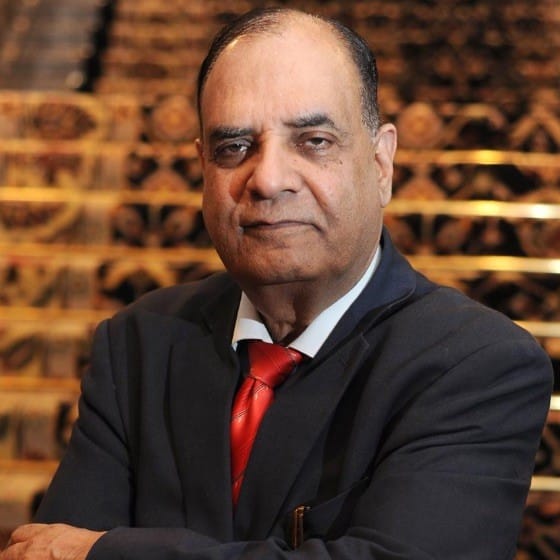 by
by
Published: Sep 17, 2026 2:26 PM | 9 min read
 Follow Us

- Narendra Modi has been a significant figure in Indian politics for 25 years, evolving from Gujarat Chief Minister in 2001 to Prime Minister, with a focus on political communication and media engagement.
- His literary background, including early writings in Gujarati and experiences during the Emergency, has shaped his communication style and political identity, emphasizing development and direct engagement with the public.
- Modi's communication strategy, exemplified by the radio program "Mann Ki Baat," combines traditional and digital media to reach a wide audience, demonstrating adaptability in his messaging and public persona.
- The release of the book "Revolutionary Raj: Narendra Modi's 25 Years" aims to document Modi's political journey and the transformation of political communication in India over the past quarter-century.
Twenty-five years is a long period in politics. Governments change, political slogans disappear, media technologies are transformed and public perceptions continually evolve. Yet Narendra Modi has remained at the centre of India's political conversation for a quarter of a century—from becoming Chief Minister of Gujarat in 2001 to completing twelve years as Prime Minister in 2026.
The evolution of what may be called “Brand Modi” is therefore not simply the story of an individual politician. It is also a story of political communication, writing, organisation, media relationships, technology and the ability to continuously renew a political personality without abandoning its essential identity.
For me, however, Narendra Modi is not simply a political personality whom I have observed as a journalist. I have known him and members of his family for a long period. Our association has also had an unusual literary dimension. Modi wrote forewords for two of my books, Naman Narmada and Social Reform in India. In January 2026, my coffee-table book Revolutionary Raj: Narendra Modi's 25 Years was released, documenting his political journey through photographs, events and journalistic observation. Its foreword was written by Amit Shah, one of Modi's closest political associates and an important architect of the BJP's organisational expansion. This personal association gives me another perspective from which to examine Brand Modi—not simply as an electoral phenomenon, but as an evolving method of communication.
One aspect of Narendra Modi's personality that is sometimes overshadowed by his political career is his long-standing interest in writing.Much of his early writing was in Gujarati, his mother tongue. His first book, Sangharsh Ma Gujarat—Gujarat in Struggle—was written after the Emergency and published in Gujarati in 1978. It recorded his experiences and observations of the political struggle in Gujarat during the Emergency. The book later went through further editions.
This is important in understanding the later Modi communication style. The political communicator emerged partly from the writer. During the Emergency, Modi was a young RSS pracharak working underground. His experiences included clandestine communication, distribution of literature and maintaining contacts among people involved in the anti-Emergency movement. His own account of those years subsequently became written political history from his perspective.
The subject returned to national attention in 2025 when Amit Shah released The Emergency Diaries: Years That Forged a Leader, a compilation of Modi's experiences during the anti-Emergency movement. The Ministry of Home Affairs said the book drew on his experiences as a young pracharak working underground and included accounts concerning censorship, repression and the wider movement.
Thus, before Modi became a television personality or a digital communicator, he had already experienced politics as a writer, organiser and underground communicator.
Modi's writing has not been restricted to political documentation. He has also written poetry, reflections and books dealing with personal experiences, society and public life.His Gujarati writing reveals a more reflective dimension of his personality than the conventional image of the political campaigner. Nature, spirituality, discipline, solitude, social concerns and personal experience appear repeatedly in his literary work.
That literary dimension is relevant to my own association with him. His willingness to write forewords for Naman Narmada and Social Reform in India demonstrated that our interaction was not confined to electoral politics. Narmada, social reform and India's changing society were subjects on which a political leader and a journalist-author could engage through books.In that sense, the Modi I encountered was not only a politician seeking publicity. He was also a reader, writer and communicator who understood the power of the written word.
When Modi became Gujarat Chief Minister in 2001, his communication environment was very different from that of the Prime Minister of India today. Television news channels and newspapers were still the principal instruments of political communication. Modi developed a direct relationship with journalists and editors, including many people whom he regarded as serious, nationalist and professionally independent.
From my own experience of the media world, I observed that he maintained communication with journalists whom he trusted, including people who were not necessarily part of the BJP organisation. Journalists and editors were invited to Gujarat, particularly around events such as the Vibrant Gujarat summits, where the government sought to present Gujarat as an investment and development destination.
This interaction with the media served several purposes simultaneously: it provided journalists access to the political leadership, allowed Gujarat's development narrative to reach national audiences, and gave Modi an opportunity to explain his own interpretation of events directly .After he moved to Delhi, this pattern of engagement with journalists continued in a different and much larger environment.
The essential lesson was that political communication could not be separated from relationships with people who communicate politics to the public.
During his Gujarat years, “development” became one of the central components of Modi's political identity. Investment summits, infrastructure, industrialisation, governance and administrative efficiency were repeatedly incorporated into the public narrative surrounding Gujarat. Vibrant Gujarat became particularly important as an international platform through which the state sought investment and visibility. The communication strategy was increasingly sophisticated: an event could simultaneously be a government programme, an economic meeting, a media event and a political message.
That approach became much more powerful after 2014.
The Gujarat Chief Minister's communication machinery was transformed into a national political communication system.
Brand Modi cannot be understood independently of the BJP organisation.Modi's years as an RSS worker and BJP organiser gave him experience in building networks, mobilising cadres and understanding political communication at the grassroots. Later, his partnership with Amit
Shah became particularly significant.
The combination of organisation and personality became one of the defining characteristics of the Modi era in the BJP.The individual leader supplied a highly recognisable public face; the organisation supplied the network capable of taking that message from Delhi to states, districts, villages and digital communities.
My 2026 book Revolutionary Raj: Narendra Modi's 25 Years attempts to document precisely this long journey—from organisational politics to Gujarat governance and then to national and international leadership.
The fact that Amit Shah wrote the foreword adds another dimension to the book. Shah has been closely associated with the organisational side of the Modi political project, and his perspective helps connect the personality of Modi with the institutional machinery around him.
Mann Ki Baat: From Radio to a National Conversation
Perhaps the most striking example of Modi's communication strategy is Mann Ki Baat.It would be easy to assume that a political leader in the digital age would rely primarily on social media. Modi instead recognised the continuing power of radio.When Mann Ki Baat began in 2014, it created a regular direct communication channel between the Prime Minister and citizens. Modi himself later explained that radio had extraordinary reach and depth, connecting remote villages, farmers, young professionals and metropolitan audiences. The programme then developed into something larger than a conventional radio address. Letters, telephone calls, MyGov suggestions, app comments and social-media responses became part of a continuing communication cycle.
By the time of the programme's 100th episode in 2023, an IIM Rohtak study commissioned by Prasar Bharati reported that 96% of the population surveyed was aware of Mann Ki Baat and that 100 crore people had listened to it at least once. The same study estimated 23 crore regular listeners. These figures are measures of reach and awareness, not independent measures of political approval.
The scale is extraordinary. Rather than abandoning traditional media for digital media, Modi effectively combined them: Radio, television, newspapers, websites, mobile applications, social media and direct public interaction.That combination is central to understanding the endurance of his communication strategy.
Another feature of Brand Modi is the ability to change political vocabulary while maintaining a recognisable personal identity. At different stages, the public image has included the Gujarat administrator, development-oriented Chief Minister, BJP organiser, campaigner, “chaiwala,” Prime Minister, technology-oriented leader, nationalist communicator and global statesman. The themes have changed according to political circumstances, but certain recurring elements remain: personal effort, discipline, national service, direct communication, a connection with ordinary citizens and an emphasis on India's civilisational and national identity.
A political leader who writes can construct a narrative about himself in words. A political leader who understands media can distribute that narrative. A political organisation can take it to the grassroots. And digital technology can multiply it almost instantaneously.
Modi has operated across all four levels.
For me, the journey from knowing Modi and his family over many years to writing Revolutionary Raj: Narendra Modi's 25 Years has been particularly significant.
His earlier forewords for Naman Narmada and Social Reform in India belong to an earlier phase of our association. My 2026 coffee-table book belongs to a very different phase: an attempt to document twenty-five years of Modi's political journey through photographs, political events and journalistic observation.
The foreword by Amit Shah provides an important bridge between personal leadership and political organisation.The book therefore represents more than a collection of photographs. It is an attempt to examine how a political personality evolved over twenty-five years—and how that personality was communicated to an India undergoing enormous technological, economic and social transformation.
After twenty-five years, Brand Modi is worth studying precisely because it cannot be explained by one slogan, one election or one medium.Its evolution contains several layers the writer, the RSS organiser, the BJP strategist, the Gujarat Chief Minister, the development communicator, the media personality, the Prime Minister, the radio broadcaster and the digital-age political communicator.
The roots go back much further than social media.They can be traced to Gujarati writing, political organisation, the experience of the Emergency, relationships with journalists, public meetings and the understanding that communication is not merely about delivering a speech—it is about creating a continuing relationship with an audience.
Mann Ki Baat represents perhaps the clearest example of this philosophy: an old technology transformed into a modern political communication platform, linked to millions of citizens and amplified through television and digital media.
My own association with Narendra Modi—from his Gujarati and literary interests, to his forewords for my books, to my long experience as a journalist, and finally to Revolutionary Raj: Narendra Modi's 25 Years—offers one personal window into that much larger story. Twenty-five years after Modi entered the highest level of state leadership, the phenomenon is no longer simply about political branding. It is also a case study in the transformation of political communication in India—from the printed page and personal media relationships to radio, television, smartphones and a direct digital connection with millions. On his Birth Day – I wish him a great success not limiting India, but in the world politics for peace and progress of the society .
Disclaimer: The views expressed here are solely those of the author and do not in any way represent the views of exchange4media.com.
Read more news about Digital Media, Television Media, Out of Home Advertising, Print Media, Latest Advertising India
For more updates, be socially connected with us onInstagram, LinkedIn, Twitter, Facebook, YouTube & Google News