Celebrating Rahul Kanwal: A career built on news, leadership and reinvention
As he celebrates his birthday today, Kanwal’s professional journey is also a story of repeatedly adapting to an industry that rarely stands still
 by
by
Published: Sep 14, 2026 8:18 AM | 4 min read
 Follow Us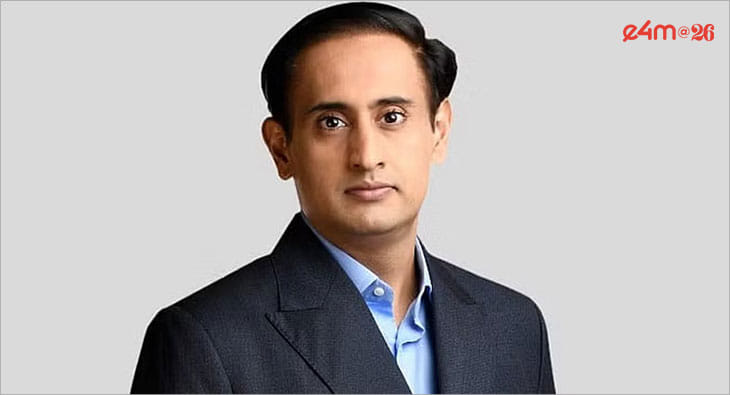

- Rahul Kanwal, a prominent figure in Indian television news, has adapted to the evolving media landscape over 25 years, transitioning from reporter to CEO and Editor-in-Chief of NDTV.
- His career began in 1999 with Zee News and included significant roles at Aaj Tak and the India Today Group, where he focused on politics, elections, and investigative journalism.
- Kanwal has been instrumental in newsroom innovations, such as the Anti-Fake News War Room, emphasizing fact-checking and technology in journalism.
- His recent appointment at NDTV marks a shift to overseeing both editorial and business operations, reflecting broader changes in the media industry as leaders balance journalism with audience engagement and sustainability.
Indian television news has changed dramatically over the past two-and-a-half decades. Formats have evolved, audiences have fragmented, digital platforms have rewritten consumption habits and the role of the television journalist itself has undergone a transformation. Through much of that change, Rahul Kanwal has remained a prominent presence, first as a reporter, then an anchor, newsroom leader and, today, as CEO and Editor-in-Chief of NDTV.
As he celebrates his birthday today, Kanwal’s professional journey is also a story of repeatedly adapting to an industry that rarely stands still.
His television career began in 1999 with Zee News before he joined Aaj Tak in 2002. What followed was a long innings within the India Today Group ecosystem, where he steadily moved from reporting assignments to anchoring and senior editorial responsibilities. Over the years, politics, elections, national affairs and investigative journalism emerged as some of the defining areas of his work.
Kanwal became one of the recognisable faces of television news through programmes including NewsTrack and the interview-led Jab We Met. His on-air persona was built around high-energy news presentation, political questioning and an instinct for the big national story. But limiting his career to his years in front of the camera would tell only part of the story.
As his responsibilities grew, so did his involvement in newsroom strategy and innovation.
At the India Today Group, Kanwal was associated with initiatives such as the Anti-Fake News War Room and the Open Source Intelligence Desk. Both represented an important shift in news gathering, bringing fact-checking, verification, open-source information and technology more systematically into newsroom workflows at a time when misinformation was emerging as one of journalism’s biggest challenges.
His career has also combined newsroom experience with formal academic and management exposure. A Delhi University alumnus, Kanwal went on to study International Broadcast Journalism at Cardiff University as a Chevening Scholar. He later attended the General Management Program at Harvard Business School, an experience particularly relevant to the leadership role he occupies today.
The most significant turn in his career came in 2025.
After spending more than two decades within the India Today ecosystem, Kanwal moved to NDTV as CEO and Editor-in-Chief. The appointment marked more than a change of newsroom. It fundamentally expanded the scope of his mandate.
For a journalist accustomed to chasing stories, conducting interviews and managing editorial teams, the new position brought responsibility for both the editorial and business sides of a major news organisation. His task was no longer simply to decide what should lead the bulletin; it was also to think about audiences, revenue, technology, talent, products, platforms and the long-term positioning of the institution.
That transition reflects a wider change taking place in the media industry. Today’s newsroom leaders increasingly operate at the intersection of journalism, technology and business. Maintaining editorial credibility remains fundamental, but so does building a sustainable organisation capable of competing for audiences across television, digital, social media and emerging formats.
For Kanwal, NDTV therefore represents perhaps the biggest test and opportunity of his career.
It also represents a striking evolution. The young reporter who entered television journalism at the end of the 1990s has moved through almost every layer of the profession: field reporting, anchoring, political journalism, newsroom management and executive leadership.
Along the way, recognition has followed. His career has included honours for anchoring and journalism, including recognition at the exchange4media News Broadcasting Awards, while his reporting credentials have also included a Rory Peck Trust grant for hostile-environment journalism training.
Yet perhaps the more interesting measure of Kanwal’s journey is not the number of roles he has occupied, but how different those roles have been.
From reporting the news to presenting it, from managing journalists to running a media organisation, each chapter has demanded a reinvention.
Today, as Rahul Kanwal celebrates another birthday, his story remains unfinished. The anchor who spent years questioning people in positions of power now finds himself confronting a different set of questions about trust, transformation and what the news organisation of the future should look like.
Read more news about Television Media, Digital Media, Advertising India, Marketing News, PR and Corporate Communication News
For more updates, be socially connected with us onInstagram, LinkedIn, Twitter, Facebook YouTube & Google News