Zakir Khan: How the ‘Sakht Launda’ turned relatability into an advertising asset
As Zakir Khan celebrates his 39th birthday, his brand collaborations show how staying true to his voice has become his biggest commercial strength
 by
by
Published: Aug 20, 2026 8:42 AM | 8 min read
 Follow Us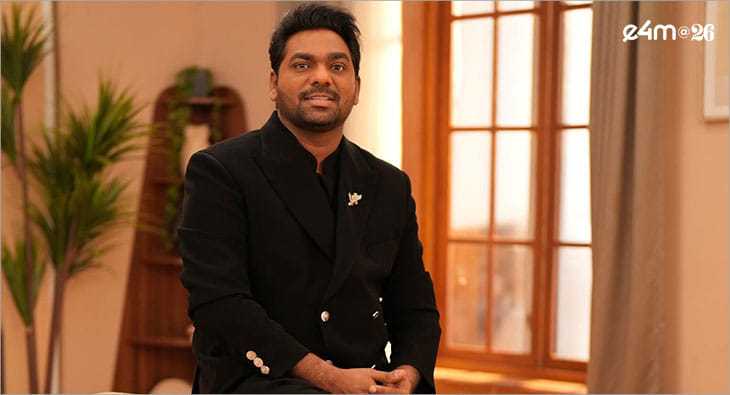

- Zakir Khan, a popular comedian known for his relatable storytelling and the 'Sakht Launda' persona, has successfully transitioned into advertising by maintaining his authentic voice while collaborating with various brands across sectors like fintech, fashion, and telecom.
- His advertising partnerships leverage his unique comedic style and personal anecdotes, allowing brands to connect with audiences in a more relatable and engaging manner, as seen in campaigns for Deciml, Myntra, and Set Wet.
- Khan's consistent persona and storytelling ability have made him a valuable asset for brands looking to move away from traditional celebrity endorsements, as he embodies a cultural shorthand that resonates with his audience.
- Despite announcing a potential long break from live comedy for personal reasons, Khan's established brand identity and scarcity may enhance his appeal in the advertising space, demonstrating the effectiveness of creator-led storytelling in modern marketing.
For most comedians, the challenge of moving from stand-up to advertising is to ensure that the joke does not overpower the brand. For Zakir Khan, the equation has worked differently. Over the years, brands have increasingly plugged into the very qualities that built his popularity in the first place: everyday storytelling, middle-class observations, self-deprecating humour and the now-iconic ‘Sakht Launda’ persona.
As Zakir Khan turns 39, his advertising journey offers an interesting case study in how a comedian can build a commercial identity without completely diluting his own voice. From fintech and grooming to fashion and telecom, his collaborations have generally allowed him to remain Zakir first and brand ambassador second, giving marketers access to an audience that recognises his tone almost instantly.
That distinction matters in a creator economy where audiences are increasingly wary of conventional celebrity endorsements. Zakir's strongest brand collaborations do not ask him to become someone else for the camera. Instead, they take a product proposition and place it inside the world his audience already knows.
From ‘Sakht Launda’ to a marketable personality
Zakir Khan's rise began with his 2012 win on Comedy Central's ‘India's Best Stand Up’, but his eventual commercial appeal came from something bigger than winning a comedy competition. His stories about relationships, family, friendships, school, small-town aspirations and middle-class life created a persona that audiences could recognise beyond individual punchlines.
The ‘Sakht Launda’ identity became particularly powerful because it was not presented as an aspirational celebrity character. It was deliberately ordinary, flawed and familiar. For advertisers, that created an unusual combination: a mass entertainer with a distinctly personal voice.
His subsequent stand-up specials, including Haq Se Single, Kaksha Gyarvi, Tathastu, Mannpasand and Delulu Express, further strengthened that association. His YouTube presence and streaming specials also helped turn his storytelling style into a recognisable piece of intellectual property in its own right.
That is arguably what brands are buying when they work with Zakir. They are not merely buying reach. They are buying access to a storytelling format that already has audience recognition. One such example is Pepsi India:
Deciml showed what happens when the brand enters Zakir’s universe
One of the clearest examples came in 2023 when micro-investing platform Deciml built its ‘Influesters’ campaign around creators who were also investors in the company.
The campaign featured Zakir alongside creators including Bhuvan Bam, Ranveer Allahbadia, Suhani Shah and others. Instead of presenting a conventional fintech endorsement, the films built humour around the idea that creators approached as influencers had effectively become stakeholders in the company.
Zakir's film leaned heavily into his familiar comic rhythm and even played with the word ‘Influester’, turning the commercial relationship itself into the joke.
The campaign, conceptualised by Bare Bones Collective, reportedly generated 25 million-plus campaign reach, ₹24 million in earned media and more than 228,000 app installs, according to the agency's case study.
For marketers, the important takeaway was less about the numbers and more about the format. Deciml did not try to make Zakir sound like a finance expert. It made the fintech proposition fit naturally into his storytelling language.
Myntra put the comedian inside a fashion fantasy
The same principle played out differently when Zakir featured alongside Jacqueline Fernandez for The Roadster Life Co., Myntra's fashion brand.
The 2024 campaign, ‘Trends with Benefits’, positioned the duo around trend-first fashion, with the narrative built around Zakir's humorous dream of impressing Jacqueline through his appearance. The story begins with a fantasy involving a luxury car before revealing that the real transformation comes from his fashion choices.
The campaign was particularly interesting because fashion advertising traditionally relies heavily on aspiration, glamour and celebrity desirability. Zakir brings a different currency to that equation.
His presence makes the aspiration humorous and accessible rather than distant. Even when the campaign places him alongside a mainstream Bollywood celebrity, his character remains recognisably Zakir.
The outdoor extension of the campaign further amplified the celebrity pairing, with Laqshya Media Group executing large-format innovations across cities, including a 60-by-30-foot billboard in Lucknow featuring Jacqueline.
Set Wet used his personal story, not just his popularity
For Set Wet, the association went closer to Zakir's own grooming journey.
The brand's 2023 #ApniHairStyleHiApniVibeHai campaign had Zakir talk about how hairstyling became part of his own grooming routine. Rather than simply asking him to demonstrate a product, the campaign used his anecdotes and humour to build a larger conversation around confidence and personal style.
The campaign's ‘Baal Set, Toh Vibe Set’ proposition worked because it connected an otherwise conventional grooming message to something personal about Zakir.
Again, the advertising did not attempt to erase the comedian's identity. His storytelling became the advertising device.
Airtel and the power of everyday Zakir
Telecom is another category where relatability becomes particularly valuable because the product is woven into everyday life.
Zakir has appeared in Airtel's brand communication, including content built around witty observations, nostalgia and everyday situations. Airtel has also featured him in its Postpaid Advantage Club communication.
This is where his positioning as an ‘everyman’ performer becomes commercially useful. His humour does not depend on elaborate sets or larger-than-life characters. It can emerge from a classroom memory, a friend-group conversation or an awkward everyday interaction.
For a mass brand, that gives marketers a relatively flexible creative asset.
Even a stage integration can become advertising content
His Vicks association offered another route: rather than placing Zakir inside a conventional television commercial, the brand integrated itself into the environment where he already has the strongest audience connection, his live show.
The appeal of such integrations is obvious. A comedian's stage performance is inherently conversational, while a product placement can often feel disruptive. When the brand is incorporated into the comedian's existing performance rhythm, the distinction between content and advertising becomes less obvious.
That model reflects a wider shift in entertainment marketing, where brands are increasingly trying to become part of creator-led formats instead of simply interrupting them.
Why Zakir continues to work for brands
The biggest strength of Zakir Khan's advertising appeal may be that his persona has remained remarkably consistent.
He has moved from stand-up stages to streaming platforms, television, podcasts, acting and large-scale international performances, but the core character has remained familiar. That consistency gives brands a recognisable cultural shorthand.
A marketer does not necessarily have to explain who Zakir is before using him in a campaign. His pauses, expressions, Hindi storytelling style and observations about everyday life already carry meaning for his audience.
That makes him particularly useful at a time when advertising is moving away from polished celebrity endorsements towards creator-led storytelling.
His relatability is therefore not simply a personality trait. It has become a commercial asset.
From comedian to a brand in his own right
Zakir's career also shows how the creator economy has changed the definition of celebrity.
Earlier, an actor or sportsperson could build a commercial portfolio largely through conventional endorsements, with brands borrowing fame to create awareness. Creators such as Zakir operate differently. Their commercial value is tied to the relationship they have built with audiences through a distinctive voice.
That makes authenticity less about whether a celebrity uses a product in real life and more about whether the advertising feels native to the personality audiences chose to follow.
Zakir has managed to maintain that balance across categories that have little obvious connection with each other.
A fintech app can use his humour to explain investing. A grooming brand can use his personal story. A fashion brand can turn his lack of conventional fashion-star credentials into the joke. A telecom brand can put him into everyday situations.
The product changes. The Zakir Khan storytelling engine does not.
The long break may make his brand even more valuable
Interestingly, Zakir's commercial journey now enters a different phase. In January 2026, during his Papa Yaar tour in Hyderabad, he announced that he planned to take a long break from live comedy, potentially lasting three to five years. He said the decision was connected to his health and other matters he needed to address.
He later clarified that reports around his health had been exaggerated and said he also wanted to focus on writing work that had accumulated over several years.
For the advertising industry, the hiatus does not necessarily diminish his value. If anything, scarcity can make a creator's appearances more distinctive, particularly when the personality has already built a strong body of work.
Zakir Khan's journey therefore offers marketers a useful lesson: the strongest creator brands are not built by making creators behave like celebrities. They are built by allowing the creator's existing cultural identity to do the advertising.
And in Zakir's case, the biggest brand he has built may not be any of the products he has endorsed. It is Zakir Khan himself, a storyteller whose most valuable proposition remains the same one that made audiences listen in the first place: he sounds like someone they already know.
Read more news about Digital Media, Television Media, Out of Home Advertising, Print Media, Latest Advertising India
For more updates, be socially connected with us onInstagram, LinkedIn, Twitter, Facebook, YouTube & Google News
