Narendra Modi at 76: What India’s most recognisable political brand teaches communications
As our Hon. Prime Minister Narendra Modi turns 76, explore how his unique communication strategies have shaped India's political landscape and what it reveals about leadership, trust and reputation
 by
by
Published: Sep 17, 2026 1:51 PM | 8 min read
 Follow Us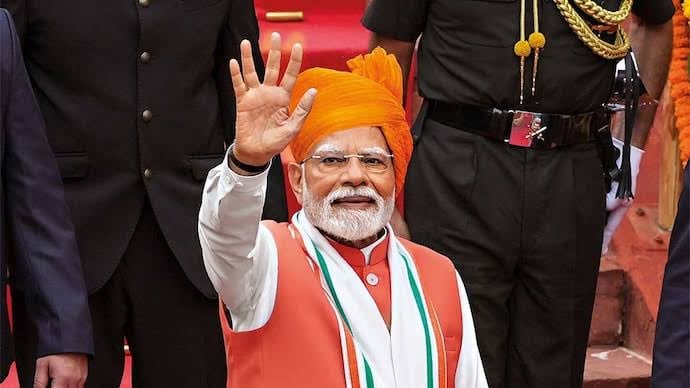

- Prime Minister Narendra Modi, who turned 76 on September 17, has developed a comprehensive communication strategy that utilizes multiple platforms, including social media, radio, and public events, to maintain visibility and engagement with diverse audiences.
- His approach emphasizes direct communication with citizens, utilizing technology and social media to create a direct channel for interaction, exemplified by initiatives like the monthly radio program "Mann Ki Baat," which has become a consistent communication vehicle since its launch in 2014.
- Modi's communication model integrates participatory campaigns, such as Swachh Bharat and Har Ghar Tiranga, which encourage public involvement and relationship-building, demonstrating a shift from traditional political messaging to a more engaged, narrative-driven approach.
- His crisis communication during the COVID-19 pandemic showcased his ability to provide clear, actionable guidance while fostering a sense of collective action, highlighting the importance of adaptability and audience engagement in effective communication strategies.
On September 17, our honourable Prime Minister Narendra Modi turned 76. But while birthdays are usually occasions to look at a person’s journey, his public life shows the rise of the leader as a communications platform in his own right.
There are a few contemporary Indian political figures who have built such a sustained, multi-platform communication ecosystem around themselves. From radio to Instagram, from mass rallies to one-to-one digital engagement, from domestic campaigns to meetings with world leaders, his communication model offers a case study in how a public personality can maintain visibility, recognition and a consistent narrative across very different audiences.
Over the last decade, he has not merely occupied the office of Prime Minister. He has also become one of the most recognisable faces of the Indian state, government communication and political messaging.
The interesting part is not WHAT he communicates but ‘HOW’.
Talk directly to people
One of the defining features of his communication strategy has been his emphasis on direct communication.
In 2014, shortly after becoming Prime Minister, Modi described technology and social media as important tools for direct communication. The official Prime Minister’s website was presented as a medium through which he could communicate with citizens while also listening and sharing. 
He shifted the strategy where political leaders heavily depended on television, newspapers and traditional media gatekeepers. Instead, in November 2014, Modi joined Instagram, adding another platform to an already extensive digital presence that included Facebook, Twitter, Google+, LinkedIn and others. The Prime Minister’s Office explicitly described social media as a way to create a direct channel between the Prime Minister and citizens. 
He always followed a simple strategy of ‘Don’t wait for the audience to come to you. Go where the audience already is.’ He was one of the few political figures who adopted it at scale relatively early in India’s political digital era.
The power of a recurring story
In October 2014, Mann Ki Baat began.
Its importance as a communications vehicle lies partly in its consistency. Instead of communicating only when there was a major announcement or political event, he established a recurring appointment with the public.
By its 100th episode in 2023, the programme had become a long-running communication institution. He described it as a way of remaining connected with ordinary citizens after moving from Gujarat to Delhi and said that he regularly read messages and letters from listeners. The format also reversed the traditional direction of political communication.
Through this, he created recurring narrative for ordinary citizens, local initiatives, national themes, behavioural appeals and stories that can be repeated across other media.
According to a 2025 Press Information Bureau release, Mann Ki Baat continues to use radio, television, YouTube, social media, the NewsOnAir app and other platforms, while citizens can send suggestions through MyGov, letters, emails and voice messages.
Consistency creates familiarity, familiarity creates recognition, and recognition creates an easier route for a message to travel. For brands, this is uncomfortable to accept because many corporate communication programmes still operate campaign-to-campaign.
The CEO appears when there is a product launch, the company speaks when there is a crisis, the spokesperson surfaces when there is an announcement, then the organisation goes quiet.
With time, he established the rule that reputation is built in the periods between major announcements.
Power of Relationship Management
Another distinctive element is the conversion of communication into participation.
The Swachh Bharat initiative is an obvious example. The communication around cleanliness was designed as a participatory campaign, with public figures, citizens and institutions encouraged to visibly participate.
The same principle appeared in Har Ghar Tiranga, where he used his own social media presence to encourage citizens to change their profile pictures to the Tricolour. This is a familiar ambition in corporate communications: moving from awareness to action.
And now, the Seva Sankalp Abhiyan, launched today, September 17, to mark his 76th birthday and his 25 years in public service. The month-long campaign, running until October 17, includes blood donation camps, cleanliness drives, health initiatives, welfare activities and public outreach across the country. From a communications lens, the interesting part is the conversion of a personal milestone into a participatory public narrative.
But the difference lies in designing communication with a behavioural endpoint.
Communication is also relationship management and becomes more powerful when the audience has a role in the story.
In an interview, he described personal engagement with foreign leaders as important because, in his view, governments increasingly operate in an interconnected world where people-to-people relationships matter alongside government-to-government relations. This illustrates a classic reputation-management principle that relationships are built through repeated contact, not a single interaction.
Whether the audience is a citizen, entrepreneur, celebrity, foreign leader or community group, sustained communication creates familiarity.
For companies, this could mean employees adopting a new behaviour, customers participating in a programme, stakeholders contributing to a cause or communities becoming part of an initiative.
The leader as the brand asset
Perhaps the biggest shift in his communication model is the degree to which the person and the institution have become intertwined in public perception.
A company can have an excellent brand identity and still have an invisible CEO.
Modi's public communication has followed almost the opposite route. His face, voice, mannerisms, vocabulary and recurring phrases are immediately identifiable.
Research on Modi's political communication has examined precisely this personalisation. One study comparing his 2014 and 2019 Twitter communication found a shift from a first-time contender's emphasis on attacking opponents and promising growth towards greater self-promotion and direct connection with voters as an incumbent. This creates what might be called a leader-led reputation. The person becomes a shortcut for understanding the institution.
There are obvious advantages of this strategy such as recognition, emotional connection, memorability and message consistency among varied audiences.
Crisis communication: clarity, symbolism and collective action
The COVID-19 pandemic offered one of the clearest demonstrations of his crisis communication style.
On March 24, 2020, Modi addressed the country to announce a nationwide lockdown beginning at midnight and framed the decision around the need to protect lives. If communicated poorly, it could have backfired in unprecedented ways. However, his communication approach helped shape the public narrative around one of the country’s most unprecedented crises and gave people a sense of confidence and direction.
Following the consistency ladder, he showed up timely, addressed citizens again and connected the public's actions such as the March 22 Janata Curfew and the symbolic clapping and bell-ringing to a broader idea of collective strength.
The communications architecture was notable for its use of simple behavioural instructions like stay home, maintain discipline, stand together, recognise frontline workers, and most importantly, act collectively.
He followed an important crisis-communication principle which is that during uncertainty, audiences often need more than information. They need to understand what they are expected to do. Communication is also relationship management
And now, the Gen Z test
The evolution continues. His speeches at global summits often use the vocabulary of diplomacy, development, technology and India's global role. His radio communication happens to be more conversational and citizen-focused. His social media posts are shorter and more visual. His mass-event speeches rely heavily on repetition, slogans and emotional crescendos.
In 2026, his digital communication began experimenting with a noticeably more informal Instagram language, including selfie-style videos and more casual content aimed at younger audiences.
From Mitro to Hello Friends, he has continuously adapted his communication persona to the audience, context and platform
Reuters reported in August that this shift followed youth-led protests and a broader effort by the BJP to adapt its digital outreach to younger audiences. For more than a decade, his digital identity was associated with highly controlled, polished and recognisable communication.
Now the environment itself is changing. However, the lesson is not that every brand should suddenly become casual. It is that a successful communication system has to evolve when audience behaviour changes.
Authenticity cannot simply mean making a formal brand look informal. The audience has to believe the behaviour is native to the platform.
What his communication model teaches communicators
For India's communications industry, perhaps the most useful way to study Prime Minister’s is as a long-running case study in scale, repetition, personalisation and narrative control.
The following principles stand out.
Build owned channels before you need them.
A crisis is a bad time to discover that your organisation has no direct relationship with its stakeholders.
Make communication habitual.
Reputation grows through repeated, consistent interactions—not only through major campaigns.
Give audiences a role.
The strongest narratives turn audiences from spectators into participants.
Build the leader, but don't make the organisation invisible.
A recognisable CEO can humanise a company. Overdependence on that personality can also create concentration risk.
Match the message to the medium.
A 30-second Reel, a CEO speech, and a global summit speech cannot follow the same communication grammar.
And perhaps there is a sixth:
The communicator is no longer merely distributing information. The communicator is designing an ecosystem.
The birthday lesson
Perhaps that is the most interesting way to look at his birthday.
Not simply as the birthday of a political leader, but as a moment to examine the communications phenomenon surrounding a public figure.
From a radio programme reaching millions to hashtags that invite participation; from social-media posts to international meetings; from grassroots stories to carefully repeated national themes, his underlying strategy of being visible, accessible, tell stories, repeat the message, invite participation, and build relationships is remarkably impactful.
The takeaway from his journey is that a strong public reputation is rarely built by one campaign. It is built when every channel, every story and every interaction reinforces a coherent identity over time.
Read more news about PR and Corporate Communication News, Internet Advertising, Marketing News, Digital Media News, People Movement News
For more updates, be socially connected with us onInstagram, LinkedIn, Twitter, Facebook YouTube & Google News