The Changing Boundaries of PR and Marketing
Vivek Pradeep Rana, Managing Partner at Gnothi Seauton weighs in on the growing overlap between PR, marketing and paid influence
 by
by
Published: Aug 26, 2026 6:33 PM | 6 min read
 Follow Us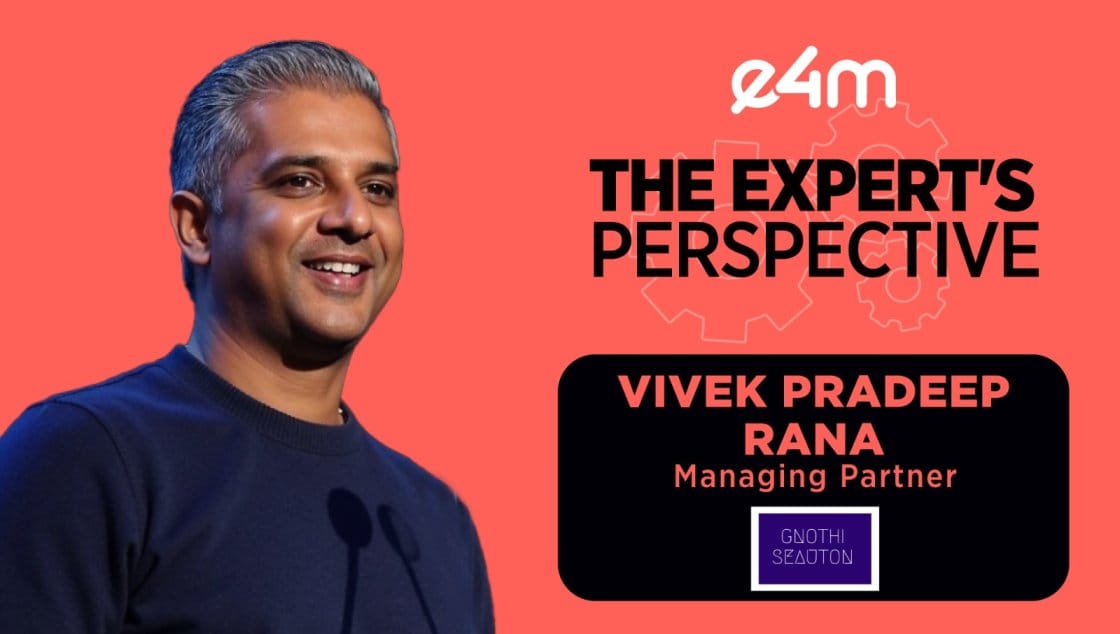

- A recent film release sparked immediate mixed reactions on social media, with accusations of negative PR from rival actors, despite a lack of evidence supporting these claims.
- The article critiques the tendency in Indian business to broadly label negative publicity as "PR," which obscures accountability and fails to address issues like paid reviews and coordinated attacks on competitors.
- It emphasizes the importance of genuine public relations, which involves transparent and accountable communication, contrasting it with unethical practices that undermine trust and can lead to legal consequences.
- The author calls for corporate boards to recognize the risks associated with undisclosed marketing practices and to ensure that their public relations strategies prioritize integrity and accountability.
Toxic released at 6 am today. By 6.37 am the verdicts were up. "Complete nightmare." "Heavy KGF hangover." "A toxic waste." By nine, social media had an explanation ready: negative PR by the lead actor's rivals.
There is no evidence of that. Mixed reactions are exactly what you would expect when a film opens on more than 12,000 screens in one morning. What is worth noticing is how fast the label arrived. Nobody had established whether a single review was paid for, and within three hours everyone already knew whose fault it was.
Forget the film. The reflex is the interesting part. Indian business has decided that one word covers everything from paid praise to a coordinated attack on a competitor, and the word it picked was PR. That is wrong, it is convenient, and it is costing companies money, because a market that cannot name manipulation cannot defend itself against it.
The alibi
A short-seller publishes a report and the target calls it a calculated attack on its reputation. A rival's product collects identical one-star reviews the week before a funding round. A founder's downfall is preceded by months of anonymous "sources say" stories. A CSR announcement is dismissed as a PR exercise before the first rupee is spent. A stock is pumped by finfluencers, and when SEBI moves in, the conversation is about paid PR.
Every time, the explanation lands on the same profession, and the people who commissioned the work, executed it and profited from it drop out of the story. When someone says "PR did it," what they mean is that nobody did.
What was actually done
Undisclosed payment for coverage is undisclosed advertising. The Press Council called it paid news in 2010, and the industry has spent sixteen years behaving as though the finding was about somebody else.
Fake reviews are an unfair trade practice under the Consumer Protection Act. The CCPA moved in 2024 to make the review standard mandatory because the practice is illegal, not because it is bad public relations.
Coordinated anonymous attacks on a competitor are defamation or market manipulation, depending on the claim. Stock promotion dressed up as independent opinion is a securities violation, and SEBI has fined people for it.
So why say PR? Because it is softer, because it spreads the blame across an entire industry, and because it lets the marketing head who signed the purchase order describe what happened as something a consultant did.
What public relations is
Public relations is the disclosed, accountable management of a company's relationships with the people it depends on: investors, regulators, employees, customers, the press.
Three questions follow. Who is on the record? Is the claim true? Would it survive being disclosed as paid?
Real public relations passes all three because it cannot work any other way. The practitioner is named, the client is named, the journalist knows who is calling. A claim that fails a check ends the relationship, which is the only asset the practitioner has. No coverage is paid for, so there is nothing to disclose.
Everything in the previous section fails at least one of those questions. That is not a matter of degree. It is a different activity, with a different budget line, a different vendor and a different set of legal consequences.
The profession is not innocent. Burson-Marsteller was caught in 2011 running a covert smear against Google for Facebook. Bell Pottinger was thrown out of its industry body in 2017 for a racially divisive campaign in South Africa and was in administration within weeks. Plenty of Indian firms sell reputation management that is really review-farming on a retainer. But in the two global cases the profession named the conduct and the firms paid for it. The Indian industry has done nothing comparable, and it is paying for that silence with its name.
Why a CFO should care
This is about capital, not sympathy for consultants. Once a CMO believes PR means manipulation, the brief starts asking for it. Agencies that refuse lose the account, agencies that comply win it, and the company ends up with a vendor whose entire value is deniability.
Undisclosed coverage, fake reviews and coordinated attacks are contingent liabilities that never reach the risk register because they sit under communications rather than compliance. When a regulator or a court finds them, the board discovers it has been carrying legal exposure on a marketing budget nobody told it about.
And the things that actually protect a company in a crisis, a spokesperson the press trusts, a record of straight answers, relationships with regulators built before they were needed, are slow and invisible when they work. So they are the first thing cut once the whole category is assumed to be noise. Then the short-seller report lands, and the company has a budget for bots and nobody who will take its call.
Who has to move
Do not wait for an industry body. Membership clubs do not expel the members who pay the dues. The fix sits with the buyers.
Boards should put paid influence on the risk register and ask the auditor where it sits. If the answer is "marketing," the board has already lost control of it.
CFOs should ask every agency on the roster one question, in writing: do you buy coverage, seed reviews or run undisclosed campaigns against competitors, for us or for anyone else? Keep the answer on file and drop the ones that hedge.
CEOs should stop rewarding the wrong outcome. A quiet week is what public relations looks like when it is working. Pay for the quiet.
And the honest end of the profession needs to say, by name and in the contract, what it will not do. Firms that draw that line out loud will lose some briefs. They will also be the only ones left with a reputation when the regulator turns up.
The test
Who is on the record? Is it true? Would it survive being disclosed as paid?
Yes to all three and it is public relations; argue with the message if you like. No to any of them and it was never PR. It is fraud, defamation or market manipulation, and someone inside the company signed for it. Find out who. That is where the accountability has been hiding all along.
Read more news about PR and Corporate Communication News, Internet Advertising, Marketing News, Digital Media News, People Movement News
For more updates, be socially connected with us onInstagram, LinkedIn, Twitter, Facebook YouTube & Google News
