India’s soda brands starting to look alike. Is quick commerce to blame?
With soda brands sporting the same colours, fonts and flavours, branding experts flag how the chase for quick-commerce sales risks brand differentiation and recall
 by
by
Published: Oct 10, 2026 10:06 AM | 5 min read
 Follow Us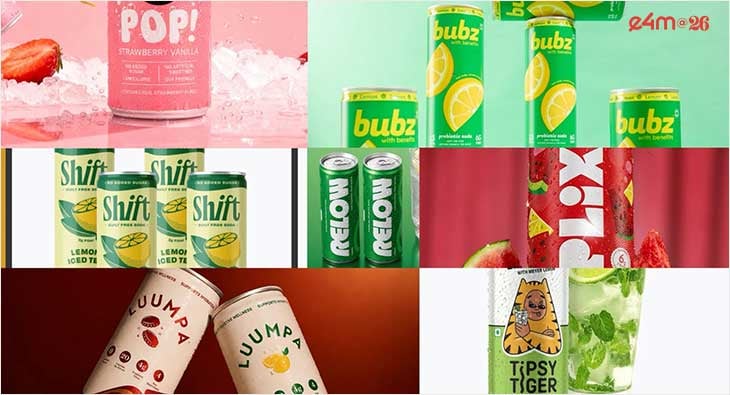

- The soda category in quick-commerce apps is increasingly homogenized, with brands adopting similar designs, colors, and flavor profiles, making it difficult for consumers to differentiate between them.
- Experts highlight a "Differentiation Paradox," where brands aiming to appeal to consumers end up resembling their competitors, particularly in a crowded digital marketplace.
- While brands prioritize visibility and trial on quick-commerce platforms through promotions and advertising, this focus often undermines long-term brand identity and consumer loyalty.
- There is an opportunity for Indian beverage brands to leverage local flavors and cultural elements to create distinctive identities, moving beyond global trends to establish memorable brand experiences.
Scan through any quick-commerce app and the soda category begins to look like a game of spot the difference.
The same slim cans, the same pastel-meets-bright colour palettes, the same minimalist fonts and increasingly similar flavour profiles. Berry, citrus, tropical fruit and zero-sugar promises compete for attention, but the brands behind them are becoming harder to distinguish.
Some appear to be following the visual language of Western better-for-you sodas such as Olipop. Celebrity-backed launches have also invited comparisons. Karan Aujla’s Zyro, for instance, has drawn comparisons with Logan Paul and KSI’s Prime Hydration, with consumers and social media creators linking the two for their similar trendy, celebrity-backed, zero-sugar hydration and wellness positioning.
The question is whether brands are borrowing familiar cues to make their products easier to sell, while making it harder for consumers to remember who made them.
“The problem isn't that these brands look alike. The bigger problem is that they're beginning to think alike,” said Hemal Majithia, founder of brand solutions agency OktoBuzz.
“Everyone wants to look modern, youthful and premium. So we see similar colours, slim cans, minimalist fonts and almost identical visual identities. Nothing wrong with following category trends, but when everyone follows the same trend, how does anyone stand out?” he said.
Majithia called this the “Differentiation Paradox”, where brands trying to look like what consumers want end up looking like their competitors.
The problem is particularly relevant on quick-commerce platforms, where a product is often reduced to a thumbnail competing with several others on the same screen. “On the app, the brand is reduced to a thumbnail and people are searching by a need like zero sugar or prebiotic,” said Nisha Sampath, founder of Bright Angles Consulting.
“The cola brands of today, with their pastel palette, are imitating American brands like Olipop, trying to cue that they are the healthier soda, in a short time span,” she added.
When the immediate task is to communicate a functional benefit, distinctive brand identity can take a back seat. A familiar colour palette or a clean, contemporary design may help signal the category, but it does little to establish why one brand should be remembered over another.
The race for the first purchase
The commercial logic behind the sameness is not difficult to understand. New beverage brands need visibility, trial and conversion. On quick-commerce platforms, promotions, search rankings, ratings and availability can influence what makes it into the consumer's basket.
Syed Amjad Ali, a brand consultant who has worked extensively on e-commerce, quick-commerce and D2C platforms, said discoverability and conversion often take precedence over building brand equity. He said, “Similar products compete side by side, the lowest price, promotions, ratings and availability often drive consumer choice.”
Ali added that brands invest in platform advertising to maintain visibility, prioritise search rankings and drive sales, with success measured largely by return on advertising spend (ROAS).
“If you keep spending meaningfully on the platform, the platform will keep rewarding you with hefty sales over a period of time,” he said.
But visibility on a platform does not necessarily translate into a distinctive identity beyond it. “The brands therefore need to spend money on brand building outside of the platforms,” Ali added.
For beverage brands, the distinction is between getting a consumer to try a new drink and giving them a reason to choose it again. Quick commerce can make discovery and purchase convenient, but it cannot, by itself, establish what a brand stands for. “Today brands are buying trials, but not cashing in on an opportunity to build memorability,” said Sampath.
Trial is not loyalty
A first purchase may be driven by packaging, curiosity, a discount or the promise of a particular health benefit. Repeat purchase, however, depends on the product experience and whether consumers have a reason to return to the same brand. “Trial is not loyalty. Just because someone bought your product doesn't mean you've built a customer, let alone a brand,” said Majithia.
He added, “Of course, the product itself needs to deliver. Great branding cannot compensate for a disappointing experience.” The challenge is that brands can become so focused on the immediate transaction that the question of long-term recall gets pushed aside. A consumer may enjoy a drink but still struggle to remember its name when faced with several similar-looking alternatives on their next shopping trip.
For a category with multiple new entrants competing on similar functional promises, that can make differentiation particularly important. If a brand's most recognisable feature is a pastel can or a zero-sugar claim, competitors can adopt similar cues with relative ease.
An opportunity to build an Indian identity
Sampath believes Indian beverage brands have an opportunity to draw more deliberately from the country's own flavours and visual culture.
“India has its own distinctive flavors and visual culture. We have seen local spirit brands like Jaisalmer, Godawan and Bira91 try to leverage this to create distinctive branding. For Indian colas, this is an opportunity waiting to be seized,” she said.
The opportunity is not necessarily to abandon global design trends or make every product look overtly Indian. It is to establish a recognisable identity through flavour, personality, packaging or the occasions a brand wants to own.
Majithia suggested starting with a basic question: “What is the one thing we want consumers to remember us for?”
“It could be a distinct taste, an attitude, a personality or even an occasion the brand wants to own. Then build everything around that one idea, from packaging and communication to the actual product experience,” he said.
The challenge for India's soda brands is not simply to look different on a quick-commerce screen. It is to make that difference meaningful enough to survive after the first purchase. As the category gets more crowded, another colourful can may be enough to earn a click. Whether consumers remember the brand behind it is a different question altogether!
Read more news about Marketing News, Advertising News, PR and Corporate Communication News, Digital News, People Movement News
For more updates, be socially connected with us onInstagram, LinkedIn, Twitter, Facebook, YouTube & Google News
