Inclusive leadership is the foundation of authentic brand storytelling
Poulomi Roy, CMO of Joy Personal Care (RSH Global), explains how brand storytelling has evolved from being brand-driven to shaped by consumer experiences and perspectives
 by
by
Published: Mar 12, 2026 8:53 AM | 5 min read
 Follow Us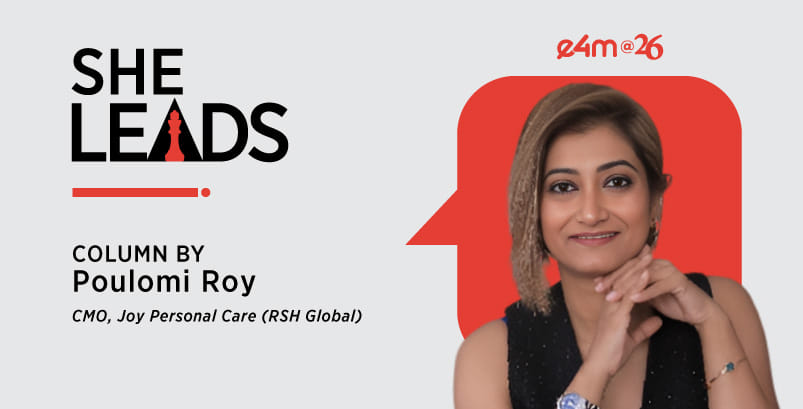

Every year, Women’s Day brings a wave of conversations around representation, empowerment and progress. Brands celebrate women’s achievements, organisations highlight diversity initiatives and leaders speak about inclusion. While these conversations are important, there is a deeper question that often goes unasked who is shaping the stories we see about women in the first place?
The answer to that question determines whether storytelling feels authentic or staged. Women’s Day should therefore not only be a moment of celebration; it should also be a moment of reflection. Because the narratives brands create are often shaped by the perspectives sitting in leadership rooms. If those rooms do not reflect the realities of the consumers they speak to, storytelling will always have a blind spot.
From Perfect Ideals to Real Conversations
Over the past decade, the way brands communicate has changed significantly. There was a time when campaigns were built around perfect ideals: flawless beauty, aspirational lifestyles and carefully constructed images of success. Brands told consumers what beauty should look like, and people were expected to follow that narrative.
Today, that equation has changed. Consumers are far more aware and vocal. They question unrealistic portrayals and expect brands to reflect real lives rather than idealised ones. As a result, storytelling has shifted from being brand-led to being influenced by consumer experiences. People want to see themselves in the stories brands tell, not a polished version of life that feels distant from their own reality. This shift has forced marketers to confront a simple truth: authenticity cannot be manufactured. It emerges when brands recognise the complexity of people’s lives rather than trying to redefine them.
The Digital Lens: Consumers Are More Informed Than Ever
Digital platforms have significantly increased consumer awareness and scrutiny. Social media and online communities allow people to question, discuss and amplify brand narratives in real time. A message that feels disconnected from reality can be challenged instantly, while authentic stories gain credibility through organic conversations. For women in particular, digital spaces have opened platforms to share experiences around identity, work and societal expectations. As these conversations shape public perception, brands are expected to reflect real lives rather than constructed ideals. In this environment, inclusive leadership becomes even more important because authentic stories are the ones that withstand the transparency of the digital age.
Listening to Real Lives, Not Just Market Segments
For a long time, marketing relied heavily on demographic categories. Women were segmented by age, income or geography, and campaigns were designed accordingly. While this helped organise consumer data, it rarely captured the realities that shape people’s lives.
Today, women’s experiences are far more layered. A young professional may be navigating career ambition while managing family expectations. A mother returning to work may be rediscovering her identity beyond caregiving. A student in a smaller town may be influenced by global culture through digital platforms. These experiences cannot be captured through simple demographic labels. When brands begin to listen to real lives rather than just analyse consumer profiles, storytelling becomes more meaningful. It begins to reflect everyday conversations rather than assumptions.
Inclusive Leadership Creates Honest Storytelling
Authentic storytelling rarely comes from homogeneous leadership rooms. When decision-making is shaped by similar backgrounds and perspectives, the stories that emerge tend to reflect a limited view of society. Inclusive leadership expands that lens. When people with different experiences contribute to decision-making, across gender, geography, culture and life stages: the questions asked in the room change. Conversations move beyond “what will sell” to “what truly resonates.”
This is where storytelling becomes more human. Narratives start reflecting everyday realities instead of idealised standards. In industries like beauty and personal care, this shift is especially important. For decades, the category defined beauty through narrow ideals. Today consumers expect something very different confidence, individuality and authenticity. Brands that recognise this shift begin telling stories that celebrate real people rather than unrealistic perfection.
Representation in Leadership Shapes Representation in Campaigns
There is a direct connection between who sits at the decision-making table and the stories that appear in campaigns. When diverse voices influence strategy, storytelling begins to reflect a wider range of experiences. Instead of portraying perfection, campaigns highlight resilience. Instead of distant aspiration, they celebrate individuality.
This is where representation becomes meaningful. It is not simply about having women present in leadership roles. It is about ensuring their perspectives shape decisions, challenge assumptions and guide narratives. Because when women are part of shaping the story, the narrative naturally becomes more authentic.
Trust Comes From Stories That Feel Real
Modern consumers are incredibly perceptive. They can quickly sense when a brand narrative is driven by genuine belief and when it is shaped by convenience. In a world where messaging is constant, trust has become one of the most valuable assets a brand can build.
Authentic storytelling plays a powerful role in building that trust. When consumers feel that their realities are acknowledged and their voices are reflected, they form a deeper connection with the brand. This connection goes far beyond advertising. It shapes long-term loyalty and credibility.
Choosing Narratives That Empower, Not Stereotype
Women’s Day reminds us that storytelling carries responsibility. Brands do not simply reflect culture they influence it. The stories we create shape how ambition, confidence and identity are understood.
For leaders and marketers alike, the challenge is clear. Authentic storytelling cannot be treated as a seasonal campaign or a creative tactic. It must come from leadership that listens, includes and understands the realities of the people it seeks to represent. Because the most powerful brand stories are not the ones that try to define women.
They are the ones that truly see them.
Read more news about Marketing News, Advertising News, PR and Corporate Communication News, Digital News, People Movement News
For more updates, be socially connected with us onInstagram, LinkedIn, Twitter, Facebook, YouTube & Google News