How leadership will evolve over the next decade
Akshali Shah, Executive Director at Parag Milk Foods, says leadership is entering a reset phase, where clarity, sound judgement and accountability will matter more than hierarchy or control
 by
by
Published: Mar 11, 2026 8:38 AM | 3 min read
 Follow Us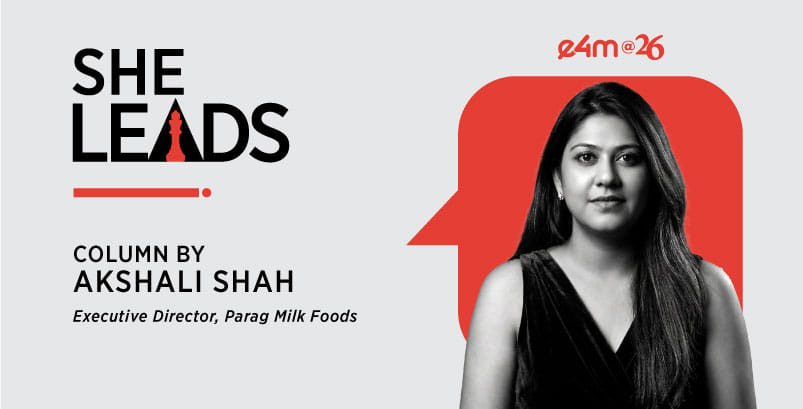

Leadership is entering a reset phase. Over the next decade, it will be defined less by hierarchy and more by clarity; less by control and more by judgment. The tools around us will change rapidly, and expectations from teams will evolve even faster. What will remain constant is accountability.
AI will be one of the biggest forces shaping leadership. But it will not replace leaders. It will expose them. When data becomes accessible to everyone, the differentiator will no longer be access to information; it will be the ability to interpret it, question it, and make decisions despite ambiguity.
AI will automate processes, accelerate analysis, and sharpen targeting across functions, from marketing and operations to supply chains. What it cannot do is set direction, build trust, or take responsibility when a decision does not work. Leaders of the next decade will need to understand AI well enough to use it effectively, but remain independent enough to challenge it. Judgment will matter more than ever.
A Workforce That Expects Transparency and Purpose
The second shift will come not from technology, but from people. Gen Z is already influencing how organisations think about work, culture, and communication. This generation is less impressed by titles and more interested in purpose. They are comfortable with transparency and expect leaders to be accessible. They also value speed and directness.
These expectations will gradually reshape leadership structures. Command-and-control models will struggle. Feedback loops will shorten. Leaders will need to communicate more clearly, more frequently, and listen more attentively, not perform listening, but genuinely adapt based on what they hear.
Gen Z will also normalise fluid careers. Loyalty will increasingly be built through opportunity and alignment rather than tenure. Leaders will therefore need to create environments where growth is visible, merit is clear, and performance is recognised in evolving ways.
The Leadership Capabilities That Will Matter Most
In this environment, three capabilities will become critical.
First, strategic clarity. As markets grow more volatile and technology more disruptive, leaders must cut through noise. The ability to prioritise, and just as importantly, to say no, will matter as much as the ability to scale.
Second, adaptability without losing identity. Organisations will experiment more, categories will blur, and consumer behaviour will shift faster. Leaders must remain open to change while staying anchored in what their brand and business stand for. Reinvention should not mean dilution.
Third, resilience, not performative resilience, but operational resilience. The next decade will bring cycles of demand shifts, regulatory changes, and competitive intensity. Leaders must be comfortable making long-term bets while managing short-term pressures.
For women leaders, the conversation is also evolving. It is no longer about proving capability, but about shaping direction. Representation matters, but influence is what creates lasting change. The focus must move from presence in the room to impact on decisions.
Leadership will become more transparent, more data-informed, and more human at the same time. AI will sharpen execution. Gen Z will demand authenticity. Markets will demand discipline. The leaders who succeed will not necessarily be the loudest or most visible; they will be the ones who combine technology with judgment, ambition with responsibility, and speed with clarity. The next decade will not reward authority alone. It will reward accountability.
Read more news about Marketing News, Advertising News, PR and Corporate Communication News, Digital News, People Movement News
For more updates, be socially connected with us onInstagram, LinkedIn, Twitter, Facebook, YouTube & Google News