The skills that will define the next decade of leadership
Babita Baruah, CEO of VML India, writes that leadership in the next decade must embrace inclusivity, challenge the status quo, and prioritise people over processes
 by
by
Published: Mar 9, 2026 9:47 AM | 3 min read
 Follow Us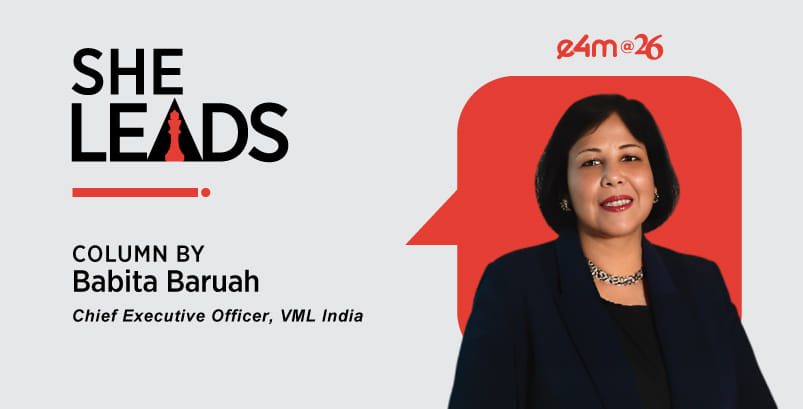

As leaders, we envision a future where leadership is redefined – not as a relentless pursuit of profits or power, but as a force for good. In India, a country celebrated for its diversity yet still burdened by deeply ingrained cultural and gender biases, this evolution is not just an option – it is an urgent necessity. Leadership in the next decade must be bold enough to embrace inclusivity, challenge the status quo, and prioritise people over processes.
At the heart of this vision is the belief that kindness is a transformative value. In a world that often equates toughness with effectiveness, leading with kindness is a radical choice. Kindness in leadership means treating people with respect and making decisions that uplift the team and the organisation. Kindness is not just about being “nice”; it’s about creating a culture of trust, where people feel valued and empowered to thrive. It is a commitment to building workplaces where compassion and accountability go hand in hand.
Leadership must put well-being at the core of workplace culture. This isn’t about token wellness programmes or empty gestures, it’s about fostering environments where people feel safe, supported, and inspired to bring their best selves to work. When we prioritise well-being, we’re not just doing the right thing; we’re creating the conditions for sustainable, long-term success.
Inclusivity is key to creating workplaces where every voice is heard, where women and marginalised communities are not just present but given equal opportunities to lead and succeed. It’s about being brave enough to call out bias, challenge outdated norms, and ensure that decisions are made with diverse perspectives in mind. Inclusive leadership is not just a moral imperative – it’s a business advantage that drives innovation and growth.
Empathy, often dismissed as a “soft skill,” is perhaps the hardest and most essential quality for leaders to cultivate. It requires courage to step into someone else’s shoes, to understand their struggles and aspirations, and to make decisions that balance both head and heart. Empathy is what transforms a manager into a leader and a workplace into a community.
The workplaces of the future must also be flexible and adaptable, designed to meet the evolving needs of their people. Whether it’s embracing hybrid work models, supporting worklife integration, or rethinking traditional norms, leaders must create environments where people can thrive without compromising their well-being.
To lead effectively in the next decade, leadership must be grounded in three core values:
- Kindness: Leading with care, humility, and respect for the humanity in every individual.
- Well-being: Placing people’s mental, emotional, and physical health at the core of workplace culture.
- Inclusivity: Breaking down barriers, addressing biases, and creating spaces where every voice is heard and valued.
When these values are embraced, we create workplaces where people feel a deep sense of belonging and pride – environments where individuals are not only productive but also fulfilled. Far from being at odds with performance, these values enhance productivity and innovation. By fostering trust, empowering individuals, and creating inclusive spaces, leaders unlock the full potential of their teams. Leadership that prioritises people doesn’t just achieve results; it drives excellence and redefines success for the better.
Read more news about Marketing News, Advertising News, PR and Corporate Communication News, Digital News, People Movement News
For more updates, be socially connected with us onInstagram, LinkedIn, Twitter, Facebook, YouTube & Google News