From influence to checkout: Is performance the next test for creator marketing?
As marketplaces bring shopping into videos, agencies, brands and creators weigh the opportunities and challenges of tracking sales and measuring returns
 by
Published: Oct 23, 2026 8:54 AM | 6 min read
 Follow Us

- The creator marketing landscape in India is shifting from a focus on reach and engagement metrics to performance-based models, with brands increasingly seeking measurable results from their investments.
- Platforms like YouTube Shopping are integrating shopping tools directly into video content, allowing creators to tag products, which enhances the shopping experience and drives sales through a more fluid buying journey.
- Brands are emphasizing the importance of metrics beyond views and likes, such as click-through rates and incremental sales, to evaluate the effectiveness of creator-led commerce, while agencies are adapting contracts to include performance-linked payouts.
- Creators are seeing affiliate marketing as a significant income source, but many still face challenges as brand partnerships often prioritize traditional engagement metrics over actual sales performance.
For years, creator marketing in India was paid for in reach. A brand sent a product, a creator posted, and success meant views, likes and comments. That model is giving way to something closer to performance marketing. Platforms are building shopping tools into video, e-commerce companies are paying creators per sale or per click, and brands are asking harder questions about what their money actually bought.
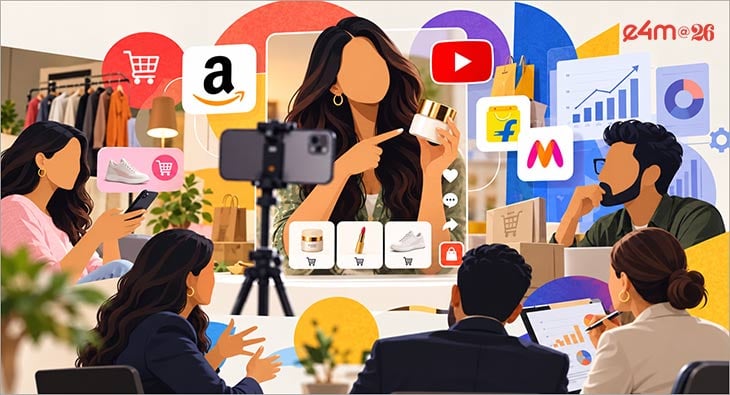
YouTube Shopping is the clearest example. It lets creators tag products inside videos so viewers can look at an item without leaving the content. Flipkart and Myntra were among the first Indian retailers linked to it, and Amazon is now joining. Instagram, WhatsApp and Telegram have long carried affiliate links, but those links usually sit in a description or bio. The new formats put the buy button inside the content. Here is how that shift looks from four seats at the table.
Read: Creator economy gets a commerce push as brands move closer to checkout - Exchange4media
The Marketplace View
For marketplaces, shoppable video brings in shoppers who may not have arrived through search or ads. Nidhi Thakkar, Head of Social Commerce at Amazon India, says it changes the shape of the buying journey. “Now that journey becomes more fluid. It is possible to discover, consider and act in a single interaction,” said Thakkar.
She is candid about the trade-off. “Not everyone will purchase, and it also means there will be a lot of low-intent clicks,” said Thakkar. Marketplaces accept the noise because each click brings a shopper to their platform. Amazon also expects the tools to widen the supply of creators. A travel vlogger, for instance, can tag the thermals and rucksacks from a Northeast trip without becoming a “tech creator.”
“I think more creators will become commerce creators because it has become much easier to do what they are already doing,” Thakkar added.
Pay models are evolving as well. Amazon’s standard affiliate programme pays a commission on completed purchases, with rates published on a public rate card. Its newer Creator Connections programme, launched less than two months ago, lets brands pay creators per click, with offers that vary by how well a creator has converted. Amazon says it is still tracking results.
Read:Creator economy gets a commerce push as brands move closer to checkout - Exchange4media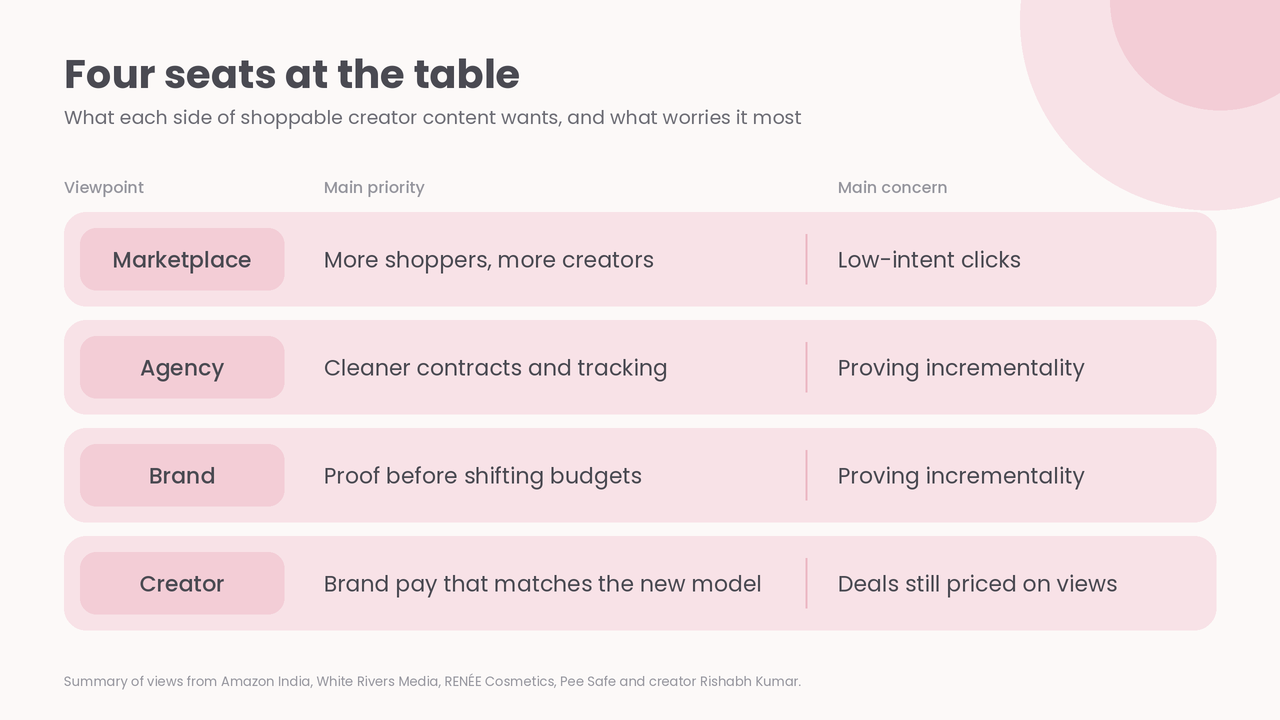
The Brand View
Brands welcome a clearer path from content to checkout, but they are wary of moving money on promises. Priyank Shah, Co-Founder of RENÉE Cosmetics, said creator content now plays a role in discovery and purchase, not just awareness.
“We do not view creator marketing, paid social, marketplace advertising and shoppable content as competing channels,” said Shah. His yardstick goes beyond vanity metrics. “When evaluating creator-led commerce, we look beyond views and likes to indicators such as click-through rates, conversions, customer acquisition costs and return on ad spend,” he added.
The test he cares about most is incrementality. “Equally important is understanding whether a campaign generates incremental purchases rather than simply capturing existing demand,” said Shah.
Pee Safe, which sells period care and intimate hygiene products, takes a similar line from a more sensitive category. Pee Safe uses trackable links, campaign-specific discount codes and affiliate mechanisms where it can, but cautions against over-reading the numbers. “Attribution must account for the fact that consumers often interact with multiple touchpoints before purchasing,” said Somya Srivastava, Brand Lead, Pee Safe. Before shifting budgets, she underscored, the brand would want consistent conversion rates, sustainable acquisition costs and evidence of incremental sales. Shah added that any scaling must protect the quality of the content, delivering results “without compromising the authenticity and creativity that make creator partnerships effective.”
The Agency View
Agencies sit between brand budgets and creator output, and they are rewriting the paperwork. Kushal Bhuva, Associate Vice President, Founders Office, Influencer Marketing and Video at White Rivers Media, says briefs now go well beyond creative direction. They include product integration, calls to action and tracking.
Creator selection is changing too. Reach still matters, but audience relevance and credibility now carry equal weight. “A creator with a close community can move a product better than one with a broad, loosely matched audience,” said Bhuva.
On payment, the agency position is a hybrid. “Fixed fees cover the work of making content. Performance-linked payouts add a sales incentive where purchases can be tracked,” said Bhuva. The right mix, he says, depends on category, margins and how reliably sales can be attributed. Attribution windows, usage rights and payment terms should be agreed upfront.
The harder problem is proving that a sale was caused by the creator. A tracked link shows that a purchase followed a creator’s post, not that it would not have happened anyway.
“One of the key challenges is separating sales attributed to a campaign from genuinely incremental purchases. Tracking links can show which purchases followed creator interactions, but establishing whether those purchases would have happened anyway requires stronger measurement methods, such as controlled tests. This distinction is important for brands looking to evaluate returns accurately and scale creator commerce with greater confidence,” said Bhuva. This is where the agency role is growing: coordinating tracking, distribution and cross-platform reporting so brands can compare creator spend with outcomes.
The Creator View
For creators, shoppable content is a second income stream, and for some it is already substantial. Food creator Rishabh Kumar, who focuses on recipes and food storytelling, says the numbers are clear. “Last month, affiliate marketing contributed nearly one-third of my YouTube Shorts earnings, while YouTube Shopping accounted for around one-tenth of my total income,” said Kumar.
He posts primarily on Instagram and repurposes videos for YouTube Shorts. Featuring kitchen products he already uses in his recipes lets him earn through affiliate links without turning each video into an advertisement. He is also seeing brand conversations change, with around one-third of enquiries now involving affiliate or performance-based collaborations. But the shift is uneven. “However, most brand partnerships still focus on views and engagement rather than actual sales,” said Kumar. The gap matters. Brands and agencies talk about performance, yet many creators still see deals priced the old way.
The tools are catching up. Creators using the YouTube integration can see estimated commissions and earnings when they tag a product, and commission rates vary by product, so what to recommend now carries a visible price tag. That creates its own risk. A creator who chases high-paying products over genuinely useful ones may find that audiences notice, and trust, the asset that makes affiliate income possible, wears thin.
What Comes Next
All four groups agree on the direction: more tracking, more accountability and more pay tied to results. They differ on priorities. Marketplaces want volume, agencies want cleaner contracts, brands want proof of incrementality, and creators want brand budgets to match the new model. Until measurement catches up with the buy button, shoppable creator content will keep growing while the question of who deserves credit for each sale remains open.
Read more news about Marketing News, Advertising News, PR and Corporate Communication News, Digital News, People Movement News
For more updates, be socially connected with us onInstagram, LinkedIn, Twitter, Facebook, YouTube & Google News