‘Those who bring data & creative insights to the forefront will be big game-changers’
At e4m’s Real-Time Programmatic Advertising Conference, Kedarswamy Ravangave, Head of Marketing at Kotak Mahindra Bank, spoke to Neeta Nair, Editor of Impact
 by
by
Published: Sep 20, 2024 9:17 AM | 4 min read
 Follow Us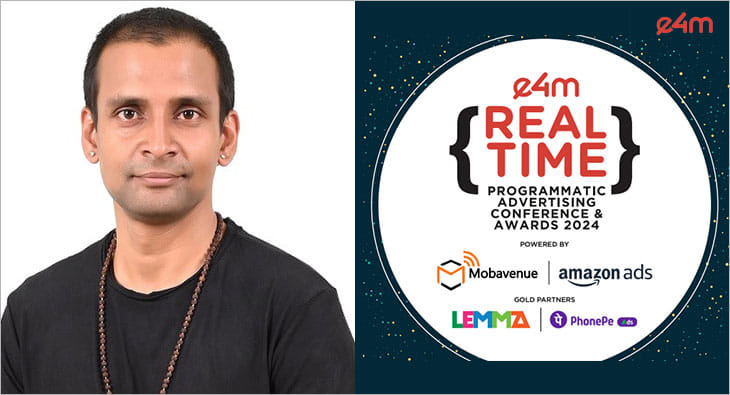

At e4m’s Real-Time Programmatic Advertising Conference, held on Thursday, an insightful discussion was held on the evolving dynamics of programmatic advertising. Kedarswamy Ravangave, Head of Marketing at Kotak Mahindra Bank, spoke to Neeta Nair, Editor of Impact, about how the bank has strategically embraced programmatic advertising, which is exponential growth and reshaping its digital marketing strategy.
Nair started the conversation highlighting how programmatic advertising has evolved from a “misunderstood technology” to a cornerstone of the marketing industry in India.
Ravangave began by sharing how the financial services landscape is undergoing a dramatic transformation, with fintechs becoming more bank-like and banks adopting fintech approaches. Kotak Mahindra Bank, he noted, has embraced this shift by deeply integrating programmatic buying into its operations.
One of the core strategies Kotak adopted was redefining customer journeys to make them more frictionless, he mentioned. "The more seamless the journey, the higher the output on any investment," Ravangave explained. He also emphasized the importance of segmenting consumers based on data and insights, noting that understanding consumer behaviour allows for better-targeted solutions and recommendations.
Furthermore, Ravangave stressed that match rates — the ability to match first-party data with other sources — play a critical role in conversion rates. He cited data showing that companies with match rates above 60% or 70% see significantly higher returns, and Kotak's success in programmatic advertising has been due in part to this deep data-driven approach.
Nair then shifted the discussion toward creativity in programmatic advertising, asking how Kotak balances its focus on data with the need for compelling, engaging campaigns. Ravangave dispelled the myth that programmatic advertising lacks creativity. "Creativity is very much at the center of it," he said, comparing programmatic advertising to crafting a powerful outdoor ad which is engaging, and action-driven. Data enhances creativity, providing insights that help refine and target messages with precision.
He went on to explain how Kotak’s famous *811 digital account* campaign, which saw a 99% increase in loan applications, was a perfect example of combining data-driven insights with creativity. "Using data to understand consumers helps fuel creativity and deliver more personalized and effective communication," Ravangave added.
Nair then brought up an intriguing case study about Luminous Inverters, where the brand used programmatic advertising to target customers during power cuts in Jaipur. She asked Ravangave whether brands should involve programmatic partners earlier in the creative and media planning stages to benefit from data-driven insights. Ravangave agreed, stating that an integrated approach, where programmatic is embedded throughout the entire campaign process, yields better results.
He emphasized that Kotak seeks partners who challenge traditional thinking, bring data and creative insights to the forefront, and drive innovation. “Those who pick this up and make it the center are going to be the big game-changers in the next four or five years,” he predicted.
Programmatic advertising also allows for real-time optimization, a feature that has enabled Kotak to redirect budgets toward more effective campaigns and channels. Ravangave shared an example of how Kotak used programmatic for targeted campaigns aimed at upgrading existing account holders. By leveraging internal data, they were able to sharpen their focus and drive better results with significantly fewer resources.
This precision targeting, he noted, is what makes programmatic advertising a powerful tool for marketers, offering the ability to save costs and redirect investments to where they will yield the highest returns. He cited the *811 campaign* again, noting how it effectively acquired a significant number of new customers in a short time.
The discussion then turned to artificial intelligence (AI) and its role in transforming digital advertising. Ravangave acknowledged that AI is already changing the game, especially in content creation and voice cloning. AI enables marketers to produce more versions of content quickly and efficiently, tailoring messages for different audiences. "Content is where AI in programmatic is probably doing its best work," Ravangave said.
He emphasized that AI's ability to analyze large data sets and provide deep insights is what makes it an invaluable asset in programmatic advertising. AI allows for the automation of creative processes, giving marketers the tools to deliver more personalized, timely, and relevant content to consumers.
In the concluding part of the conversation, Nair asked about balancing programmatic’s data-driven measurability with the need to maintain long-term brand equity. Ravangave cautioned that while programmatic’s ROI-driven approach is highly effective, brands must not lose sight of the importance of building and sustaining equity over time. He stressed the need for a balanced approach, where programmatic efforts are aligned with broader brand-building initiatives.
Ravangave closed with a reflection on how brands like Google Pay have achieved tremendous growth through a largely programmatic strategy. "It’s about finding the right mix of short-term and long-term strategies," he concluded.
Read more news about Digital Media, Internet Advertising, Marketing News, Television Media, Radio Media
For more updates, be socially connected with us onInstagram, LinkedIn, Twitter, Facebook, YouTube & Google News
