Rs 10,000 crore AdEx at risk due to real-money gaming ban: Kartik Sharma
Omnicom Media Group India CEO Kartik Sharma spoke on how the ban will hit cricket, digital platforms and sports sponsorships, why e-commerce, FMCG, BFSI and auto will fill the gap, and more
 by
by
Published: Aug 22, 2025 5:47 PM | 5 min read
 Follow Us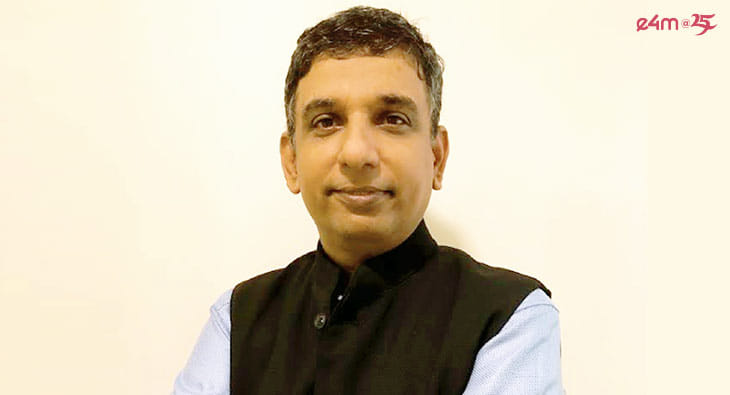

India recently notified Promotion and Regulation of Online Gaming Act sending shockwaves through the advertising and media ecosystem by outlawing all real-money gaming (RMG) formats, including fantasy sports.
The move wipes out nearly 86% of the gaming sector’s revenue and leaves an estimated ₹9,000–10,000 crore hole in India’s AdEx, as RMG brands had emerged as aggressive spenders across cricket, digital platforms, and influencer marketing.
For advertisers, media players and agencies, the immediate challenge is how to navigate this sudden vacuum while rebalancing demand toward more sustainable categories.
To understand the implications, exchange4media spoke with Kartik Sharma, Group CEO, Omnicom Media Group India, who shared his perspective on the short-term pain, the resilience of India’s advertising economy, and how categories like e-commerce, FMCG, BFSI, and auto will step in to fill the gap. He also outlined how agencies can build resilience against regulatory shocks through diversification, agility, and foresight.
Edited Excerpts
How do you see the blanket ban on real-money gaming apps impacting the overall AdEx this year? Is the industry prepared for the sudden vacuum it creates?
The immediate impact is expected to take a meaningful slice out of India’s advertising economy, in the short term. Independent estimates suggest that nearly ₹9,000 to 10,000 crores of ad revenues are directly at risk. That said, the market is not unprepared. India’s advertising base is deep – E-commerce, BFSI, FMCG, auto, telecom, and other categories continue to accelerate.
In the near term, yes, there will be challenges, but our advertising economy is resilient, its growth drivers are diversified, and with rapid reallocation and a focus on compliance, the industry will recover momentum over the upcoming season.
Which categories or sectors do you think will feel the maximum pinch from this advertising loss- digital platforms, broadcasters, or sporting properties like IPL?
Sports properties – particularly cricket – will feel the pinch. Approximately, 85–87% of real-money gaming sponsorship spends are directed towards cricket. Select sporting ecosystems, for instance, have become a showcase for gaming brands, both on broadcast and in sponsorships. Digital platforms are also impacted, especially in performance-driven video, influencer marketing and programmatic ecosystems, where gaming brands have been among the heavy spenders.
While broadcasters may face concerns, those with diversified advertiser bases will experience pressure but have more levers to recover. The task that lies ahead for the industry is less about demand disappearing and more about redirecting that demand into long-term, sustainable categories.
Beyond gaming, do you anticipate a cascading effect on adjacent sectors?
With RMG having extended itself as a demand engine for fintechs, payment gateways, affiliate marketers, creator ecosystems and sports marketing that grew around the category, one can expect the ripples to be felt across the aforementioned sectors.
However, not all is bleak. Disruptions of this scale typically tend to accelerate a rebalancing of demand and, hopefully, in the long run, it frees up premium inventory for more diversified and sustainable growth.
How are your clients reacting to this? Are they recalibrating budgets toward other high-engagement categories, or are you sensing a cautious slowdown across the board?
As this is a developing story with evolving facets to it, it’s too early for clients to react just yet.
In the near term, this looks like a sizeable hit. But do you see new categories stepping in over the medium to long term to plug the gap?
Absolutely. If you zoom out, India’s advertising economy has consistently demonstrated an ability to rebound when one category retrenches. We saw it during the pandemic, when FMCG and e-commerce stepped up even as travel and auto pulled back briefly. This time will be no different.
As I mentioned earlier, categories like e-commerce, BFSI, FMCG, auto, telecom, and retail media will continue to accelerate and be natural fillers of this gap. Sports sponsorships are also unlikely to remain vacant for long. Cricket and marquee properties like IPL are too valuable for brands to ignore.
Performance marketing was heavily driven by RMG spends. With that drying up, do you expect digital platforms to see a slowdown, or will other industries accelerate to balance it out?
In the immediate term, there will be a deceleration in performance-led advertising, as RMG was a heavy spender in the performance ecosystem. That spending does not get replaced overnight. However, it would be a mistake to conflate this with a structural slowdown for digital platforms.
India’s digital advertising base is broad and getting deeper - digital has already overtaken TV as the largest media segment. E-commerce, D2C brands, fintech, BFSI, and telecom are all ramping up their performance budgets. While Q3 may show some impact, by the festive quarter, we expect reallocation to balance the shortfall and pivot to the above categories.
From an agency standpoint, how does one plan for such sudden regulatory shocks? What kind of flexibility or diversification becomes essential in building resilience for clients?
Policy shifts are a reality in fast-growth markets like India, and agencies have to be structurally prepared for them. For us, resilience comes from the trifecta of diversification, agility, and foresight.
Diversification to ensure client portfolios aren’t overly dependent on one high-spending category. Agility in being able to reallocate budgets quickly and intelligently. And foresight that empowers us to continuously test and learn against the backdrop of regulatory scenarios, so clients aren’t caught off guard. Furthermore, Covid has taught us that staying agile and resilient in the face of challenges is a formidable strategy.
Read more news about Digital Media, Internet Advertising, Marketing News, Television Media, Radio Media
For more updates, be socially connected with us onInstagram, LinkedIn, Twitter, Facebook, YouTube & Google News