India’s new labour laws come into force: What changes for workers and employers
India has officially entered a new era of labour reform as the four long-pending labour codes, finally came into effect on 21 November 2025
 by
by
Published: Nov 27, 2025 4:15 PM | 4 min read
 Follow Us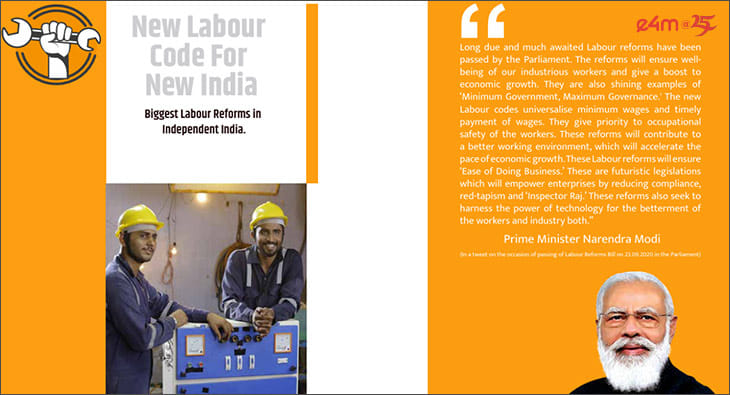

After years of debate, delays, and coordination challenges between the Centre and states, India has implemented four consolidated labour codes with an aim to create “a protected, future-ready workforce and resilient industries”. As the new rules take effect, they promise to reshape how employers hire, pay and safeguard workers—while also raising questions about on-ground enforcement and long-term impact.
With this move, the government has merged 29 existing laws into four simplified codes:
- Code on Wages (2019)
- Industrial Relations Code (2020)
- Social Security Code (2020)
- Occupational Safety, Health and Working Conditions (OSHWC) Code (2020)
The stated aim is to make the system easier to follow, improve worker welfare, and offer greater clarity to industries that earlier navigated a maze of overlapping regulations.
Click here for Labour Code PDF
Key Changes Under the New Codes
- Universal Minimum Wage
For the first time, India now has a nationwide floor minimum wage applicable across sectors. Earlier, the minimum wage applied only to “scheduled employments”; now, all employees, including unorganised and informal workers, fall under its protection. This is expected to significantly expand wage security for millions.
- New Definition of ‘Wages’
A standardised wage structure caps allowances at 50% of CTC.
This effectively increases basic pay, which in turn raises contributions to provident fund and gratuity.
The impact:
- Higher social security benefits in the long run
- Slight reduction in in-hand salary for many employees in the short term
- Social Security for Gig and Platform Workers
The codes formally recognise gig workers, delivery partners, ride-hailing drivers, and other platform-based earners. They will now be eligible for social security schemes, including:
- Insurance
- Maternity benefits
- Pension-like systems (based on future schemes)
This is a major shift, considering gig workers were previously outside the formal social safety net.
- Mandatory Written Employment Letters
Every employee, across sectors, must now receive a written appointment letter.
This brings transparency to job roles, wages, and terms of employment — a critical step in reducing disputes and protecting workers in informal settings.
- Working Hours and Safety Standards and Leave Entitlement
The weekly limit remains 48 hours, but employers can structure workdays between 8 to 12 hours with mandatory breaks.
Overtime pay must be double the regular wages.
The OSHWC code also sets stricter standards for workplace safety across factories, mines, and service sector operations.
The eligibility period for annual paid leave has been reduced from 240 days to 180 days, enabling newer employees to access leave sooner.
- Gender and Transgender Inclusion
The codes explicitly prohibit discrimination based on gender or transgender identity.
Women can now work in all sectors—including night shifts—provided safety measures are in place and consent is recorded.
This is seen as a significant step in boosting women’s workforce participation.
- Commuting Accidents Included
Accidents occurring while travelling between home and workplace are now considered employment-related, making workers eligible for compensation.
- Free Annual Health Check-ups
Employers must provide free annual health examinations or tests to all employees aged 40 and above, promoting preventive healthcare in the workforce.
Industry Impact and Concerns
While businesses appreciate the simplified compliance framework, they also face transitions: restructured payroll systems, higher social security contributions, and stricter record-keeping obligations.
Trade unions, however, have expressed strong reservations. Many argue the new codes make hiring-and-firing easier, dilute collective bargaining rights, and could shift power toward employers. Nationwide demonstrations have already begun, with union leaders demanding amendments and safeguards.
Why This Matters Now
India’s economy is in a phase of rapid job creation—especially in logistics, manufacturing, and gig-based services. The new framework arrives at a critical moment where worker protection, formalisation, and ease of doing business must evolve together.
If implemented effectively across states, the labour codes could reshape India’s employment landscape—making it more predictable, inclusive, and structured. But the success of these reforms will depend heavily on how well businesses transition and how strictly states enforce compliance on the ground.
Read more news about (internet advertising India, internet advertising, advertising India, digital advertising India, media advertising India)
For more updates, be socially connected with us onInstagram, LinkedIn, Twitter, Facebook YouTube & Whatsapp