Sethurathnam Ravi's Enduring Legacy: Building trust across India's financial system
As he turns 67 today, that body of work reads less like a résumé and more like a map of where Indian finance had to be rebuilt from the inside
 by
by
Published: Jul 22, 2026 12:02 PM | 3 min read
 Follow Us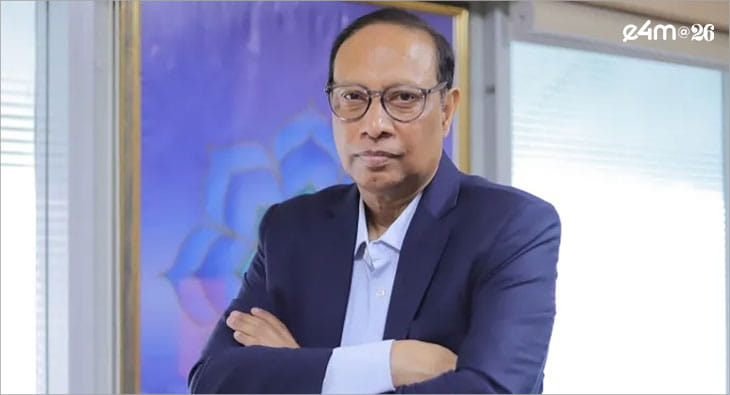

- Sethurathnam Ravi, who turns 67 today, has spent four decades working to restore confidence in Indian financial institutions, focusing on operational restructuring and compliance rather than seeking visibility.
- Educated in Jabalpur and Bhopal, Ravi is a Fellow Chartered Accountant with expertise in information systems audit and insolvency, positioning him at the intersection of compliance, technology, and financial discipline.
- His significant roles include serving on the board of Punjab & Sind Bank during a critical period in 2003 and chairing the Bombay Stock Exchange from 2017 to 2019, where he implemented modernized trading infrastructure and governance standards.
- Ravi continues to influence discussions on fintech, sustainable investing, and regulatory standards, emphasizing the importance of institutional trust built through consistent, behind-the-scenes efforts rather than public recognition.
Some careers are built on visibility. Sethurathnam Ravi's has been built on the opposite — four decades of steady, unglamorous work restoring confidence in institutions when confidence was hardest to find. As he turns 67 today, that body of work reads less like a résumé and more like a map of where Indian finance had to be rebuilt from the inside.
A Foundation Built on Precision
Ravi's grounding came early, and far from Mumbai's trading floors. Born in 1959 and educated in Jabalpur and Bhopal, he trained as a Fellow Chartered Accountant with specialisations in information systems audit and insolvency — a combination that, decades before "governance" became a boardroom buzzword, positioned him at the exact point where compliance, technology and financial discipline intersect.
The Test at Punjab & Sind Bank
That grounding was tested early too. In 2003, the RBI and the Government of India brought him onto the board of Punjab & Sind Bank at a moment of real institutional stress, tasking him with operational restructuring and tighter compliance at a public sector lender that needed both. It was the kind of assignment that doesn't make headlines but decides whether an institution survives — and it set the template for much of what followed.
Modernising the Bombay Stock Exchange
That template found its largest stage when Ravi became Chairman of the Bombay Stock Exchange in 2017, a post he held until 2019. His tenure at Asia's oldest exchange wasn't defined by a single dramatic reform but by a cluster of them — modernised digital trading infrastructure, sharper governance standards, and a deliberate widening of the runway for SMEs and startups to access capital markets. It was institution-building aimed at durability rather than a quarter's headlines.
Alongside these public mandates, Ravi has spent decades in the private sector as Managing Partner of Ravi Rajan & Co. LLP, advising companies on risk, compliance and growth strategy. That work has run in parallel with board positions at more than 45 companies — ONGC, IDBI Bank, Aditya Birla Capital, Usha Martin and PCBL among them — a spread across energy, banking, manufacturing and capital markets that few governance professionals manage to sustain, let alone lead within.
Still Shaping the Conversation on Finance
What keeps Ravi relevant today isn't nostalgia for that record — it's that he hasn't stopped adding to it. He remains an active voice in conversations on fintech and digital access, sustainable and ethical investing, cryptocurrency regulation, and ESG standards, at a moment when Indian finance is being asked to modernise and stay accountable at the same time.
A Legacy Measured in Institutions, Not Headlines
At 67, Ravi's story is a reminder that the institutions people trust rarely announce who built that trust. More often, it's the person who showed up for the restructuring, the modernisation, and the compliance overhaul — quietly, repeatedly, over forty years.
Read more news about Digital Media, Television Media, Out of Home Advertising, Print Media, Latest Advertising India
For more updates, be socially connected with us onInstagram, LinkedIn, Twitter, Facebook, YouTube & Google News