From shelf appeal to scroll appeal: Are brands redesigning products for the feed?
For brands, this means the visual identity of a product has to work not just in a store or on an e-commerce page, but also when it appears in a creator's video or a consumer's social media post
 by
by
Published: Sep 5, 2026 9:11 AM | 10 min read
 Follow Us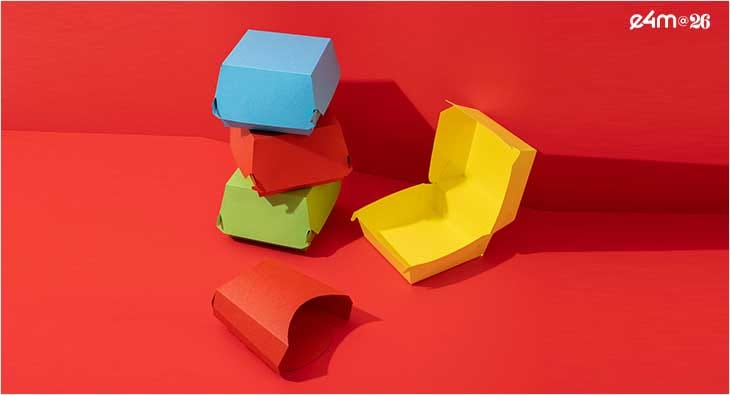

- The rise of social media has transformed product visibility, with nearly 80% of Indian shoppers discovering new products through platforms like Reels and user-generated content, prompting brands to rethink packaging and design for both physical shelves and digital feeds.
- Brands are increasingly integrating "scroll appeal" into their design processes, ensuring that products not only stand out in stores but also capture attention in social media content, particularly in categories like beauty, fashion, and food.
- Marketers emphasize the importance of creating visually distinctive packaging that enhances the consumer experience and facilitates social sharing, while maintaining a focus on functionality and quality.
- The shift towards social-first discovery is reshaping product launches and consumer engagement strategies, with brands aiming to create cohesive experiences that resonate across both physical and digital touchpoints.
A product used to have one primary job when it came to visibility: stand out on a crowded shelf. Today, it has another environment to compete in: the social media feed.
With consumers discovering products through Reels, creator content, unboxing videos and user-generated content, packaging and product design are increasingly being viewed through the lens of social media. Nearly 8 in 10 Indian shoppers now discover new products through social media, while short-form video and creator content are playing a growing role in purchase decisions.
For brands, this means the visual identity of a product has to work not just in a store or on an e-commerce page, but also when it appears in a creator's video or a consumer's social media post. The change is particularly visible in categories such as beauty, food, fashion and D2C, where packaging has become an important part of the overall brand experience.
This raises a question for marketers and designers: Are brands now designing products for the feed as much as they design them for the shelf?
Packaging has always played a role in brand recognition. What is changing is the amount of attention being paid to its potential as content. A distinctive colour, unusual format, interesting opening mechanism or tactile element can give creators and consumers something to show in a video. In categories where unboxing and product demonstrations are already popular, that can make packaging an extension of the marketing campaign.
Designing for the screen
For some brands, the shift is already influencing the design brief.
Anupam Bansal, Executive Director, Liberty Shoes Limited, said, “Scroll appeal has become as real a design brief for us as shelf appeal used to be. A few years ago, the conversation around a new colourway or a box design stopped at how it stood out on a retail rack. Today, our design and marketing teams sit in the same room from the concept stage, and one of the first questions we ask is: how does this look in a fifteen-second unboxing reel, or in the hands of a customer filming a UGC video?”
This shift from designing for the physical shelf to designing for the digital screen is also reshaping how brands think about packaging and the overall consumer experience.
Aditi Murarka Agrawal, Co-Founder, Nestasia, a home and lifestyle brand spanning home décor, kitchen, dining and gifting, with a growing omnichannel presence in India, said visual appeal has always been central to the brand’s design-led approach. She added that packaging is increasingly an experience in itself, making it important for the brand to create packaging that looks good, feels good and leaves an impact.
The emphasis on creating products and packaging that translate well visually is equally evident in fashion, where social-first discovery has made shareability an increasingly important part of product presentation.
Hemant Jain, Joint MD, KKCL, a fashion and lifestyle company spanning brands including Killer, Easies, Lawman, Integriti and Kraus, with a presence across retail, e-commerce and distribution, said that scroll appeal has become an important consideration in product design, with unboxing, Reels and UGC increasingly serving as ways to showcase product features, benefits and drive consideration.
“The consumer journey has changed. A consumer can discover a product on social media, understand its features through a Reel, see how it can be styled through UGC, and then encounter it in-store. So while shelf appeal remains important, products also need to make an impression on the screen,” Jain said.
Jain added that with consumers exposed to vast amounts of content, conventional product presentation does not always capture attention. This is pushing the company to focus on product quality, design, packaging and experiences, while communicating these strengths visually.
He stressed that the objective is not to create products simply for social media appeal. The product must deliver on quality and functionality, with scroll appeal helping make its value more visible and memorable, ultimately driving awareness, consideration and potentially sales.
According to Bansal, Liberty’s approach to product design is increasingly considering how functional features translate visually on social media. For its Healers formal footwear line, technologies such as HG, HA and H8 are being presented through cushioning, insole and unboxing details that can showcase the engineering on camera.
Similarly, its youth-focused Leap 7X sneaker line uses bold sole units and colour blocking to enhance its visual appeal in close-up social content. Bansal added that “scroll appeal” is now being considered alongside comfort, durability and price in product and packaging briefs.
The consideration is not limited to how a product looks. For SSIPL, the shift towards social-first discovery is making visual distinctiveness increasingly important across product, packaging and launch decisions.
Said Shobhit Singh, MD & CEO, Stone Sapphire India Pvt. Ltd., an integrated sportswear company spanning manufacturing, retail and distribution, with international brand partnerships including Nike, Levi’s, Puma, Skechers, Adidas, Reebok, Asics and Lotto, “scroll appeal” is increasingly being considered alongside shelf appeal.
With product discovery spanning retail, e-commerce and social media, the company looks at design, colours, finishes and presentation to ensure products stand out both on shelf and in Reels, unboxings and UGC, while retaining functionality and performance.
“Our focus remains on combining these elements to create products that work across both physical and digital touchpoints. SSIPL’s strong presence across general trade, modern trade and e-commerce makes this omnichannel approach particularly relevant,” he said.
Packaging as an experience
For Nestasia, however, the relationship between design and shareability is less about creating a separate social-first brief and more about maintaining a consistent design philosophy across the consumer experience.
Agrawal said, “We also see packaging as an important channel of communication. Through iconography, for instance, we make information easier to understand while creating better brand recall. The packaging communicates small pieces of information not just about the product, but also about who we are, how we think and what the Nestasia persona stands for.”
At the same time, Nestasia balances visual distinction with functionality, particularly as it ships fragile products. While the brand considers how packaging translates across unboxing, Reels, creator content and gifting, “scroll appeal” is not a separate brief. Instead, she said, shareability is a natural outcome of its design-led approach, with its distinctive brown and coloured boxes helping build visual recall.
Beyond making products “Instagrammable”
While brands are factoring social media into product and packaging decisions, agencies argue that the shift should not be reduced to simply making products more “Instagrammable”.
Harshit Arora, Founder & CEO, Growster, said brands should not redesign products simply to make them “Instagrammable”. However, with product discovery increasingly happening on screens, packaging now needs to communicate what a product is and why it matters almost instantly.
He added that products also need to translate well across unboxing, usage and creator content. From Growster’s experience, he said, this does not necessarily require highly polished visuals; what matters is whether the product’s appeal comes through quickly enough to capture attention.
“For me, the bigger shift is that content has become part of the product experience. If a product is difficult to demonstrate, difficult to understand or doesn’t naturally translate into short-form content, that can become a genuine disadvantage in a digital-first market,” he said.
Arora said brands are increasingly considering how products perform in content, not just on shelves. Rather than making products “Instagrammable”, he said the focus is on ensuring they fit naturally into how consumers discover products today.
Growster itself typically does not influence physical product or packaging design, but focuses on what happens once the product enters the content ecosystem.
Citing its partnership with Snitch, where the agency has produced over 3,000 pieces of content, Arora said scale allows brands to test different hooks, formats, creators and use cases rather than rely on a single creative approach.
He added that products do not necessarily need to be designed to be “shareable”; what matters is having enough ways to communicate the product story. In this context, he said, creative volume has become a growth lever, with the social feed effectively becoming another shelf for brands.
Designing the launch for social discovery
The shift towards social-first discovery is also influencing how brands think about launches, not just products and packaging.
Singh cited the Legends of Ramayan launch at Mumbai Comic Con 2026, where the experience was designed to be visually engaging and immersive, while also lending itself naturally to social sharing and content creation.
However, he stressed that the objective is not to design purely for social media, but to create experiences that work across consumer touchpoints.
“Product and packaging decisions continue to be driven primarily by functionality, quality and changing consumer requirements, with design, presentation and visual differentiation increasingly playing a role in ensuring a consistent and compelling brand identity wherever the consumer encounters it,” Singh added.
Citing an example, Jain said KKCL is increasingly looking at the complete consumer experience, from product and presentation to retail and brand experiences. He pointed to Junior Killar’s Play Street initiative, which brought the brand into a physical play environment for children and families, creating an experience beyond a conventional product display. The activation drove offline engagement while its visual and experiential nature encouraged social sharing, extending its reach online.
He added, “Ultimately, these experiences help us build awareness and consideration, with the potential to translate that attention into sales. Social media amplifies the experience, but the foundation remains a strong product and a relevant consumer proposition.”
Liberty has similarly made changes across both packaging and physical retail.
Bansal said Liberty has made deliberate changes to make its products more visually engaging across consumer touchpoints. For Healers, the packaging has been redesigned around a reveal that showcases the comfort technology and layered cushioning during unboxing. For the younger, active-fashion focused Leap 7X, the brand has introduced bolder colourways, visually distinctive sole units and in-store try-on zones designed to encourage content creation.
Is scroll appeal translating into impact?
The bigger question is whether greater visual distinctiveness is translating into measurable consumer response.
For Liberty, Bansal said the clearest signal has been the increase in organic UGC around specific launches, with customers posting their own unboxing or try-on videos without being asked, something the company did not see at the same scale two or three years ago.
“It has also fed directly into our CRM programme, Step Up Club, where customers who share content around a purchase are increasingly part of how a launch gets its initial momentum online, well before paid media kicks in,” he concluded.
For brands, the shift therefore appears to be less about replacing shelf appeal with scroll appeal and more about making sure the same product can work across both.
The shelf remains a physical point of discovery. The feed is increasingly becoming another one, with its own demands around attention, visual distinction and demonstration. The challenge for brands is to design products and experiences that can move between the two without compromising on what ultimately matters: functionality, quality, performance and consumer relevance.
Read more news about Marketing News, Advertising News, PR and Corporate Communication News, Digital News, People Movement News
For more updates, be socially connected with us onInstagram, LinkedIn, Twitter, Facebook, YouTube & Google News