Pragmatism, Not Posturing
Dr. Annurag Batra, Chairman & Editor-in-Chief of the BW Businessworld Group and the Founder & Editor-in-Chief of the e4m Group, on why leadership chemistry between Narendra Modi-Donald Trump mattered
 by
by
Published: Feb 3, 2026 6:56 PM | 4 min read
 Follow Us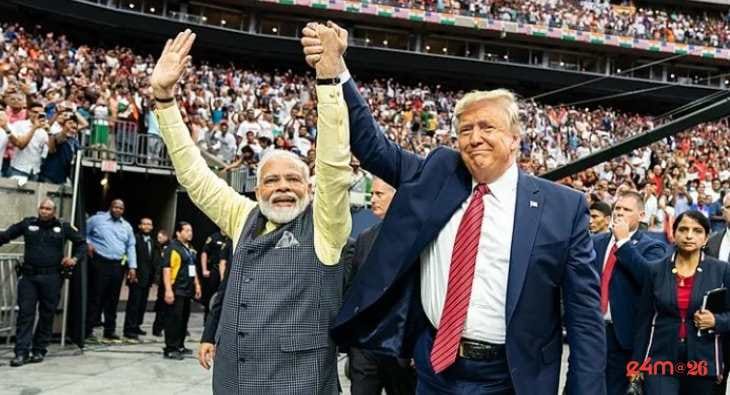

The US-India trade deal announced on February 2, 2026, is being read, predictably, in the language of winners and concessions. That is the lazy frame. What is more instructive is the method, a high-wire negotiation conducted under public glare, shaped by geopolitics as much as by tariff lines, and concluded without turning domestic consumption into collateral.
At the centre of that method is a familiar feature of Narendra Modi’s leadership, which is the ability to absorb a complex external shock, keep the long view steady, and still secure tangible outcomes that matter to the economy’s engine rooms -- jobs, exports, investment confidence -- without allowing the terms to be set by theatrics. This is not idealism. It is pragmatism as statecraft.
Beyond The Reset
The deal’s headline number is, of course, the tariff reset. But the larger story is that India has moved the conversation away from a spiral of punitive trade measures and towards a framework in which both sides can claim strategic alignment without triggering domestic backlash. The agreement also appears to embed a wider set of understandings, including energy choices and purchases of US goods, which, in turn, tells you what kind of trade deal this really is: less a spreadsheet of duties and more a political compact designed to stabilise a relationship and de-risk future shocks.
This is where the Modi approach stands out. The easiest path in a situation like this is defiance for applause, to turn trade into a proxy for sovereignty and let public sentiment harden. The second-easiest path is capitulation dressed up as compromise. Neither serves national interest. The harder path is to keep the posture measured, protect domestic priorities, and still extract a workable settlement that improves India’s relative trade position while preserving room for policy autonomy.
Modi has long treated bilateral relationships as instruments of national interest rather than as ideological postures. That lens matters with Washington, where administration styles can shift sharply while the strategic rationale remains: India is too consequential to be boxed into a purely transactional relationship, and the US is too important an economic and technological partner for India to allow ties to be held hostage by a single issue or a single news cycle.
The Discipline Of National Interest
One of the curiosities of this episode is how openly personal rapport was allowed to sit alongside hard-edged bargaining. Donald Trump’s social-media messaging has repeatedly alluded to his comfort with Modi, often framing conversations in the language of respect and personal equation, and, in this case, explicitly linking a call with Modi to the trade agreement’s outcome.
It would be naive to dismiss that as mere style. In modern diplomacy, public signalling is part of negotiation. A leader who speaks in personal terms is also telegraphing political ownership, which makes bureaucratic backsliding harder. The personal relationship, then, is not the story; it is the conduit, a channel through which difficult decisions can be taken faster, and with fewer mixed messages, than a purely institutional approach might allow.
Institutional Interest
But the more important discipline is what did not happen. India did not allow the relationship to become personality-led in a way that undermines institutional interests. Nor did it allow domestic optics to force an all-or-nothing posture. The result is a deal that appears structured to protect India’s broader economic direction even as it accommodates the reality that global trade, right now, is increasingly entangled with security alignments.
There is also a governance point here. When trade policy is negotiated under the shadow of geopolitics, it is easy for domestic impact to be discussed as an afterthought. Yet the political success of any such agreement depends on how it lands at home, on inflation sensitivity, supply stability, and the perception that national choices are not being externally dictated. The Modi government has repeatedly shown an instinct for this balancing act: make the big move, but keep the domestic story anchored in stability and continuity.
If the agreement includes stepped-up commitments to purchase US goods, including petroleum and big-ticket categories, it can be read as a pragmatic bargain, secure market access and predictability for exporters while managing strategic dependencies through diversification rather than disruption. The calculus is about optionality.
The Demanding Phase
This is also why the ‘masses’ question matters. A trade agreement that creates sudden price shocks, disrupts supply lines, or triggers retaliatory cycles is politically brittle. A trade agreement that reduces uncertainty, reassures businesses, and keeps domestic choices intact has a longer shelf life. Seen through that lens, the deal is less a surrender to external pressure and more an example of how India can absorb pressure without losing strategic agency.
Read more news about Digital Media, Television Media, Out of Home Advertising, Print Media, Latest Advertising India
For more updates, be socially connected with us onInstagram, LinkedIn, Twitter, Facebook, YouTube & Google News
