Nine Budgets, One Trailblazing Decade: Inside Nirmala Sitharaman’s defining tenure as FM
From navigating a slowdown to the COVID-19 crisis and subsequent recovery, Nirmala Sitharaman has established herself as one of the longest-serving finance ministers in India’s history
 by
by
Published: Feb 1, 2026 12:02 PM | 3 min read
 Follow Us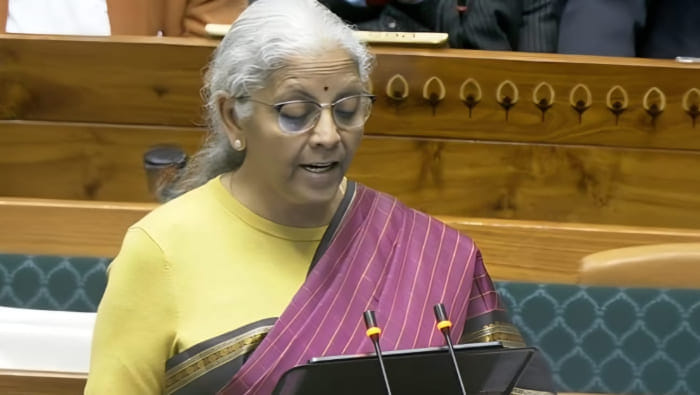

As Nirmala Sitharaman rose in Parliament today to present the Union Budget 2026-27, she scripted yet another page in her remarkable tenure as India's Finance Minister. Her ninth consecutive budget presentation underscores the significant journey she has undertaken since assuming office in May 2019.
As only the second woman to hold this crucial portfolio after Indira Gandhi, she has navigated India's economy through extraordinary challenges, from a pre-pandemic slowdown to the COVID-19 crisis and subsequent recovery, establishing herself as one of the longest-serving finance ministers in Indian history.
Sitharaman's path to the Finance Ministry was marked by steady progression through various portfolios. An economist by training with degrees from Jawaharlal Nehru University and the London School of Economics, she entered politics relatively late, joining the BJP in 2006. Her rise was meteoric: from Rajya Sabha member to Minister of State for Commerce and Industry, then to full Cabinet rank as Defence Minister in 2017, before taking on the Finance Ministry.
Sitharaman's budget presentations have become distinctive for several reasons. Most notably, she broke from tradition by abandoning the colonial-era leather briefcase in favor of a traditional Indian "bahi-khata" (ledger) wrapped in red cloth for her first budget in 2019. This symbolic gesture reflected her approach of rooting policy in Indian traditions while driving modernization.
Her budgets have consistently emphasized long-term infrastructure development as a growth engine. Capital expenditure has been a recurring priority, with successive budgets allocating substantial funds for highways, railways, and digital infrastructure. Sitharaman has repeatedly articulated the belief that public investment in infrastructure creates a multiplier effect, crowding in private investment and generating employment.
Sitharaman's budgetary approach has also been characterized by sheer pragmatism. While maintaining fiscal discipline as a medium-term goal, she has not hesitated to expand fiscal deficits when circumstances demanded, particularly during the pandemic. The COVID-19 crisis saw her announcing multiple stimulus packages, including the ambitious Atmanirbhar Bharat initiative, which combined immediate relief measures with structural reforms.
The pandemic tested Sitharaman's crisis management abilities like never before. She rolled out a series of economic packages totaling over ₹27 lakh crore, encompassing everything from direct cash transfers to MSMEs to production-linked incentive schemes for manufacturing. While critics argued that direct cash support could have been more generous, her defenders point to the difficult balance between supporting the economy and maintaining fiscal sustainability.
Her tenure has also seen significant tax reforms. The introduction of a new corporate tax regime with lower rates, simplification of personal income tax structures, and the faceless assessment system for reducing taxpayer harassment have been notable initiatives. The Goods and Services Tax, though implemented before her tenure, has been continually refined under her watch, with regular Council meetings addressing concerns and reducing rates on various items.
As Sitharaman continues in her role, her legacy is still being written. She has undeniably been a consequential Finance Minister, presiding over major reforms and navigating crises with determination. What remains indisputable is that Nirmala Sitharaman has carved a significant place for herself in India's economic history, demonstrating that perseverance and pragmatism can guide a nation through turbulent economic waters.
Read more news about budget 2024, Marketing, PR and Corporate Communication, Internet Advertising, People Movement
For more updates, be socially connected with us onInstagram, LinkedIn, Twitter, Facebook, YouTube & Google News
