Brand Vijay & the Celebrity Effect: Why star power still works in politics and advertising
Guest Column: Ganapathy Viswanathan, Independent Communication Consultant & Author, explores how some celebrities evolve beyond acting to embody ideas like hope, strength, change or rebellion
 by
by
Published: May 6, 2026 8:38 AM | 5 min read
 Follow Us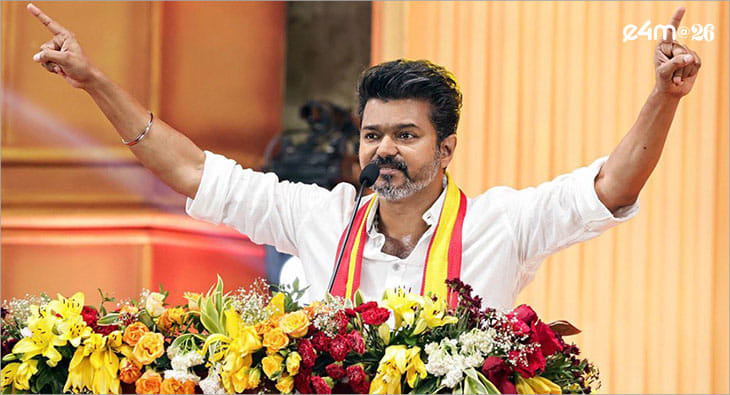

- Vijay's entry into politics marks a shift in approach, characterized by a quieter, more relatable style compared to previous film personalities in Tamil Nadu, fostering a sense of identification rather than devotion among his followers.
- Familiarity plays a crucial role in political appeal, as audiences are more likely to trust figures they have grown up with, similar to how consumers respond to celebrity endorsements in marketing.
- Emotional connections and storytelling are significant in shaping public perception, as seen with past actors like Jayalalithaa and M.G. Ramachandran, who leveraged their on-screen personas to gain political acceptance.
- The deep-rooted cultural significance of cinema in South India facilitates a natural transition for film stars into politics, allowing them to represent broader ideas and resonate with the electorate on a personal level.
A Different Kind of Entry: Understanding Brand Vijay
When Vijay stepped into politics, it didn’t feel like a repeat of the past—it felt like a shift in tone. Tamil Nadu has seen towering film personalities enter public life before, but Vijay’s style comes across as quieter, more measured, and in some ways closer to the ground.
On screen, he is often the guy who questions the system rather than simply leading it. There’s anger, but also restraint. Off screen too, he hasn’t flooded the public space with constant speeches or appearances. That absence, interestingly, has added to his presence.
What stands out is how his followers relate to him. Earlier, the relationship between star and fan often looked like devotion. With Vijay, it feels more like identification. Younger audiences, in particular, seem to connect with the idea that he represents their frustrations—about jobs, systems, everyday struggles. It’s less about “he will save us” and more about “he speaks for us.” That difference, though subtle, changes the nature of his political appeal.
Why Familiarity Makes Things Easier
Think about the last time you bought something because a known face was associated with it. You probably didn’t sit down and analyse every detail—you just felt a little more confident. That’s exactly how familiarity works.
The same applies to politics. When people like N. T. Rama Rao or M. G. Ramachandran entered the political space, they were already part of people’s lives. Audiences had watched them for years, celebrated their roles, and built a sense of emotional closeness.
So, when they asked for votes, it didn’t feel like a stranger asking for trust. It felt like someone familiar stepping forward. That head start matters—whether you’re selling a product or asking for public support.
People Remember Stories, Not Details
Most of us don’t remember product specifications or policy documents for long. But we do remember stories—especially the ones that make us feel something.
Actors spend years building those stories. They play characters who fight injustice, stand up for the weak, or challenge authority. Over time, those roles blend into how the public sees them.
When Jayalalithaa entered politics, people didn’t see her as a newcomer. They saw someone who already carried strength and resilience. Similarly, Hema Malini brought with her a sense of familiarity that made her easier to accept.
Brands tap into this as well. Instead of explaining why something works, they let the celebrity’s image do the talking. It’s quicker, simpler, and often more effective.
Getting Noticed Is Half the Job
In today’s world, attention is hard to win. There’s too much information, too many messages, and very little patience.
Celebrities cut through that noise almost instantly. The moment a known face is involved, people pause. They look. They listen. Even if it’s just for a few seconds, that attention is valuable.
For brands, it means better recall. For political campaigns, it means wider reach. Instead of struggling to be seen, they start with an advantage.
We Feel First, Then We Think
It’s easy to say that decisions should be logical, but that’s rarely how it works in real life. Most choices begin with a feeling—something clicks, and only later do we justify it.
Celebrities tap directly into that space. People admire them, feel connected to them, and sometimes even see a bit of themselves in them. That emotional pull simplifies decisions.
A product endorsed by someone you like feels more appealing. A political candidate you already admire feels easier to trust. The reasoning comes later, but the decision is already leaning in one direction.
Why South India Is Different
Cinema holds a special place in states like Tamil Nadu, Andhra Pradesh, and Kerala. It’s not just entertainment—it’s part of everyday life.
Fans don’t just watch films; they celebrate them. Dialogues become catchphrases, characters become icons, and actors become part of people’s identity.
This deep connection explains why figures like M. G. Ramachandran and N. T. Rama Rao could move into politics so successfully. The emotional groundwork was already in place.
When that kind of bond exists, extending it into public life doesn’t feel unusual—it feels natural.
When a Star Becomes Something More
Over time, some celebrities stop being seen as just actors. They begin to represent ideas—hope, strength, change, or even rebellion.
That’s when their influence expands. Brands benefit because the association feels meaningful. Political movements benefit because the leader already carries emotional weight.
The shift from cinema to real-world influence doesn’t happen overnight, but when it does, it tends to be powerful.
At the End of the Day
Strip everything down, and one thing becomes clear: people respond to people. Not just to messages, not just to ideas, but to individuals they feel connected to.
That’s why film stars continue to matter in both advertising and politics. They bring something that is hard to build from scratch—familiarity, emotion, and a story people already believe in.
And whether it’s choosing a brand or a leader, that sense of connection often makes all the difference.
Read more news about Digital Media, Television Media, Out of Home Advertising, Print Media, Latest Advertising India
For more updates, be socially connected with us onInstagram, LinkedIn, Twitter, Facebook, YouTube & Google News
