Why low-priced candies and chocolate brands continue to win consumers in India?
Guest Column: Ganapathy Viswanathan, Independent Communication Consultant & Author, explores how the smallest products can have the biggest impact
 by
by
Published: Sep 1, 2026 9:24 AM | 6 min read
 Follow Us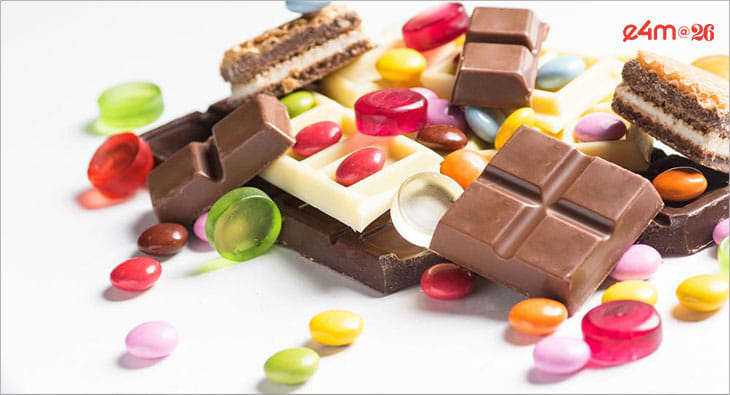

- The article discusses the significant impact of low-unit-price products, particularly in the Indian confectionery market, highlighting how small items like candies and chocolates serve as effective entry points for consumers to engage with brands.
- It references the historical success of affordable products, such as Velvette Shampoo's ₹1 sachet, which disrupted the market by making brands accessible to a wider audience.
- The author emphasizes that low-priced items encourage impulse buying and consumer trials, as they require minimal financial commitment, thus fostering brand loyalty and repeat purchases based on product satisfaction.
- Despite rising production costs, brands continue to prioritize affordability and strategic placement of small packs to attract consumers, while maintaining that quality and consistent experience are crucial for retaining customers.
A few days ago, while standing at the billing counter of a small neighbourhood store, I found myself observing something that most of us probably overlook. Right next to the cash counter was a familiar assortment of candies, toffees, chewing gums, and small chocolate bars. Children were pointing at them, adults were casually picking one or two, and some shoppers were adding them to their baskets almost unconsciously.
It reminded me of a simple but powerful truth about the Indian consumer market: sometimes the smallest products have the biggest impact.
I have never been a heavy consumer of candies or chocolates, but having worked on marketing initiatives for a few brands over the years, I have always been fascinated by the role that low-unit-price products play in building categories. In many ways, they are the first handshake between a brand and a consumer.
The idea itself is not new. In fact, one of the earliest examples I can recall comes from outside the confectionery category. Many years ago, Velvette Shampoo disrupted the market by introducing a ₹1 sachet. At a time when established multinational brands dominated the category, this simple innovation changed the rules of the game. Suddenly, consumers who could not afford a bottle of shampoo could still experience the brand.
That move was not merely about pricing. It was about removing barriers.
The confectionery industry understood this lesson very well and perhaps executed it even more effectively.
When 50 Paise Was Enough
Anyone who grew up in India during the 1980s, 1990s, or early 2000s will remember the era of the 50-paise candy. For many children, it represented purchasing power, independence, and reward all rolled into one.
A single coin could buy happiness.
Whether it was after school, during a visit to the local kirana store, or while accompanying parents to the market, buying a candy was often the first independent purchase many of us ever made.
Looking back, the brilliance of the model becomes obvious. The price was low enough to make the purchase decision effortless. There was no need for discussion, comparison, or planning. Consumers simply bought.
Even when prices eventually moved to ₹1, the industry remained remarkably cautious about pushing them higher. Confectionery companies understood something fundamental about the Indian market: affordability drives volume, and volume drives the business.
Unlike categories where consumers purchase once a month or once a quarter, candies and chocolates depend heavily on frequent purchases. The moment the price begins to feel expensive, consumption patterns can change.
Why Small Packs Work So Well
Marketers often talk about consumer trials, but in reality, trial is simply another word for reducing hesitation.
The lower the risk, the easier it becomes for consumers to experiment.
A ₹1, ₹2, ₹5, or ₹10 purchase requires almost no mental effort. Even if the consumer ends up disliking the product, the financial loss is negligible. That freedom encourages experimentation.
This is especially important in a country like India, where consumers have traditionally been very value conscious. Contrary to popular belief, value consciousness is not the same as being price sensitive. Consumers are willing to spend, but they want to feel confident that what they are spending is worth it.
Low-unit-price products make that decision easier.
They also benefit from impulse buying behavior. Walk into any grocery store, pharmacy, supermarket, or paan shop and you will notice how confectionery products are strategically placed near billing counters. The placement is not accidental.
The consumer may not enter the store intending to buy a chocolate, but the visibility triggers a spontaneous purchase. Sometimes the child asks for it. Sometimes the adult picks it up for nostalgia. Sometimes it is simply added to the basket because it feels inexpensive.
These tiny moments collectively create millions of sales every day.
The Real Job of a ₹5 Chocolate
One mistake people often make is assuming that low-priced packs exist primarily to generate profits.
In reality, their role is often much larger.
For many FMCG companies, small packs are consumer recruitment tools. Their purpose is to attract first-time users and increase penetration.
The real profitability often comes later.
A consumer may first experience a brand through a ₹5 chocolate. If the experience is positive, that consumer may eventually buy larger bars, gift packs, family packs, or premium variants.
In other words, the small pack opens the door.
The larger packs build the business.
This strategy has been used successfully across categories. Shampoos, detergents, beverages, snacks, and personal care products have all relied on affordable entry packs to build scale.
The logic remains the same: make the first purchase easy and let product satisfaction drive future growth.
The Challenge of Rising Costs
Of course, maintaining affordability has become increasingly difficult.
Over the past decade, manufacturers have faced rising costs across almost every input. Sugar prices fluctuate. Cocoa has become significantly more expensive. Packaging costs have increased. Transportation costs have risen. Labor expenses continue to grow.
Yet consumers still expect affordability.
This has created a difficult balancing act for brands.
Instead of directly increasing prices, many companies have chosen alternative approaches. Some have reduced product weight. Others have introduced premium variants while retaining smaller entry-level packs. Some have focused on innovation to justify higher price points.
The shift from ₹2 and ₹5 chocolates to ₹10 products reflects this reality.
The challenge is not simply about charging more. It is about ensuring that consumers continue to perceive value.
Trial Gets You In. Quality Keeps You There.
Perhaps the most important point in this entire discussion is that affordability alone cannot build a successful brand.
A low price may encourage the first purchase, but it cannot guarantee the second.
Consumers return because they enjoy the taste. They return because the quality is consistent. They return because the product is available when they want it. They return because they trust the brand.
In that sense, affordability creates an opportunity, but product experience determines the outcome.
The brands that have survived for decades are not necessarily the cheapest brands. They are the brands that delivered enough value to justify repeat purchases.
The Small Pack Still Matters
Despite growing incomes and increasing premiumization, I believe the role of low-unit-price products will remain important in India for many years to come.
This is a market where millions of consumers still enter categories through affordable packs. It is also a market where impulse purchases continue to play a significant role in driving consumption.
The format may evolve. The price points may change. A ₹1 candy may become a ₹2 candy, and a ₹5 chocolate may become a ₹10 chocolate. But the underlying principle remains unchanged.
The easier you make it for consumers to try your product, the greater your chances of winning them over.
That was true when Velvette introduced its ₹1 sachet. It was true when 50-paise candies ruled the market. And it remains true today.
Sometimes the biggest brand-building strategy comes in the smallest pack.
Read more news about Marketing News, Advertising News, PR and Corporate Communication News, Digital News, People Movement News
For more updates, be socially connected with us onInstagram, LinkedIn, Twitter, Facebook, YouTube & Google News