Rs 20L to Rs 12 Cr: What’s drawing brands to sing along at concerts?
Marketers say cultural spaces like music festivals allow brands to connect with younger audiences with live entertainment offering a high level of immersion and undivided attention
 by
by
Published: Nov 18, 2025 8:46 AM | 10 min read
 Follow Us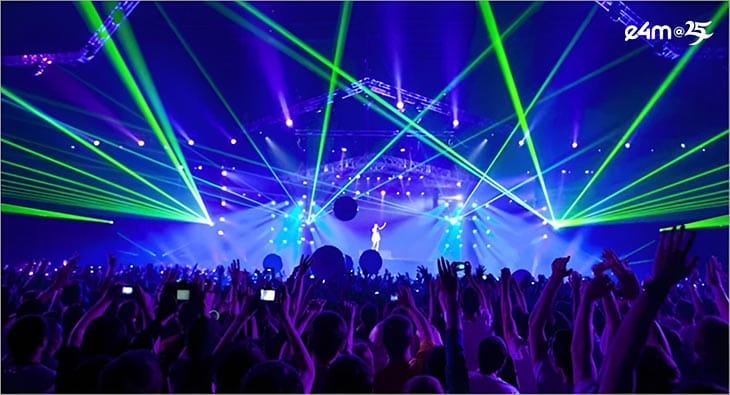

India's live music economy is in its breakout moment. From sweeping domestic tours to a steady influx of global acts, the country’s concert calendar has never been more crowded. This surge is rewriting brand marketing playbooks as advertisers increasingly view live music as a high engagement platform to reach young, high spending audiences.
Industry executives say concerts now sit at the intersection of culture, content, and community, offering brands deep experiential access that traditional advertising cannot match. The rise of multi-city tours by Indian artists, along with large-scale international performances, is also enabling marketers to activate campaigns at scale and with consistency.
How Enrique Iglesias ignited Mumbai
Marketers cite three key drivers behind the shift. First is the post pandemic appetite for shared experiences. Second is the rising disposable income among urban audiences. Third is the social media footprint of concerts, where consumer generated content amplifies brand visibility far beyond the venue.
In 2025, brands have stepped up their live-music activations across formats. Vicks grabbed attention as the “Khich Khich Relief Partner” for Himesh Reshammiya’s Cap-Mania tour, while Lollapalooza India’s third edition drew partners from lifestyle to fintech. TTK Prestige took title rights for Anirudh’s Hukum World Tour, Kotak Mahindra Bank boosted the Ed Sheeran Mathematics Tour with cardholder perks, Jindal Power supported Rehmatein-II to strengthen its social-impact narrative, and realme deepened youth engagement through campus concerts. Looking ahead, Lollapalooza India 2026 has locked in marquee partners such as H&M, Budweiser 0.0, Johnnie Walker Refreshing Mixer Non-Alcoholic, RuPay and Airbnb, and Akon’s November 2025 India tour will be co-presented by HSBC and The Spirit of Kashmyr.
Coldplay concert turns into marketing paradise
Industry experts say concert sponsorships in India have evolved into layered, outcome-driven models, with pricing now tied to both scale and experiential depth. Large-format events offer co-powering, associate, and title or co-presenting slots that span from Rs 20-25 lakh to several crores, while boutique gigs sit in the Rs 10-13 lakh range and focus on hyper-targeted engagement.
Costs climb sharply for global acts, where top-tier partnerships can hit Rs 10-12 crore and even entry-level integrations start at Rs 3-6 crore. Big concerts deliver mass visibility and cultural pull, while boutique formats offer intimacy and credibility, giving brands distinctly different storytelling avenues.
Read e4m report on - Dua Lipa's concert - a marketing jackpot
Anil Gurnani, Chief Sales and Marketing Officer at TTK Prestige, said the brand’s interest in concerts is rooted in a clear behavioural shift among young consumers. “Our association with concerts and music festivals stems from a core insight: today’s young consumers express themselves through high-energy experiences — music, events, and cultural moments that match their fast-paced lifestyle. As a brand, we see a strong alignment here. The same audience that connects deeply with music and live events also seeks products that are intuitive, effortless, and designed to keep up with their dynamic routines,” he said.
He said TTK Prestige’s approach is shaped by the way Gen Z engages with food and creativity, viewing cooking less as a chore and more as a form of self-expression. He noted that this shift makes cultural spaces like music festivals a relevant environment for the brand to connect with younger audiences in an authentic, lifestyle-driven way. He added that campaigns such as Every Type of Cook reflect this focus on individuality and evolving consumer behaviour.
This alignment between cultural energy and brand utility, experts note, is one reason more marketers are viewing concerts as fertile ground for deeper, lifestyle-led engagement.
Building on this, Samradha Tibrewala, Head of Partnerships & Revenue at BookMyShow, underscored why concerts have become a priority touchpoint for brands. “For audiences today, live events are no longer just about attending a show; they’re an expression of identity. What we’re seeing in India right now is that live entertainment has become one of the most powerful spaces for brands to engage with consumers, simply because it offers a level of immersion and undivided attention that no digital platform can replicate.”
She said large-format live events have become powerful platforms for engagement and visibility, giving brands space to build authentic connections. With the fan at the centre, her team co-curates campaigns that add real value through perks like presale access, VIP upgrades, on-ground experiences and digital touchpoints that extend beyond the event. These interactions, she noted, create lasting affinity and turn audiences into natural brand advocates. This is why brands across categories are investing heavily in festival IPs such as Lollapalooza India and other BookMyShow Live properties, which offer high-impact, real-time consumer touchpoints for young, digitally savvy audiences.
Rahul Ganjoo, CEO District by Zomato said, "Brand partnerships have become essential to the economics of large-scale concerts and festivals in India. Brands across alcobev, BFSI, lifestyle, and tech are leaning into live entertainment as one of the most authentic ways to connect with consumers. These partnerships have evolved beyond logo placements, brands are now co-creating immersive activations that genuinely resonate with audiences."
He added that while demand remains largely metro-driven, the landscape is shifting. Over the past year and a half, tier 2 cities have shown strong momentum, with artists like Rishabh Rikhiram Sharma and Anirudh Ravichander selling out mid-scale venues and signalling real appetite beyond the metros. It is still early days, he noted, but the trajectory is promising.
Meanwhile, a wave of newer brand categories has entered the concert space, all aiming to tap into a niche Gen Z audience. Sini Magon, COO and Global partner of Grapes Worldwide stated, “live music shows give them an opportunity to build cultural and emotional relevance with the fandom in order to create unforgettable experiences that transcend just visibility.”
This shift is increasingly visible on ground, where brands are moving from static placements to immersive, participatory formats.
“Beyond traditional beverage and tech sponsors, we are now seeing fintech apps, grooming and personal care labels, and homegrown lifestyle brands stepping in. These brands are designing experience zones, interactive lounges, and creative product integrations that naturally blend into the event,” said Vishal Prabhu, Creative Director – Strategy, White Rivers Media.
Brands & sponsorship tiers
According to Prabhu, large-scale concerts featuring international artists such as Coldplay or Ed Sheeran attract top-tier partnerships that often run into multi-crore deals, depending on scale, exclusivity, and rights. Mid-tier integrations such as branded zones, VIP lounges, or digital content tie-ins typically start around ₹50 lakh and scale upward, while boutique gigs allow smaller brands to participate with more accessible investments.
Meanwhile, Magon explained this in detail. “The charges for global concerts increase exponentially, where co-presenting partnership can go up to INR 10-12 crores, and the cost only goes uphill depending on exclusivity, market rights, cross-channel amplification, etc. In these, the entry-level brand integrations themselves can cost INR 3-6 crores,” she said.
She noted that meaningful visibility now depends on creating consumer moments rather than relying on basic logo placement, with brands expected to activate across both physical and digital touchpoints. Main stage branding delivers high-frequency presence and typically starts around Rs 3-4 crore for large domestic concerts, covering strong on-ground assets and digital sponsorships. Immersive on-ground activations, including experience zones and audience engagement, can climb to Rs 5-7 crore, while broader extensions such as content collaborations and social amplification add another Rs 1-2 crore.
Tibrewala of BookMyShow further highlighted the formats brands are most drawn to and how they integrate the brands seamlessly into the journey. According to her, curated branded IPs and collaborations are central to this strategy, offering a canvas for creativity, connection and unforgettable moments. At BookMyShow Live, she said, logo presence has literally become a footnote in pitch decks.
“What we lead with instead are ideas on how brands can create meaningful, impactful storytelling moments for fans, changing tack and instead of opting for the traditional route, seek partnerships with like-minded brands from allied industries that aim to engage with young, digitally savvy audiences in a meaningful way,” she highlighted, adding that the focus is on integrating brands seamlessly into the event experience so they enhance, rather than interrupt, the consumer journey.
This approach has accelerated momentum in the live entertainment space, with collaborations spanning auto, BFSI, retail and lifestyle, FMCG, e-commerce, social commerce, alco-bev and more, all tapping into the rise of experience-led marketing.
She also shared examples of recent brand tie-ups that demonstrate how partnerships are evolving. She noted that BookMyShow worked with RuPay to offer exclusive presale access and even introduced a new ticket category, Lolla Comfort by RuPay, which delivered an elevated concert experience and resonated strongly with fans. Beverage and lifestyle partners have similarly built interactive on-ground zones that encourage play, sharing and social amplification, extending visibility beyond the venue. She added that brands like Walkers & Co, AB InBev and RuPay have been part of Lollapalooza India since its first edition, helping the platform balance expanded sponsorship opportunities with deeper, more immersive brand experiences.
Brand journey
How can brands integrate into the live concert journey without feeling intrusive? Too often, audiences are met with logos that stand out awkwardly rather than blending naturally into the experience.
Prabhu said, “When brands complement the vibe of the event, support local artists, or create something memorable for fans, they stop feeling like advertising and start becoming part of the culture itself.” He offered examples to illustrate this, noting that a lifestyle brand might curate a pop-up that reflects the event’s fashion sensibility, a tech company could build an immersive discovery zone to help fans navigate the venue, and a sustainability-focused brand might align its purpose with the festival’s eco-conscious initiatives.
"As the going-out platform, District's vision has always been about creating complete cultural experiences, not just selling tickets. From discovery to venue exit, we're invested in delivering world-class entertainment at every touchpoint," Ganjoo said.
Tibrewala added to this and said that their current focus is on building an ecosystem where fans and brands share a commitment to growing the festival and the broader live entertainment industry. The aim, she noted, is to create an environment that continually enhances the music festival experience for all stakeholders.
She noted that this evolution has reshaped how sponsorships are viewed, turning them from a supporting element into a must-have for brands seeking to reach young, culturally engaged audiences through live music. By aligning with fans’ passions and showing up where consumers naturally are, brands are moving toward partnerships that feel genuinely embedded in the experience.
Ultimately, India’s live music boom is pushing brands to rethink not just how they sponsor events but how they participate in culture. As fan expectations rise and experiential formats mature, the pressure will be on marketers to move beyond surface-level visibility and deliver meaningful, integrated moments that add value to the concert experience. For the live entertainment industry, this shift signals a deeper alignment between brand intent and audience behaviour, setting the stage for a more collaborative, immersive and commercially robust concert ecosystem in the years ahead.
Read more news about Marketing News, Advertising News, PR and Corporate Communication News, Digital News, People Movement News
For more updates, be socially connected with us onInstagram, LinkedIn, Twitter, Facebook, YouTube & Google News
