Livpure’s Nitin Malhotra on how IoT and AI are changing consumer insights
Nitin Malhotra, CMO at Livpure, explains why connected devices and subscription models are alleviating ownership anxiety in a category that has been functionally confusing for too long
 by
by
Published: Jan 23, 2026 9:35 AM | 9 min read
 Follow Us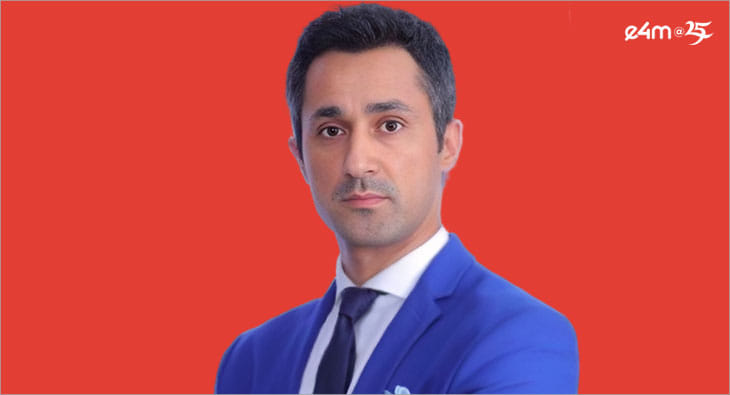

India's water purifier industry is at a notable inflection point. Despite the country’s well-documented water quality challenges, penetration remains at just 6%. Nitin Malhotra, Chief Marketing Officer at Livpure, a brand traditionally known for water purifiers before expanding into kitchen appliances and sleep solutions, believes the fundamental consumer problem has never been fully addressed, not in terms of ownership, but due to compounded anxieties around maintenance costs and service reliability.
"The water purifier industry is at an inflection point because somehow in a country like India, with a very challenged water supply, we're still at a minimal, not even double-digit water penetration," Malhotra explains. "The real consumer problems have never been solved, not just from ownership, but also the cost of maintenance." He points to rising health anxiety as a macro trend driving interest. "People are more keen to do something for their health and wellness. There's a lot of digital influence coming into our lives, building this anxiety. The emotionally rich water category has become functionally confusing because people don't know what water purifier suits them."
Livpure’s response is Water-as-a-Service (WaaS), a subscription model designed to remove the burdens of traditional ownership. The brand uses IoT-enabled devices to enhance the consumer experience through data and transparency, tackling what Malhotra describes as the industry’s “black hole” of service reliability.
IoT as the transparency engine
The connected devices sitting in subscriber homes are doing more than purifying water; they're generating actionable intelligence. "We have these IoT-enabled water devices which go and get installed at the consumer's home," Malhotra says. "It builds a lot of predictability around the water purifier. Now I, as a marketeer, know the consumption pattern of a consumer, typically how much a consumer wants."
But the real transformation is in service. "Service has always been a black hole in the water purifier industry," he notes. "Imagine a connected device that gives us, and the consumer, the power, wherein you know when it's time to change your filter. It builds transparency, rather than the service guy who will come and give you a spiel about whether it's time to change a filter, which may or may not be the case. The app is clearly showing you, much in advance, that there's an upcoming service or filter change needed."
This predictability extends to product development. "From a marketing and product dimension, it's giving us rich data on typical instances of failures of devices," Malhotra explains. "I have aggregated data, so if there's a typical issue, I can bucket it and generalize it, then put a corrective and preventive mechanism around that particular failure."
The data also reveals distinct consumer cohorts. "We have two cohorts. We call one the nomads, typically a bachelor shifting out of Bangalore, Delhi, Chennai, who doesn't want to get into the hassle of commitment of ownership," he says. "A substantial cohort is the family that has the money to pay but is really frustrated with the unpredictability of the water purifier and the rising cost of maintenance. Now it gives us very specific insights on these sets of consumers, which we leverage to put very pointed communication depending on their needs data."
The overarching philosophy is clear. "We're democratising and putting the power in the hands of the consumer," Malhotra states. "Philosophically, we as a brand are intending to do this, which we've taken as a mission for ourselves. Rather than creating demand, let's first create awareness, let's create education, let's create predictability with our offering, and that will naturally lead to demand."
Subscriptions solving the ownership tension
Cultural shifts are making Indians more receptive to asset-light models. Talking about the subscription model, Malhotra explains, “In our context, the subscription takes away that hassle and anxiety of the maintenance part. While you buy a device, there's unpredictability associated with it, effort needed in terms of when to service it, and so on. Subscription gives you hassle-free ownership."
He sees generational alignment with younger consumers. "The millennials are very accustomed to this phenomenon, wherein they don't want to make commitments. They want to free up their capital and resources on more experiences versus ownership of deliverables. We're clearly seeing this set of consumers being very receptive to the idea of subscription." The emergence of parallel platforms matters too. "The ecosystem is now building around the fact that I don't really need to own a product to use it. There are alternate ways to leverage that."
For water purifiers specifically, the model removes a critical barrier. "There's a lot of intent to own the device, but the action typically gets deterred," Malhotra says. "Why? Because there's an initial cost-benefit hesitation shaped by the tension of ownership. The subscription model is a hands-free model. It says experience the product, and tomorrow, if it doesn't go well, I have an easy exit. Though what we see is that most consumers are pretty happy with the service."
The two cohorts respond to different value propositions. "When we do consumer inciting, what clearly comes out is one cohort, especially the more aged cohort, is looking for predictability and assurance," he notes. "The subscription service is a key reason for them. While the younger cohort is looking for affordability and flexibility. This gives them the perfect solution."
AI layering intelligence onto the data stack
Artificial intelligence is translating IoT data into proactive action. "We work on a very complex stack of services. The water purification industry, beyond selling or renting a product, has a very important dimension of serviceability," Malhotra explains. "We've started to use AI in service prediction. It's helping us do a lot of beneficial modelling from a perspective of servicing, saying when is probably a consumer's filter about to change, what's a typical pattern of when this consumer reaches out to me, is there a seasonal pattern wherein the consumer would have higher demand, like when family or parents are visiting."
The predictive capabilities enhance the core value proposition. "We sit on a rich stack of data, and putting the layer of AI on top gives us a lot of predictability, which we leverage in active communication to the end consumer," he says. "It gives them the very reason why they chose service because it further builds predictability, transparency, and takes the hassle away. Rather than having the tension of keeping in mind that I have to get a service, proactively, the company is telling you the filter is about to expire, either you need to change it, or we'll send a technician."
Product innovation benefits too. "From a product innovation standpoint, it's giving us very rich insights which we can model upon, which tells us what the typical use cases are, what consumers are looking forward to," Malhotra notes. Communication cycles have accelerated as well. "From a communication standpoint, we've started to leverage AI into a lot of our communication, which is helping us create faster reach in terms of turnaround times at a more optimal cost."
Call center operations are getting smarter. "We have our call centers, many of which now have aging tech AIs, building and helping us do predictive forecasting around a typical lifecycle of a consumer," he explains. "It helps us solve typical problems which are now getting standardized and put into a set cohort, wherein we can generalize the issue or problem statement and build a tangible solution much faster, which otherwise would have taken much more time."
Partnerships expanding the subscription ecosystem
Channel evolution demands a multi-pronged approach. "The consumer's thought process and the way they consume a brand or reach out to a brand has started to change, wherein there's an emergence of many newer channels," Malhotra observes. "Traditionally, there used to be general trade, then you saw modern trade emerge, online, and D2C brands have become the hot favourite, challenging established brands."
Livpure is building deep associations across these touchpoints. "We have partnerships with leading e-commerce platforms because that's where we see a lot of category shift happening, not only as a platform of buying, but many times brand discovery is also happening on those platforms," he says. "We're also seeing the emergence of regional retail or regional formats typically isolated around certain parts, the east or south of India. We have active partnerships with them also."
Adjacent category partnerships amplify reach. "Especially from a context of subscription service, we're seeing consumers starting to experiment with many new forms of consumption when it comes to service," Malhotra notes. "You've got aggregators who rent you furniture, who give you other goods on rent, which consumers have started to embrace. We also have active partnerships with such platforms, which become cross-selling tools wherein we do cross-pollination, which is helping us build the ecosystem of subscription together. It's a win-win for both the consumer and the brands."
The future is experience, not boxes
Three shifts are reshaping how Indians engage with home wellness brands. "Fundamentally, what we've seen from consumer inciting is that today the consumer is seeking clarity of live-in service, not just in water purification but even in complete consumer durables," Malhotra says. "It's no longer a box that you get home. It is a complete experience which consumers are looking towards, also being shaped by a lot of brands which have started to challenge the narrative and created disruption in the industry."
Education levels have risen. "The consumer is very well educated now. The consumer is more of a digitally native consumer who goes out, researches as well, and has a lot of awareness about a product or category. Their need for transparency is becoming evident and visible," he explains. "Somebody who is going to win the category is going to solve this consumer problem and give them service reliability, give them convenience, give them predictability."
Technology is moving from promise to practice. "We're seeing the integration of technology into more meaningful usage now. We've been talking about tech, but now is the time when we really see tech solving those consumer problems and bringing efficiencies," Malhotra concludes. "Like the example of IoT devices. IoT was always a talk till many years but now we see tangible usage of these products and how they can add value to the consumer, and make the entire interaction of the brand or marketeer to the consumer more meaningful, more real-time, aided by data and giving us rich consumer insights which becomes the basis and foundation to build further products, categories or solve much more problems which exist in any category."
For Livpure, the mission is clear: democratize access to water purification by eliminating the barriers that have kept penetration in single digits. The brand bets that IoT-driven transparency and AI-powered prediction can shift the conversation from demand creation to awareness and education, expanding not just market share but the category itself.
Read more news about Marketing News, Advertising News, PR and Corporate Communication News, Digital News, People Movement News
For more updates, be socially connected with us onInstagram, LinkedIn, Twitter, Facebook, YouTube & Google News
