LinkedIn’s Devajit Roy stresses moving from vanity metrics to value-based measurement
At Pitch BrandTalk in Delhi, Devajit Roy of LinkedIn emphasised the urgent need for marketers to rethink how they measure digital advertising effectiveness
 by
by
Published: Nov 22, 2025 8:42 AM | 4 min read
 Follow Us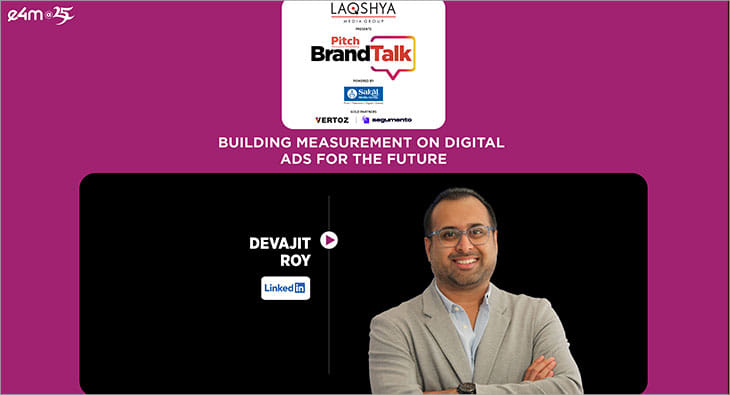

As digital marketing continues to evolve at breakneck speed, measurement has moved from being a support function to becoming a core strategic driver for brands. This was the central message at the Pitch BrandTalk - Spotlight Session in Delhi, where Devajit Roy, Head of India, New & Emerging Business – Marketing Solutions at LinkedIn, outlined the urgent need for marketers to rethink how they assess digital advertising effectiveness.
Addressing a packed audience, Roy opened by stressing that the industry’s current measurement practices must evolve in line with changing consumer behaviour and increasing accountability. He noted that the pace of transformation in the digital ecosystem has forced marketers to move beyond surface-level indicators.
Roy emphasised that the marketing ecosystem must move decisively away from “vanity metrics” such as impressions, reach, and click-through rates, and instead prioritise metrics that directly reflect business value. This includes pipeline contribution, conversions, revenue influence, and measurable impact on organisational growth. He noted that marketers today operate under significantly increased scrutiny, with leadership teams, founders, and investors demanding clearer justification for every rupee spent on digital platforms.
Industry trends, he pointed out, reflect this shift in expectations. Most marketers now identify return on investment (ROI) and return on ad spend (ROAS) as their most important performance indicators, signalling a broader move towards accountability and outcome-oriented measurement frameworks.
Roy also highlighted the dramatic shift in buyer demographics, particularly in the B2B sector. Millennials and Gen Zs now form a large part of purchasing committees and are heavily influenced by video-led content across digital platforms. This behavioural shift, he pointed out, demands a renewed focus on content formats, personal branding, and thought leadership.
He observed that B2B buyers increasingly depend on recommendations from peers and credible voices within the industry. With content creators, domain experts, and senior executives shaping brand perception, marketers must balance organisational messaging with their own presence as representatives of their brands.
Despite advancements in tooling and analytics, Roy noted that a significant proportion of marketers still believe that measuring the true impact of digital campaigns remains a challenge. He attributed this to the industry’s tendency to track campaign performance in silos rather than connecting it to broader organisational goals.
Transitioning to LinkedIn’s evolving role, Roy explained how the platform has reoriented its marketing solutions to support this industry-wide shift toward business-impact measurement. LinkedIn, long known for its strong first-party data, now offers deeper measurement capabilities through integrations with global attribution partners. This allows brands to map their digital spends to pipeline creation, influenced revenue, and conversions with greater accuracy.
“Earlier, the focus was on reach, impressions and CTR. Now advertisers can go two or three levels deeper to understand how their investments contribute to pipeline and sales,” he said, highlighting the platform’s expanded reporting capabilities.
He also stressed the reliability of LinkedIn’s first-party data, which comes directly from user-submitted professional information including job roles, work history, seniority, and industry, offering marketers a more accurate targeting foundation than third-party datasets. Coupled with new infrastructure such as LinkedIn’s conversion API, brands can now link even offline conversions, such as store purchases or on-ground interactions, back to digital campaigns.
Another pillar of LinkedIn’s approach is the integration of AI-driven tools that assist marketers in campaign creation and optimisation. These tools, Roy said, are designed to make the process more efficient while maintaining relevance for diverse audience groups.
The broader takeaway from the session was clear: measurement today must be rooted in value, not volume. Roy emphasised that the emphasis on measurement should extend beyond platforms and be embedded into marketing’s strategic core. “Measurement is serious business,” he said. “If you haven’t started your journey of tying digital spends to business value, today is the right time.”
The session concluded with Roy encouraging marketers to refine their presence across platforms and lean into content formats that resonate with younger decision-makers. He reiterated that the future belongs to marketers who combine insight, credibility, and measurable impact, and who are able to connect the dots between digital activity and real-world business growth.
Read more news about Marketing News, Advertising News, PR and Corporate Communication News, Digital News, People Movement News
For more updates, be socially connected with us onInstagram, LinkedIn, Twitter, Facebook, YouTube & Google News
