Ching’s Secret: Ajay Gupta on Capital Foods’ bet on Rs 11-cr Ranveer Singh action film
Ajay Gupta, Capital Foods’ Founder and MD, has revealed the secret behind the Rs 11-crore action-comedy ad film titled Agent Ching Attacks
 by
by
Published: Nov 22, 2025 8:09 AM | 5 min read
 Follow Us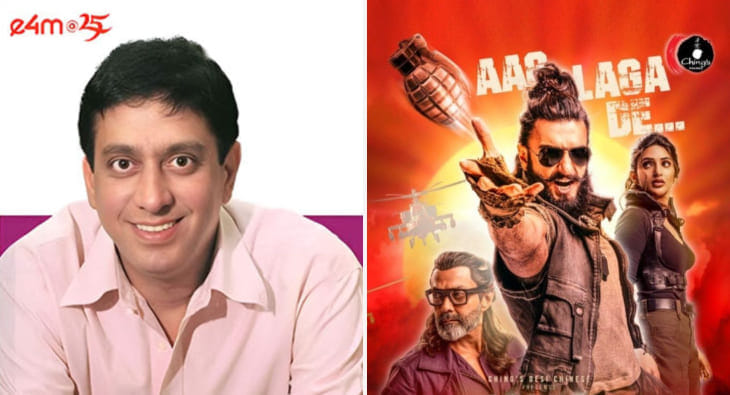

Capital Foods Founder and MD Ajay Gupta revealed the secret behind the Rs 11-crore action-comedy ad film titled Agent Ching Attacks, directed by Atlee and starring Ranveer Singh in the lead, along with Sreeleela and Bobby Deol.
At the Pitch BrandTalk event on Friday, Gupta said the company’s recent ad film cost Rs 11 crore and was funded entirely by high gross margins, adding that the brand’s 2014–2016 campaigns went viral before the Jio era without any paid media.
Gupta said the company used science and internal R&D to operate at 50 percent gross margins. He said, “Profit funds passion and marketing investment.”
He said the 2016 film cost around Rs 8.5 crore and the new film cost Rs 11 crore.
He said, “Where does the money come from? High gross margins.”
Why the Brand Chose Movies, Not Cricket
Gupta said the company used cinema as its central medium because cricket was expensive and did not reach the diaspora. He said, “Two religions my country has. Cricket. Movies. And the third one we created, which is Desi Chinese.”
He said the brand did not want a celebrity endorsement model. He said, “We did not want an endorser. We wanted a character who became the brand himself. We owned the narrative, not just the airtime.”
He added that virality was not planned. He said, “You cannot make a viral like this.” He said the brand earned free media and its trailers crossed 100 million views without spending money. He said, “How much money we spent on making it 100 million? Zero.”
Gupta said the company was one of YouTube’s first partners in Asia.
He said the brand’s channels publish only recipes and not advertising. He said, “They are there because they want to be there. They are not there because they want to see your advertising.”
Ching’s Secret began in 1995 when Gupta noticed a gap between rising consumption and the lack of innovation in India’s food aisles.
He said “food is culture” and added that India is one of just five food cultures in the world. He said the company focused not on what people were eating but how they were eating. He told the audience, “It is very important for a marketer to not just look at the most obvious. What is behind the obvious.”
Gupta said Desi Chinese was the only cuisine that cut across India. He said, “One cuisine that links Kashmir to Kanyakumari is Desi Chinese. The 29th state, 30th state of this country is China. That is the way we saw it.”
Creating New Categories at Low Price Points
Gupta detailed how Capital Foods created products that did not exist in the market. He said, “Ninety-nine percent of what we created or produced were flavours and profiles that did not exist in India.”
He said the company created fried rice masala, paneer chilli masala and Manchurian masala at a ten-rupee price point. He added, “Bache hue chawal ko lagao tadka and you have fried rice.”
He said Schezwan chutney became a Rs 250-crore category built on two SKUs. He added, “I took Schezwan and I took chutney and put both of them together and created Schezwan chutney.”
On Smith & Jones, he said the brand created the ginger-garlic paste category in 1996. He said investors initially dismissed the idea of pasta masala, but the five-rupee SKU now has a run rate of Rs 100 crore. He said, “My investor rolled and rolled in the conference room. One of them is a gora and he turned back and said my grandmother is going to turn in her grave. Pasta and masala.”
Distribution, Wet Sampling and Go-to-Market
Gupta said conventional distribution models were not suited to a smaller brand. He said, “Distribution is a black hole in this country.”
He said the company removed the GT label and created discovery stores and mini discovery stores, including masala shops, paneer shops and chicken shops in Delhi.
He said wet sampling was core to the business. He said, “Our sampling was about creating delight with the consumer. When the consumer stood there and said rice has turned red, she tried it. She bought the product then.”
Gupta advised marketers to “chase meaning, not markets” and to observe the consumer outside transaction moments. He said, “Focus on the quasi-consumer. Focus on him when he is not transacting.”
Gupta said sales and brand score are connected. He said, “I cannot look at brand score without sales. They have to be in conjunction.”
He ended by saying the company was built on culture, consistency and courage. He said, “Think out of the box. Go on the streets. The consumer is talking to you. Not the customer. The consumer is talking to you. Listen to him. Live with him.”
Read more news about Marketing News, Advertising News, PR and Corporate Communication News, Digital News, People Movement News
For more updates, be socially connected with us onInstagram, LinkedIn, Twitter, Facebook, YouTube & Google News
