Raj Shamani’s Python podcast sparks chatter on how far podcast marketing can go
Episode featuring live Python snake leaves the internet divided, with debate around content creation and boundaries
.png) by
by
Published: Apr 24, 2026 5:36 PM | 3 min read
 Follow Us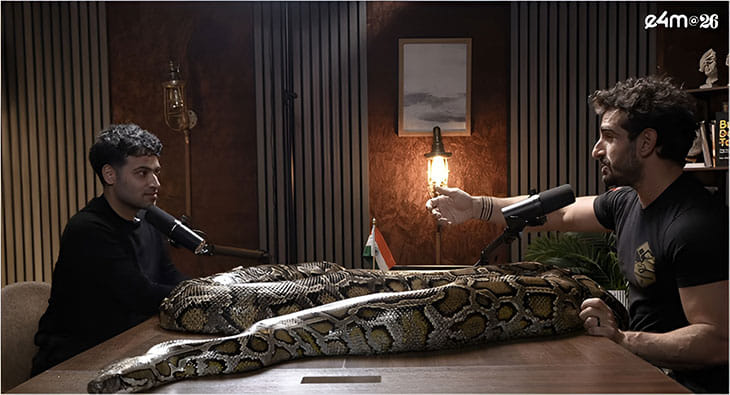

- The 500th episode of Raj Shamani's Figuring Out podcast featured American conservationist Paul Rosolie, who brought live snakes, including a 15-foot Burmese python, to discuss snake behavior and wildlife protection.
- The inclusion of live animals sparked mixed reactions, with some viewers appreciating the novelty while others raised concerns about safety, animal welfare, and regulatory compliance.
- The episode prompted discussions about the evolving podcast format, with some viewers questioning the definition of "interactive podcasts" and others praising the integration of the guest's expertise into the content.
- This event has become a significant topic in the podcasting community, highlighting trends in content innovation and audience engagement strategies.
The latest episode of Raj Shamani’s Figuring Out podcast has drawn attention for featuring live snakes as part of the conversation. The episode marks the 500th episode of the show, with American conservationist Paul Rosolie who is known for his work in the Amazon rainforest and wildlife protection.
The guest featured on the podcast brought in different types of snakes like Red Tail Boa and a live Burmese python measuring approximately 15 feet and placed it between himself and Shamani during the conversation.
Years spent studying dense forest ecosystems and animal behaviour, Rosolie utilized this podcast to highlight aspects of snake behaviour and their reputation as misunderstood creatures.
The inclusion of a live animals in a podcast format quickly caught viewers’ attention, with many describing it as an unusual and unexpected move within the format.
Clips from the episode circulated widely, with some users appreciating the novelty and scale of the setup. Comments like “Raj Shamani on next level” and “this looks super dangerous” reflected how the episode stood out in an increasingly crowded podcast space.
https://x.com/govindprataps12/status/2047552357693870231?s=20
At the same time, the episode also drew criticism, particularly around the handling and showcasing of wild animals, including questions around safety.
Some users questioned whether the setup complied with regulations, with comments such as “is it okay?” and “are they not hurting animals?” appearing across platforms. Others raised concerns about permissions, writing “do they have authorisation to do this?” and “this looks like mishandling.”
‘Interactive podcasts’ or pushing boundaries?
The episode also triggered a more nuanced conversation around evolving podcast formats and audience expectations.
One user wrote, “This is not what we meant by ‘interactive podcasts,’ where a snake almost bites you,” highlighting how the format is being stretched in unexpected ways.
At the same time, some reactions viewed the move through a different lens, suggesting that the element worked because it was tied to the guest’s identity rather than added purely for shock value. “It worked because the snake served the narrative, not the other way around,” one comment read. Another added, “no chaos for engagement, just a guest bringing their actual world into the conversation.”
This perspective also linked the moment to innovation in content creation. Comments like “we’re competing on experience now, not just ideas,” and “your guest needs to do more than talk, they need to show,” framed the episode as part of a larger evolution in how podcasts are trying to hold attention.
A content choice
The episode has since become a talking point not just for its content, but for what it represents within the broader creator ecosystem.
As podcasting continues to evolve, moments like these are prompting conversations around format innovation, audience expectations and where viewers draw the line.
Read more news about Influence Zone, Marketing, PR and Corporate Communication, Internet Advertising, People Movement
For more updates, be socially connected with us onInstagram, LinkedIn, Twitter, Facebook, YouTube & Google News