What Deepinder Goyal revealed about Zomato on Raj Shamani’s podcast
Responding to criticism around ultra-fast delivery timelines, Deepinder Goyal rejected the idea that riders are given strict deadlines or are pushed to rush orders
.png) by
by
Published: Jan 5, 2026 4:47 PM | 4 min read
 Follow Us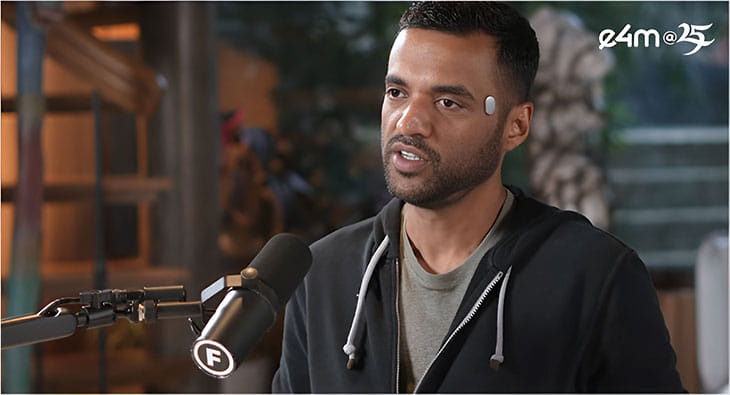

Deepinder Goyal's appearance on Figuring Out with Raj Shamani offered a peek into the scale at which Zomato and Blinkit work. He shared first-person explanations that added context to the issues that very often make headlines, providing a pretty good view of the mechanics, constraints, and decisions that shape the day-to-day functioning of Zomato.
Beyond the core discussions, the over four-and-a-half-hour-long episode also included a range of other themes were discussed in the podcast: Goyal's view on leadership and personal decision-making, his take on risk and experimentation, the challenges of public scrutiny as a founder, and interest areas beyond food delivery that include health and longevity research. All these added further contexts to his thinking.
Why Zomato fires 5000 people every month?
Responding to accusations of Zomato letting go large numbers of workers every month, Goyal stated that his company lets go of 5,000 delivery partners every month, mostly for fraud and repeated abuse of the system. “We let go of 5,000 every month. Most of it is fraud,” stated Goyal.
According to Goyal, Zomato and Blinkit together engage with around 7 to 8 lakh active delivery partners every month, onboarding approximately 1.5 - 2 lakh new partners, while a similar number leave voluntarily. “Most of it is part-time,” he added, noting that many delivery partners join temporarily to meet short-term income needs and exit once those needs change.
Delivery disputes, fraud and the karma system
On how Zomato handles customer disputes and delivery partners, Goyal explained, what we are using is an internal reputation score that is very commonly known as a karma system to access past behaviour. "This is where the customer karma score and rider karma score kind of blend in, and we can never be fully right," he said.
He explained that they absorb the loss when it is impossible to identify which one of them is to blame: "50% to 70% of the time, we take the hit," he stated.
10-minute delivery and quick commerce economics
Responding to criticism around ultra-fast delivery timelines, Deepinder Goyal addressed concerns that 10-minute delivery models place undue pressure on delivery partners. He rejected the idea that riders are given strict deadlines or are pushed to rush orders.
“Our delivery partners are not given any fixed timeline that they must deliver the food by a certain time,” Goyal said, clarifying that delivery speed is not enforced at the rider level. He explained that shorter delivery times are a result of how the logistics network is designed, rather than how riders are instructed to operate. “Ten minutes is not enabled through us asking people to drive fast; ten minutes is enabled by density of orders,” he said.
According to Goyal, having a dense network of nearby stores reduces the distance between pickup and drop-off points, allowing quicker deliveries without altering rider behaviour or safety expectations.
Blinkit acquisition
Goyal also spoke about his experiences in matters of leadership after Zomato’s acquisition of Blinkit. He stated that he had asked Albinder Dhindsa, the founder & CEO of Grofers (now Blinkit), to step down twice during the transition period. “Right after we acquired Blinkit, I asked him to leave. I told him, You will not be able to cut it. This happened twice,” Goyal said.
Competition: Swiggy, Zepto
In the context of competition in the podcast, Goyal gave a brief mention regarding the presence of competitors in food delivery as well as quick-commerce such as Swiggy and Zepto. In fact, Goyal confirmed that competition is to be expected for large categories of business and did not engage in a discussion regarding comparisons. In this particular context, Goyal made a passing comment regarding marketing by Zepto as follows:
“Hum se hi seekh ke gaya hai,” which meant that they had learned from Zomato which was shared widely across social media too.
Final Takeaway
Overall, this podcast has given a better insight into the scale, complexity, and public scrutiny at which Zomato’s leadership is geared up to handle. Through this podcast, Deepinder Goyal has been able to put certain current issues in perspective, as opposed to focusing on the headlines, which include matters concerning the gig workforce, dispute resolution, competitiveness, as well as changes in personnel.
Read more news about Industry Briefing, Internet Advertising, Marketing, PR & Corporate Communication, Television Media
For more updates, be socially connected with us onInstagram, LinkedIn, Twitter, Facebook YouTube & Google News