Over 75% of influencer ads flagged linked to betting and personal care: ASCI Report
The report revealed that offshore and illegal betting promotions topped the list with 683 cases, followed by personal care at 194
 by
by
Published: Nov 11, 2025 1:50 PM | 3 min read
 Follow Us

More than three-fourths of influencer-led advertisements investigated by the Advertising Standards Council of India (ASCI) between April and September 2025 were related to betting and personal care. The half-yearly complaints report, released this week, shows that of the 1,173 influencer ads reviewed, 98 percent required modification, while nearly 60 percent were found to be promoting products that are disallowed by law.
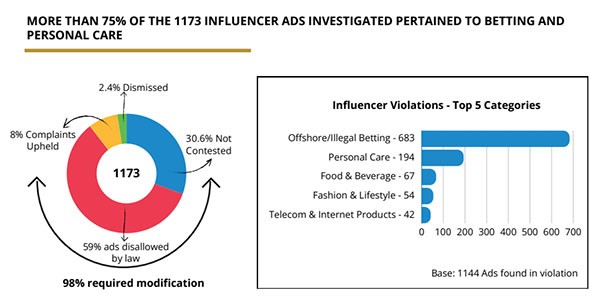
The report revealed that offshore and illegal betting promotions topped the list with 683 cases, followed by personal care at 194. Other categories that saw violations included food and beverage (67), fashion and lifestyle (54), and telecom and internet products (42). Most of these cases were identified through proactive monitoring rather than consumer complaints, reflecting ASCI’s growing surveillance capacity in the influencer space.
According to the report, 30.6 percent of influencers made prompt corrections to their posts, while 90 percent had complied as of October 30, 2025. On average, non-contested ads were modified within six business days. However, ASCI found that 20 influencer promotions involved both misleading claims and lack of proper disclosure, raising further concerns about compliance gaps.
Top Digital Stars Under Scrutiny
In a separate dipstick study conducted on Forbes India’s Top 100 Digital Stars 2024, ASCI found that 76 percent of the top influencers failed to meet disclosure norms, compared to 69 percent the previous year. These influencers collectively command a following of over 110 million, amplifying the potential impact of undisclosed or misleading promotions.
“Despite these clear guidelines, many influencers continue to disregard their ethical and legal obligations. Top influencers, backed by major brands and ample resources, remain frequent violators, increasing reputational and regulatory risks for both themselves and the brands they endorse,” the report stated.
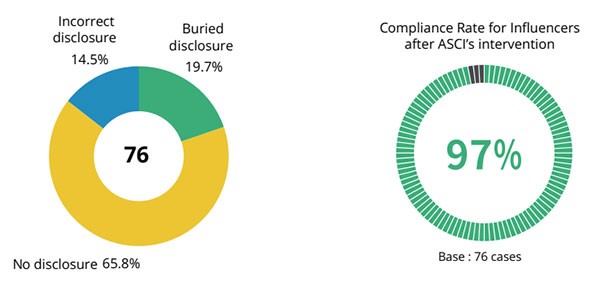
Out of the 100 top influencer handles evaluated, 10 did not post any promotional content during the review period, while 12 had appropriate disclosures. The remaining 78 were investigated further, and 76 were found in violation of ASCI’s Code and CCPA guidelines. Of these, 72 influencers—about 95 percent—agreed to put proper disclosure labels without contest. Two others made corrections after ASCI’s jury recommendation, and two cases were escalated to the Department of Consumer Affairs for non-compliance.
Among the violations identified, 65.8 percent of the content carried no disclosure at all, 19.7 percent had buried disclosures, and 14.5 percent carried incorrect disclosure labels.
Slow but Steady Compliance
Post-investigation compliance among influencers improved from 93 percent to 97 percent, and voluntary corrections rose from 85 percent to 95 percent since ASCI’s first study in February 2025. However, the council noted that many influencers continue to take their chances with non-disclosure, correcting course only after being flagged.
“This pattern suggests that many influencers continue to take their chances with non-disclosure, correcting course only after intervention. This reactive compliance highlights a concerning trend that without sustained oversight, violations persist,” the report said.
ASCI Calls for Stronger Deterrence
Addressing the growing concern around influencer violations, ASCI said, “The widespread exposure to betting ads despite the ban, as well as the disappointing standards set by top influencers, are some challenges that have come to the fore in our recent work. Consumer trust can be fragile in the digital age, and such practices create problems for the industry at large. ASCI is however, pleased to note a strong increase in uncontested cases, as well as in rates of voluntary compliance, underscoring its growing role as the first line of defence. For repeat and wilful violators, stringent action by regulators would set a strong deterrent and help protect consumer interests.”
The council added that it continues to share information and data with statutory regulators such as the Ministry of Information and Broadcasting and the Department of Consumer Affairs for action within the legal framework.
Read more news about Influence Zone, Marketing, PR and Corporate Communication, Internet Advertising, People Movement
For more updates, be socially connected with us onInstagram, LinkedIn, Twitter, Facebook, YouTube & Google News
