Why OTT platforms are betting big on animation?
Valued at nearly $1.5 billion and expanding at 12–13% CAGR, India’s animation market is witnessing a content boom as OTT platforms race to capture digital-first audiences
 by
by
Published: Oct 22, 2025 8:27 AM | 7 min read
 Follow Us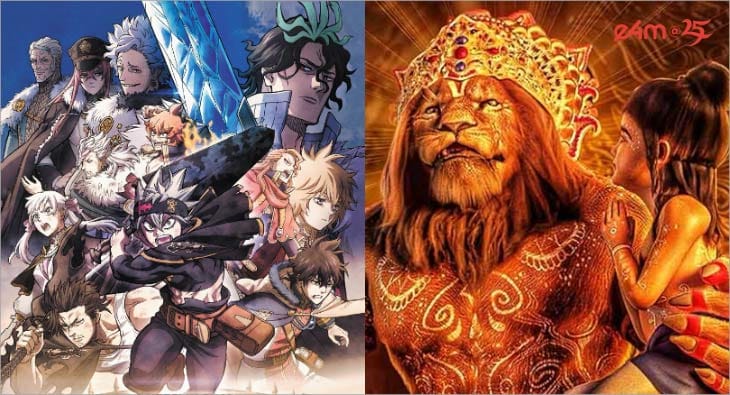

Last week at the FICCI Frames event in Mumbai, Gaurav Dwivedi, CEO of Prasar Bharati, announced an AI-led reimagining of India’s most celebrated epic, Mahabharat, premiering on WAVES OTT on October 25, followed by its telecast on Doordarshan every Sunday at 11:00 AM from November 2.
The government-run platform’s latest move follows the massive success of India’s first full-fledged mythological anime film, Mahavatar Narsimha, based on Vishnu Puran.
WAVES is not alone. From homegrown to global and even regional players, India’s OTT landscape is witnessing fierce competition as platforms seek to capitalise on the booming demand for animation. Japanese animation—or anime—is driving much of this momentum, experts say.
Read On: WAVES OTT by Prasar Bharati expands reach through partnership with CloudTV
The audience appetite for animation is growing sharply in India. Netflix, Amazon, and JioHotstar are all scaling their anime offerings to meet this demand. Animation and VFX currently account for 6% of the M&E industry’s market share in India. Of this, 83% of audiences prefer anime. The segment is valued at around $1.5 billion, growing at a CAGR of 12–13%.
JioHotstar, for instance, leads in family and kids’ animation with its Disney, Pixar, Marvel, and Star Wars library, alongside anime favourites like Doraemon, Shin-chan, and Pokémon—all localized for Indian audiences. Its original Indian animation hit, The Legend of Hanuman, further strengthens local engagement.
“Since the platform launch, we have significantly grown a dedicated audience with more joining every day. With over 1,000 titles, including Demon Slayer, Spy Family, Assassination Classroom, Bleach – Thousand Year Blood War, Tokyo Revengers, My Hero Academia, Jujutsu Kaisen, and Haikyu!!, we are nurturing a vibrant and growing otaku fandom, particularly among 15–25-year-olds who seek immersive, visually stunning, and emotionally resonant storytelling,” JioHotstar told e4m.
“The engagement we see today is the result of strategic curation—diverse genres, storylines, and character-driven narratives—coupled with localization in Indian languages, making global anime experiences feel closer to home. Our upcoming slate will continue to bring global blockbusters and thoughtfully localized offerings to Indian audiences,” the platform stated.
Netflix has been investing in the genre since 2013 through third-party studios. By 2018, it set up its own animation studio, expanded to Burbank and Hollywood in 2019, and in 2022 acquired Australian studio Animal Logic to strengthen production capabilities.
Read On: ‘We have localised Japanese anime & made it relevant to kids in India’
Anime content is rapidly rising in India, with titles like SAKAMOTO Days and Demon Slayer: Kimetsu no Yaiba trending on Netflix India’s Top 10 for weeks, alongside favourites such as Jujutsu Kaisen, Spy x Family, and Baki Hanma. The success of Black Clover: Sword of the Wizard King further underscores anime’s growing cinematic pull. Netflix’s homegrown animation, led by the Mighty Little Bheem franchise and acclaimed titles like Bombay Rose and Kurukshetra, cements its position as a key driver of both anime and animation in India.
Amazon Prime Video combines kids’ and adult animation with an optional Crunchyroll add-on (₹79/month). Meanwhile, AVOD platforms like YouTube and MX Player offer Hindi-dubbed anime and children’s cartoons free of cost, helping convert casual viewers into paying subscribers.
Crunchyroll’s entry into India has intensified competition while expanding the market and attracting new fans. Industry analysts project India’s anime market to grow at a CAGR of ~13% through 2028, potentially exceeding $5 billion by 2032.
“With over 500 million internet users and OTT viewers, a large untapped audience remains. As content localization increases — including Indian-themed anime productions by Crunchyroll and others — animation’s reach will expand to smaller towns and regional-language audiences,” says OTT expert Pep Figueiredo.
Read On: Why Mahavatar Narsimha’s ₹200-crore goal signals a turning point for Indian animation?
Industry Economics
India’s animation and VFX industry, valued at over ₹11,400 crore, is projected to reach ₹18,500 crore by 2026 (FICCI-EY M&E report), driven by streaming, mobile gaming, and educational content. Competitive production costs make India an attractive hub for both domestic and global projects.
“Animated films, often part of a franchise, consistently generate significant revenues. Globally, titles like Inside Out 2, Despicable Me 4, and Ne Zha 2 have crossed billion-dollar milestones,” noted Sunder Aron, Managing Partner, Locomotive Global. “With anime’s rising popularity and AI adoption, more projects are likely to follow the success of the Indian animated film Mahavatar Narsimha.”
Locomotive Global is itself developing projects that blend anime sensibilities with Indian contemporary and mythological tales, including sci-fi themes — a clear sign of the genre’s growing creative and commercial potential.
Platforms supplying compelling animated content are also reporting measurable subscriber gains. Netflix credited anime for helping lift its India share to 16% in 2024 from 13%, while Amazon Prime Video’s 20 million Indian users remain steady, with anime aiding in retaining younger subscribers.
Importantly, animation is budget-friendly. The average cost of production per minute is ₹20,000 for 2D content, ₹1,00,000 for mid-range 3D, and ₹3,00,000 for top-tier animation—significantly lower than live-action shoots, production houses told e4m.
Read On: The Rise of Unseen Creators: Animation-led artists are becoming brand favourites
Long-Term Loyalty
Platforms curating anime intelligently are not just capturing attention—they’re building long-term loyalty and community engagement among Gen Z and Gen Alpha viewers.
Cultural acceptance of animation among adults is also rising, evident in thriving fan conventions and booming merchandise sales among 15–30-year-olds. From Naruto to Hanuman, animation has evolved from the fringes to a key growth driver of India’s OTT ecosystem.
Anime gained popularity in India with shows like Dragon Ball Z, Pokémon, Naruto, and Beyblade, which aired on Cartoon Network, Hungama TV, and Animax. The advent of counterfeit merchandise gave these characters cult status. “Generations that followed got hooked idolising their predecessors. Gen Zs and Alphas identify deeply with anime’s hyperrealism and philosophical undertones,” Figueiredo noted.
No surprise, then, that Crunchyroll has rapidly emerged as India’s anime powerhouse. With over 800 titles—more than 80 dubbed in Hindi, Tamil, or Telugu—and subscriptions starting at ₹79/month, it has become India’s second-largest user market within months. Around 65% of its viewership comes from dubbed content. Its deep catalogue, simulcast access, and fan-driven initiatives (Comic Con sponsorships, celebrity campaigns) make it the go-to platform for anime enthusiasts.
According to Figueirredo, anime and animation are here to stay and will continue to be a wise long-term investment for both creators and platforms, as seen in the kind of animation content Gen Betas watch on their iPads during mealtime.
Read On: India has 60 crore OTT users, nearly 15 cr active paid subscriptions: Ormax
Connected TV Push
Connected TV (CTV) viewers play a pivotal role in fuelling anime’s growth. “CTV contributes 28% of viewership and 45% of watch time, highlighting the demand for premium, immersive experiences,” JioHotstar commented.
“Indian audiences love mythological stories, and the genre continues to resonate. Animated storytelling allows these narratives to reach younger, digitally native viewers effectively,” said an industry insider familiar with multiple platforms’ strategies.
Korean Content
Unlike its rivals, ZEE5 is aggressively chasing Korean content to woo Gen Z.
“Korean content currently forms a relatively small but growing share of our overall catalogue as it continues to gain steady viewership. We have observed a growing appetite among younger audiences for visually rich, globally styled storytelling that remains emotionally authentic and culturally relatable,” says Raghavendra Hunsur, Chief Content Officer, Zee Entertainment Enterprises Ltd.
Popular titles such as Strong Girl Bong Soon, School 2017, and Fight for My Way continue to perform well. “Our upcoming Korean slate will build on this momentum, bringing more curated, high-quality titles that reflect evolving tastes. This direction aligns with our brand philosophy—‘Multiple Languages, Infinite Stories’—ensuring every story, irrespective of origin, connects deeply with viewers in their preferred language,” Hunsur added.
Read more news about Digital Media, Internet Advertising, Marketing News, Television Media, Radio Media
For more updates, be socially connected with us onInstagram, LinkedIn, Twitter, Facebook, YouTube & Google News
